
Tour de France Femmes ethics debate: Niewiadoma-Gery crash footage
New video sharpens the argument, but the road still has the final word.
 Beatrice Kensington5 min read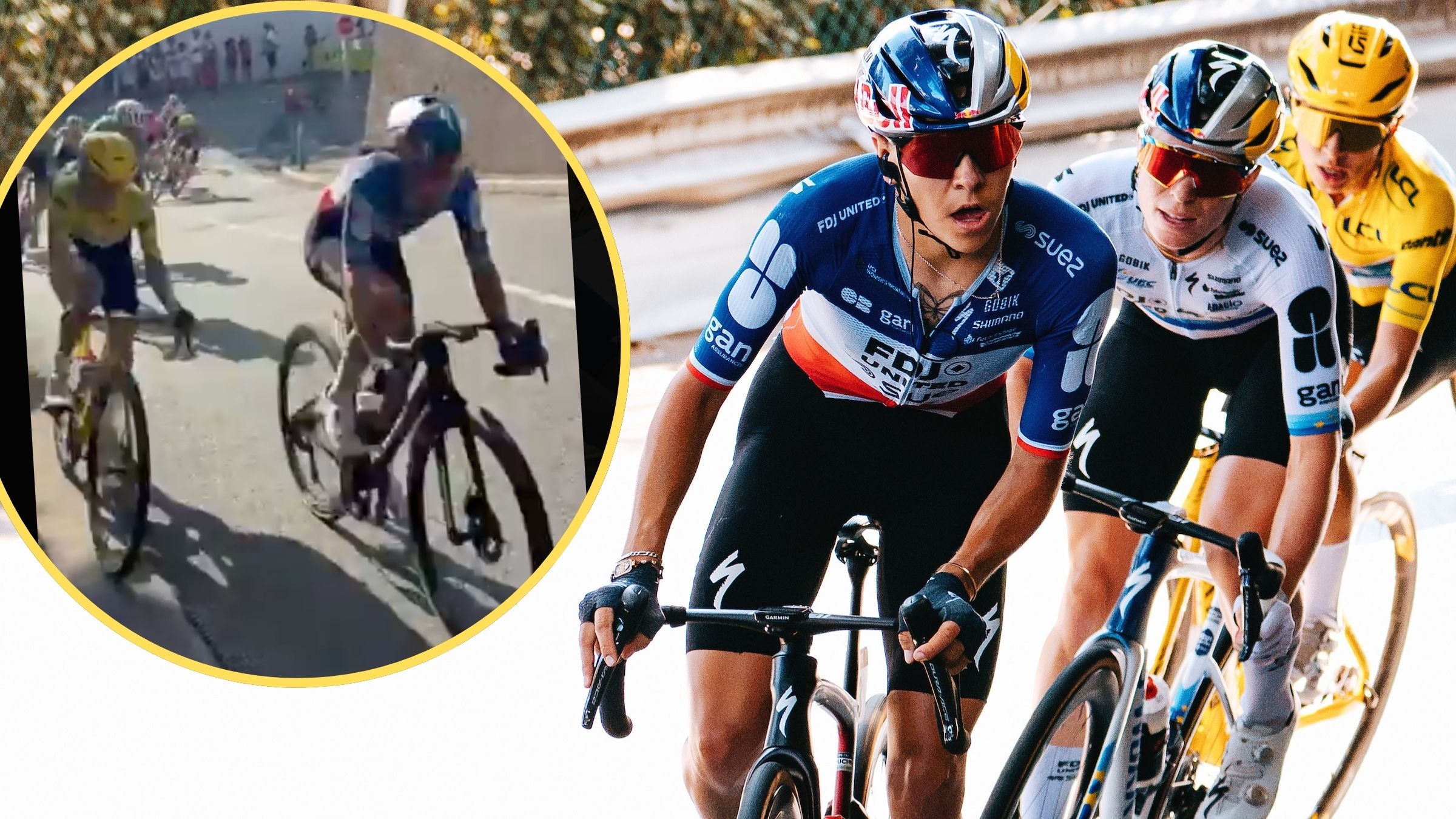
The corner that may decide a yellow jersey
The Tour de France Femmes has always been a race of gradients, nerves, and tiny mistakes made under enormous strain. This one has added a moral bruise to the ledger. Fresh roadside footage of the stage 8 corner involving Kasia Niewiadoma and Célia Gery has given the cycling world a harsher, clearer view of the moment that jolted the race toward controversy, and perhaps toward the yellow jersey itself.
That is the cruel arithmetic of modern stage racing: one bend, one hesitation, one bike length too late and a whole week of labor can tilt. The footage does not close the case. It does, however, make it harder to dismiss the uproar as the usual post-stage fog, that familiar cycling habit of letting the truth arrive in fragments, then calling the fragments a verdict.
In a race this tight, the line between aggressive racing and unacceptable risk can be thinner than a tire track in wet paint.
Why the video matters more than the chatter
Cycling has always lived in the tension between instinct and rules. Road racing, unlike many sports, is a place where the battlefield is shared with traffic islands, cobbles, painted lines, curb cuts, and bad geometry. The peloton’s code is unwritten until something goes wrong, and then everyone suddenly discovers how much they believe in it.
That is why this footage matters. Not because every replay should become a moral tribunal, but because the more complete the visual record becomes, the more the sport is forced to confront how it polices itself in real time. The Tour de France Femmes is no longer a novelty sidecar to the men’s race; it is a marquee event with its own pressure, its own scrutiny, and its own ability to expose the sport’s old habits in high definition.
The debate is not simply whether one rider clipped another or whether a line was held. It is about how much danger cycling is willing to normalize in the name of initiative. That question has followed the sport for decades, from bunch sprints to mountain descents, and it never gets cleaner just because the cameras get better.
Niewiadoma, Gery, and the cruel math of the GC fight
For Kasia Niewiadoma, the stakes are obvious. She has spent years as one of the most resilient all-around riders in the women’s peloton, a climber who does not merely survive pressure but seems to metabolize it. For Célia Gery, the moment is different but no less consequential. Young riders do not get to have anonymous mistakes in races like this. Every angle is replayed as if it were evidence in a courthouse.
What makes the situation so combustible is that general classification racing lives on margins. A rider can be brilliant for 150 kilometers and still lose the race in a few seconds of contact, hesitation, or lost position. The public often wants a clean villain and a clean victim. Cycling rarely offers that luxury. It offers chaos, momentum, and consequences.
And consequences here extend beyond the two riders. Teammates are dragged into the argument because every decision in a Grand Tour is collective. Directors are dragged in because they are paid to anticipate traffic patterns before the riders even see them. Race officials are dragged in because the sport keeps promising itself it can be safer without ever fully escaping the fact that it is, by design, a high-speed negotiation through narrow lanes.
Tommy John message: Yankees icon thanks fans amid health battle may live in another sport entirely, but the emotional register is familiar: fans always want clarity, dignity, and a story that lands cleanly. Elite sport so often refuses them all three.
What this says about women’s cycling now
Women’s cycling has spent years fighting for the obvious things — visibility, legitimacy, better coverage, proper staging, respect that does not arrive as a concession. The Tour de France Femmes has become one of the best arguments the sport has ever made on its own behalf, because the racing has been sharp enough to demand attention without apology.
That makes moments like this more important, not less. When controversy rises around the race, it is no longer possible to file it away as the result of inexperience or underdevelopment. The event is big enough now to attract the full burden of elite sport: the video angles, the scrutiny, the outrage, the instant folklore.
As a matter of public health for the sport, that is both a burden and a sign of maturity. Racing at this level needs the same rigorous ethical language we apply to any major championship. It also needs restraint from those of us watching from the sidelines, because outrage is cheap and precision is rare.
I have long believed cycling’s romanticism is both its greatest strength and its most convenient shield. The sport loves to present itself as elemental — men and women in motion against mountains and weather, stripped down to willpower and lungs. But romance can blur responsibility. If the footage from this corner tells us anything, it is that the sport can no longer afford to treat dangerous ambiguity as part of the scenery.
And perhaps that is the larger inheritance of the women’s peloton right now: it is forcing cycling to become more honest about the cost of its own drama. Not to sand off the edge. To admit the edge exists.
The verdict will shape more than one classification
However race officials ultimately frame the stage 8 controversy, the damage will not be measured only in time gaps. It will live in how riders interpret each other in the stages ahead. It will live in the way a leader enters a corner, or hesitates a half-beat longer, or leaves a margin that felt unnecessary two days earlier.
If the yellow jersey changes hands because of this, the debate will only get louder. If it does not, the argument will not disappear. Cycling never really lets these things disappear. It just tucks them into the next descent, the next sprint, the next hard-earned act of nerve.
The road has a long memory. So do the riders.
The next stage will not erase the footage. It will answer it, one pedal stroke at a time.
More from Straight From The Bench
Comments
Join the conversation — sign in to leave a comment.
Sign in to commentRelated Stories

WNBA transgender athlete participation: league task force to debate
Cathy Engelbert has put transgender athlete participation on the WNBA’s immediate agenda. The next week could shape how the league talks fairness, inclusion, and risk.
)
Whitney Stakes: Sovereignty rolls late for a Saratoga rout
Sovereignty ran the Whitney the hard way, from way back to way out in front. Bill Mott had the right horse in the right race, and Saratoga knew it.
Chicago Sky DiJonai Carrington Ejection: Cunningham foul fallout
DiJonai Carrington’s ejection on Sophie Cunningham and her postgame social media message turned a feverish WNBA moment into something larger. The Sky and Fever now sit inside a dispute about force, in