
Travis Hunter Jaguars Loss: historic INT and TD catch in London
A rare two-way spark in a familiar Jaguars ache.
 Beatrice Kensington6 min read
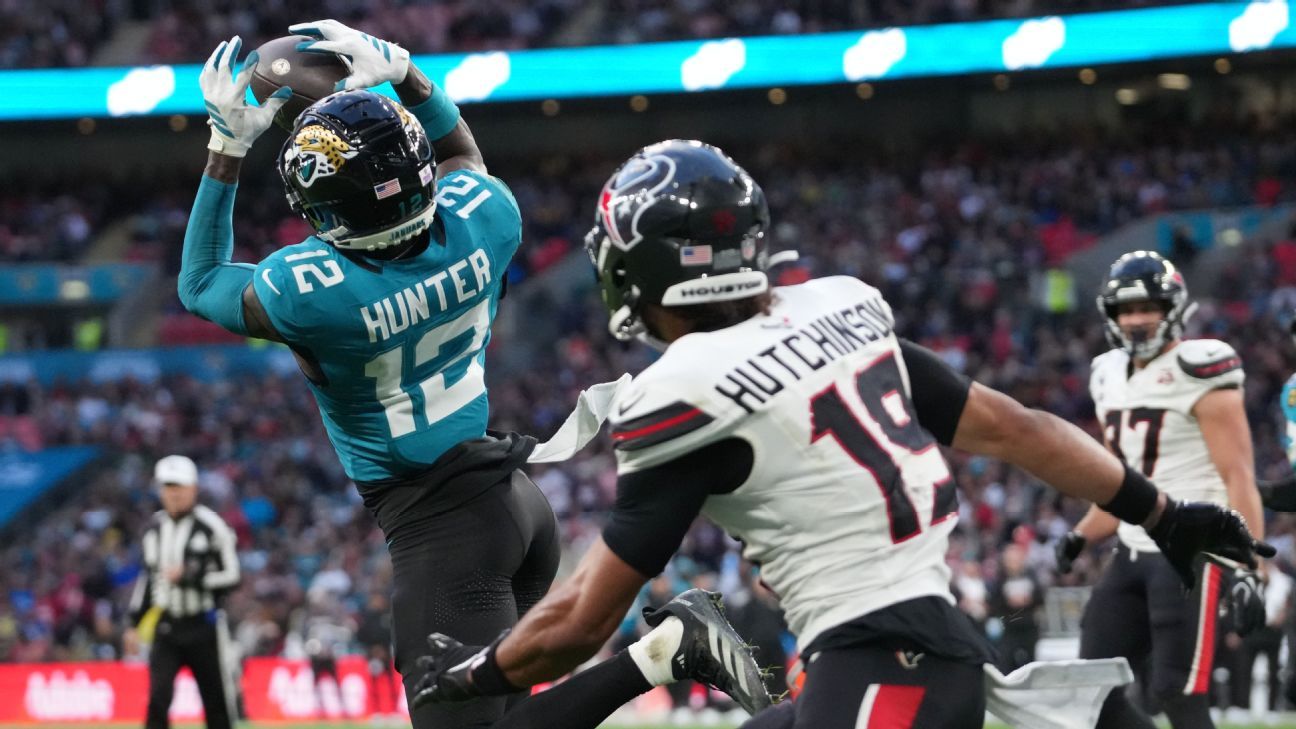
There are afternoons when a player does not merely perform, he bends the atmosphere around him. Travis Hunter had one of those in London, leaving Wembley Stadium with an interception, a touchdown catch and the sort of statistical line that asks the old game to make room for something newer. The Jaguars still lost to the Texans, 34-31, and that detail will sting in Jacksonville longer than the flight home. But Hunter’s imprint was unmistakable. He became the first player since 2002 to record both an interception and a touchdown reception in the same game, a reminder that some talents arrive not as specialists but as arguments.
The box score will say loss. The tape says something more unsettling for the rest of the league: the Jacksonville Jaguars may have found a player who can alter a game from either side of the ball, and perhaps alter the way we think about roster construction itself.
Wembley saw the outline of a rare kind of player
Hunter’s day was not only historic because of the numbers attached to it. It was historic because of the shape of it. He made an impact on offense, then turned around and made one on defense, the sort of two-way utility that football often romanticizes and seldom permits at scale. The modern sport is built on specialization, on carving the field into little kingdoms of assignment. Hunter keeps wandering through the fences.
That is part of the fascination with him, but also part of the burden. Two-way players are not just exciting; they complicate everything. Snap counts. Conditioning. Matchups. Weekly game plans. There is a reason football has mostly retreated from this kind of experiment since the game professionalized and hardened into a science of margins. Yet Hunter does not look like a nostalgia act. He looks like a fresh problem.
He caught four passes for 59 yards in the London game, a useful offensive contribution on its own. Add the interception, and the line becomes a conversation starter. Add the context of a one-score loss, and it becomes a warning to the rest of the AFC South.
The Jaguars lost the game, but not the larger argument
Jacksonville’s defeat will be remembered first because the margin was tight and the setting was grand. Wembley gives NFL games a strange shimmer; everything looks a little more ceremonial there, as if the sport has put on its best coat. But grandeur does not protect a team from the familiar cruelty of close losses. The Jaguars have known that feeling before. Good plays, promising spells, enough evidence to believe, and then the final hand slips through the fingers.
That is where Hunter matters most. He offers Jacksonville something beyond a highlight reel. He offers a different emotional architecture. Teams that are stuck in the middle often search for identity in slogans and discipline and the thin romance of “culture.” Sometimes identity arrives in one player who can make the field feel wider. Hunter does that. He changes how an opponent has to prepare, and he changes how a fan base imagines the next snap.
If you want a useful comparison point, think less about a traditional wide receiver or cornerback and more about a piece that forces coaches to redraw the board. The Jaguars do not need him to be a miracle. They need him to be a multiplier.
The best teams usually have one. The dangerous ones have two.
The most valuable thing Travis Hunter can give Jacksonville is not novelty. It is optionality.
Two-way football is beautiful, and it is also a stress test
I have always believed football has a soft spot for myths it can no longer quite support. The game loves to imagine the singular athlete who can do everything, then quietly funnels that player into one narrow lane. Hunter resists that process, and because he does, he becomes more than a prospect or a novelty. He becomes a test case for the sport’s tolerance for ambition.
There is a historical thread here, stretching back to the era when players were asked to fill every role and the game was less segmented, less coddled by certainty. But the old comparisons only go so far. This is a league that now measures fatigue in GPS traces and injury risk in spreadsheets. It is a merciless machine for novelty. So when Hunter keeps appearing on both sides of the ball, it feels almost defiant.
That defiance matters. It asks coaches to be brave, but it also asks them to be honest. How much can a player truly handle? How long can a team resist the temptation to make him easier to manage by making him smaller? Jacksonville does not have to answer that today. It only has to avoid wasting the opportunity by treating him like a curiosity.
The league has seen gifted players come and go. What it has seen less often is a player who seems to expand the map in real time. Hunter is not just producing plays; he is forcing a philosophical conversation that most staffs would rather postpone until the offseason.
What this means for Jacksonville’s next stretch
For the Jaguars, the immediate lesson is less romantic. Close losses do not care about historical footnotes. They care about fourth-down execution, red-zone decisions, protection, tackling, and the ugly little details that decide whether a team travels home with momentum or regret. Jacksonville will need all of that sharpened. The Houston Texans took the game because they finished more cleanly, and that is the hard edge of the league.
Still, if you are Jacksonville, the proper mood is not despair. It is curiosity with a pulse. Hunter’s versatility gives the coaching staff options that most teams can only sketch on whiteboards. It gives the locker room proof that a rookie can change the temperature of a game in more than one phase. And it gives the fan base something sturdier than hype: evidence.
The challenge now is sustainability. Every big two-way performance invites the same question — can this last? — and every honest answer in football usually begins with a cautious pause. Maybe not forever. Maybe not every week. But enough, perhaps, to matter. Enough to make opponents uncomfortable. Enough to make the Jaguars harder to prepare for than they were a month ago.
That is not a small thing. In a league built on parity and panic, being difficult to categorize can be its own advantage.
The next game will not care about Wembley’s glow. It will care about whether Jacksonville can turn one brilliant day into something sturdier. Hunter has already done the harder part. He has made the impossible look negotiable.
More from Straight From The Bench
Comments
Join the conversation — sign in to leave a comment.
Sign in to commentRelated Stories
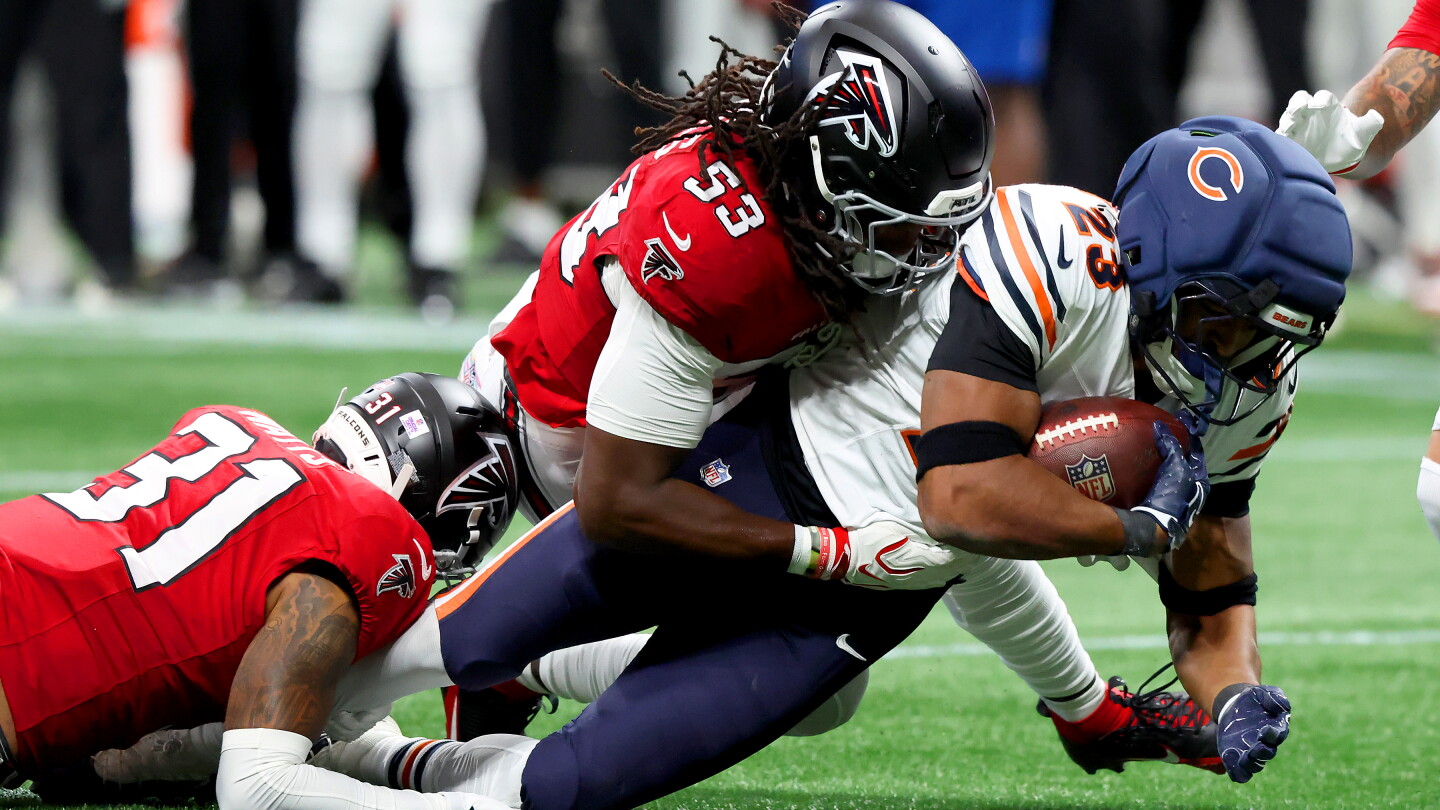
Falcons LB Kendal Daniels Injury Update: stretcher exit vs Bears
Kendal Daniels was carted off after a collision with Colston Loveland, shifting the afternoon from football to fear. Atlanta now waits on the only update that matters: his status.

Week 6 NFL schedule: inactive stars, returns, and Sunday pressure
Sunday in Week 6 has already delivered the usual NFL bruises and reprieves: stars sitting, stars returning, and every sideline decision carrying weight. The schedule is less a list than a referendum.
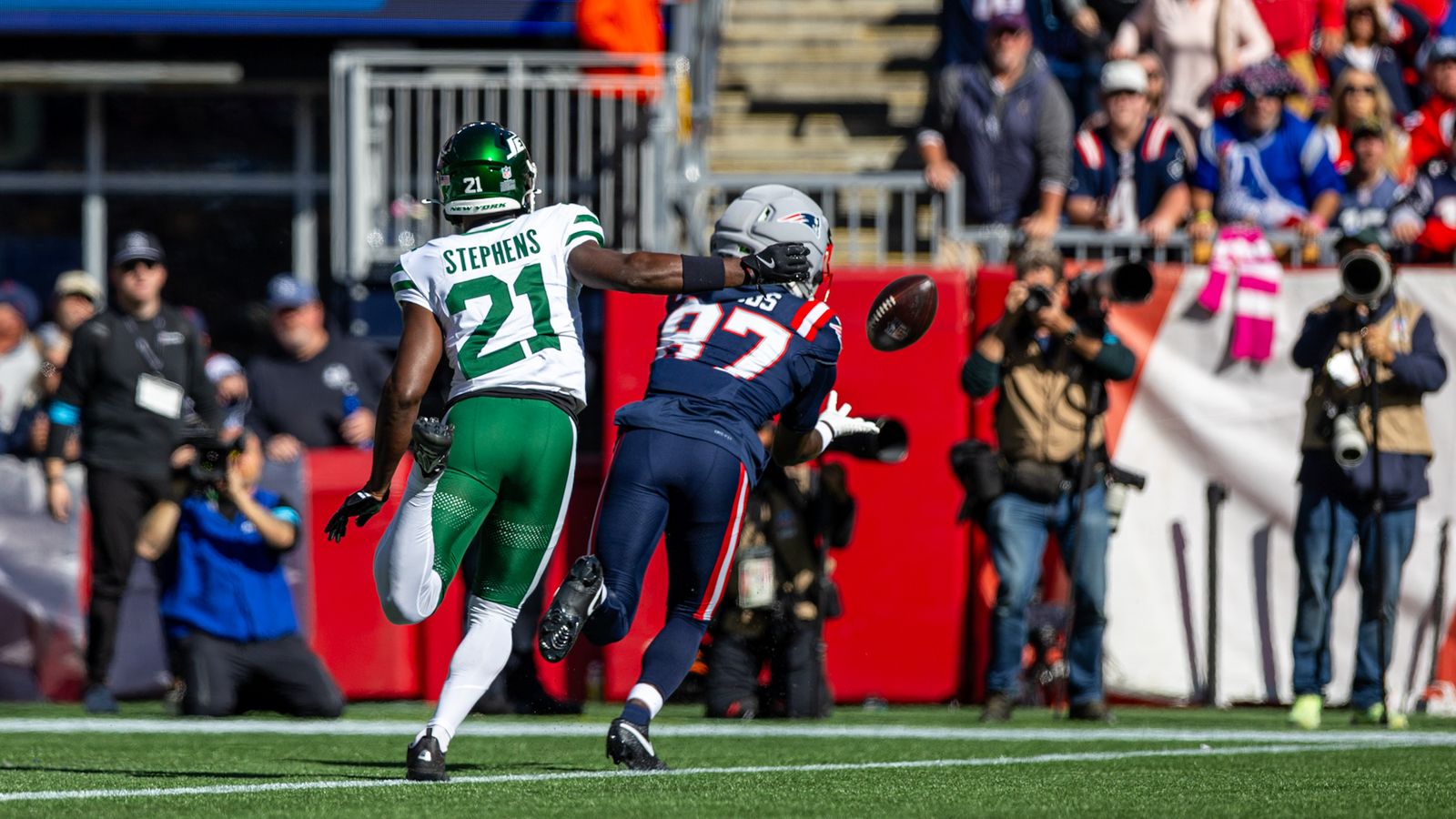
Jets vs Patriots: New England’s defense tests Drake Maye
The Jets will crowd the picture and dare Drake Maye to find answers in the middle. New England’s run game has to make them pay, or this gets ugly fast.