
Tyreek Hill Civil Battery Case: Mixed Verdict Brings Closure
The football future is one thing. The legal cloud just got a lot smaller.
 Zane Miller5 min read
Tyreek Hill woke up with the kind of off-field news that changes the temperature around a player, even if it doesn’t change the playbook. A civil jury returned a mixed verdict in his battery case, and while that does not erase the noise around him, it does move the situation into a very different lane than the one Kansas City has been living in for weeks.
This is where football people start doing the math again. Not the highlight-reel math. The roster math. The market math. The kind of thinking that kicks in when a player’s name is tied to legal uncertainty and teams have to decide whether they’re buying talent, volatility, or both.
Hill’s talent has never been the debate. It’s the gravity around him. And in the NFL, gravity matters because front offices build depth charts with it in mind. Coaches do too. One public civil case can affect trade value, free-agent interest, locker-room trust, and how quickly a team wants to move on from the whole conversation.
The legal cloud just got thinner
A mixed verdict is not the same thing as a total exoneration, and it’s not the same thing as a football suspension either. But it does matter. For a player trying to stay in the league conversation, even as a free agent reportedly looking to play again this season, the headline now shifts from open-ended legal uncertainty to whatever comes next on the football side.
That is not a small distinction. Around the league, executives read these situations in layers. First comes the legal risk. Then the PR risk. Then the roster risk. Once one of those layers clears, the temperature changes fast.
Hill has been one of the league’s most explosive receivers for years, and teams know exactly what they’d be buying if they consider him. The issue was never the tape. It was the baggage sitting next to it. This verdict doesn’t make that baggage disappear, but it does change how some decision-makers will frame the discussion.
The football talent was never in doubt. The only question was how much off-field noise a contender could tolerate.
For the Chiefs, the practical effect is simple: they can keep the focus where it belongs, on their current roster and their current receivers, instead of getting dragged back into a legal story every time the conversation turns to Hill.
Why this matters for Kansas City now
Kansas City lives in the pressure cooker more than most teams because every season becomes a referendum on Super Bowl windows. And any time a former star’s situation hits the news, it pulls the fan base back into the what-if machine.
That’s the wrong lens now. This is a team that has moved on organizationally, even if the memory of Hill’s speed still lingers in the building and in the fan base. The Chiefs don’t need nostalgia. They need stability, snaps, and clean availability.
The more interesting part is how this case intersects with the modern NFL market. Teams are more willing than ever to kick the tires on controversial talent if the price is right. But they also hate dragging unresolved legal questions into a season. General managers don’t just ask, “Can he help us?” They ask, “What else comes with him?”
That’s why a resolution — even a partial one — can matter. It reduces the unknowns. It doesn’t eliminate the scrutiny, but it narrows it.
If you want the broader Kansas City frame, this fits the same cold-blooded roster logic that has defined a bunch of recent moves around the league: teams don’t pay for headlines unless the football upside is overwhelming.
The market for a star never really vanishes
People love to pretend the league has a clean moral threshold. It doesn’t. It has thresholds, plural, and they move based on talent, timing, and desperation.
Hill is still the kind of player who forces a defense to distort. That matters. Speed like that changes coverages before the ball is even snapped. It changes safety rotations. It changes how opponents call third down. The league always remembers that part.
I’ve seen this script before, and I don’t mean just with Hill. Once the legal noise cools, front offices start re-sorting their priorities. The talented player becomes less of a daily distraction and more of a football question. Can he fit? Can he be trusted? Can the room handle it? Can ownership handle it?
My read: the teams that had a hard no will stay there. The teams that were waiting for the temperature to drop just got what they wanted. That’s the real business here. Not drama. Optionality.
And that’s why the next chapter is about perception as much as paperwork. A player can’t usually control how the league views him after a legal story, but he can control how fast football people are willing to re-open the file. This verdict helps that process.
The Chiefs can keep the focus on the field
For Kansas City, this is the cleanest possible outcome short of the whole thing never becoming a story in the first place. The Chiefs have enough on their plate without living inside a legal aftermath tied to a former receiver.
They’ve got their own roster chess to play. They’ve got their own offensive timing to protect. And they’ve already shown they can win without constantly leaning on the memory of Hill as the cheat code.
That’s the bigger organizational lesson here. Elite teams don’t just replace stars — they insulate themselves from the distractions that follow them out the door. If you want the parallel on the Chiefs side, the front office has already proven it can keep moving, just like it has in other roster pressure spots such as the Rams’ offensive line situation or the way clubs manage public uncertainty around high-profile players in other sports, from Shohei Ohtani’s slump to the way contention windows force quick decisions.
That’s the job now: separate the football from the fallout and keep the engine running.
Hill’s next move will tell us plenty. So will the teams willing to listen. The legal fog is lighter today, and in this league, that alone changes the conversation by a mile.
More from Straight From The Bench
Comments
Join the conversation — sign in to leave a comment.
Sign in to commentRelated Stories
Jaguars Coach Liam Coen Takes Blame for Delay of Game Penalties
Liam Coen owned the mess after Jacksonville’s three delay-of-game penalties against Philadelphia. That’s the right first step — now the Jaguars have to prove it was a fixable brain cramp, not a habit.

Rams Alaric Jackson Suspension: Sean McVay Faces a Line Problem
Alaric Jackson’s two-game suspension puts the Rams in a familiar spot: protecting the quarterback while managing a self-inflicted mess. Sean McVay now has to steady both the locker room and the line.
Tyreek Hill Liability Verdict: Jury Finds Two Battery Counts
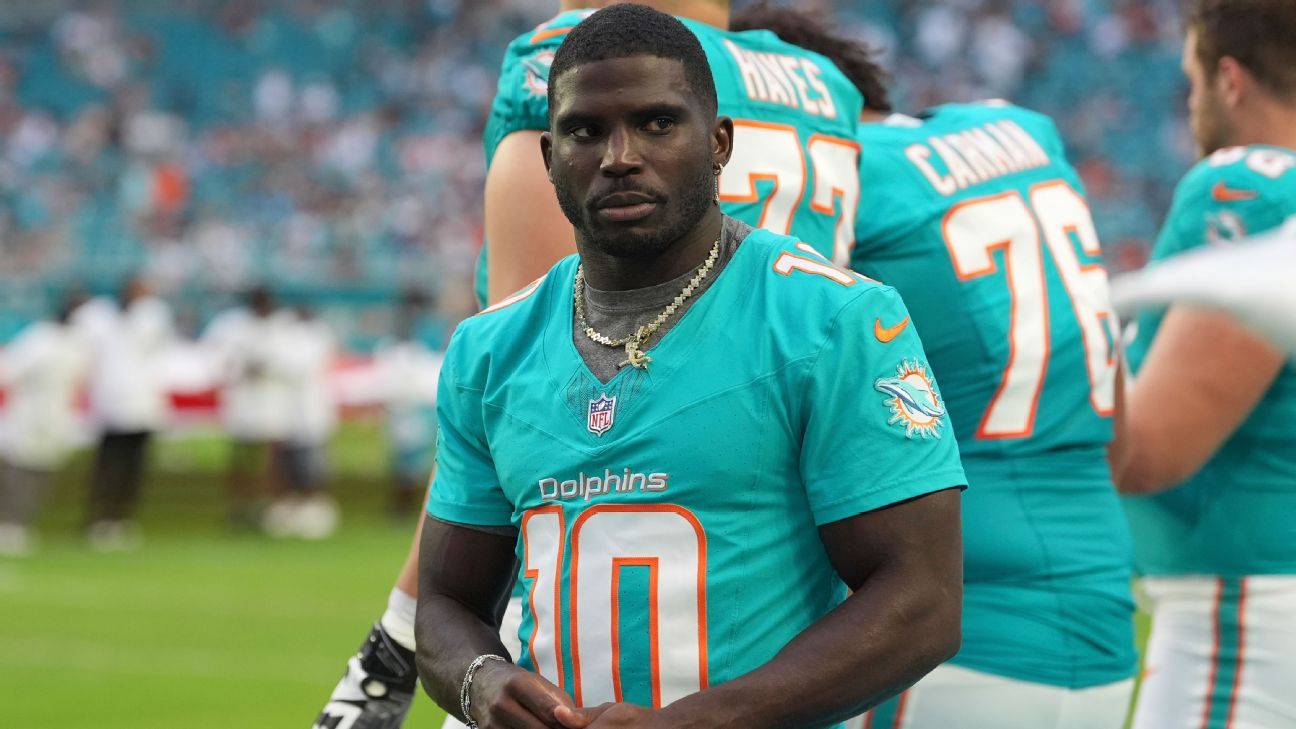
Tyreek Hill was found liable on two battery counts in a civil trial, while eight other claims fell away. The football part of his life won’t escape the fallout.