
UNC football players cited: Sadler, Chapman out vs Clemson
A traffic stop has pushed discipline, football, and judgment into the same hard lane.
 Beatrice Kensington6 min read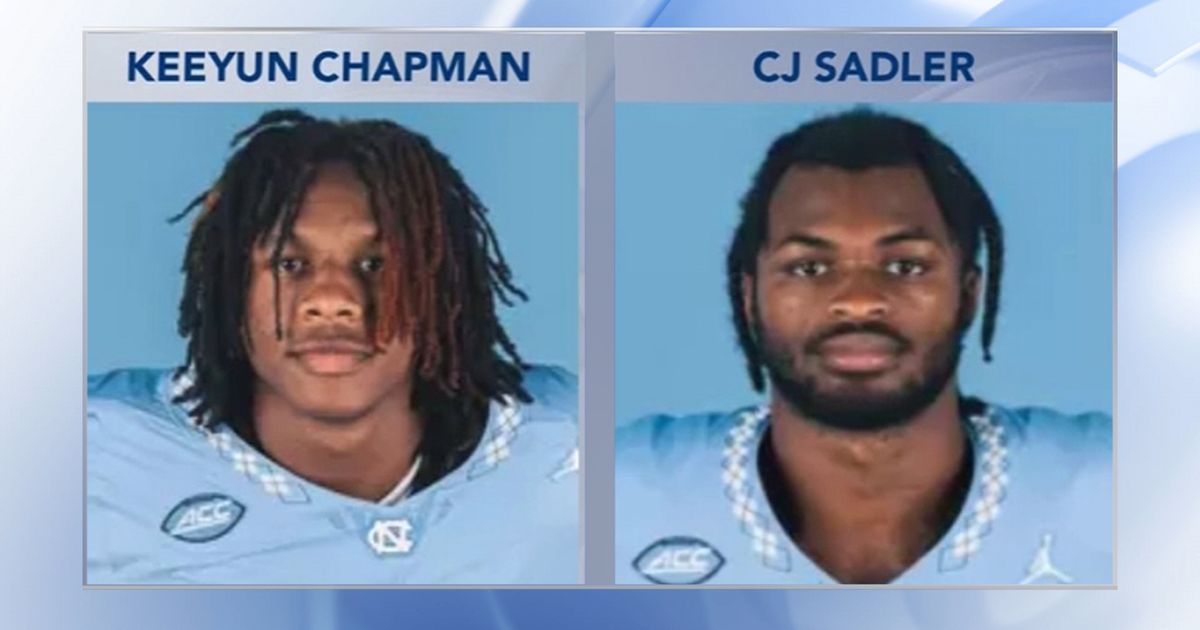
A Friday-night problem that became a Saturday absence
North Carolina’s ACC opener was already going to arrive with a bruise on it. Then the Tar Heels learned they would be without two freshman wide receivers, CJ Sadler and Keeyun Chapman, after both were cited following a traffic stop in Chapel Hill earlier in the week. Chapman is facing a misdemeanor gun charge. Sadler was cited for driving at least 60 miles per hour in a 35-mph zone. One stop. Two young players. And suddenly a football team that wanted to talk about Clemson is instead forced to answer for judgment, maturity and the thin line between a youthful mistake and a program’s public shame.
The absences matter first in the simplest way: depth. Freshman receivers are not usually the ballast of an offense, but they are part of the week-to-week accumulation that keeps a season from fraying. Against a team like Clemson, every body on the sideline becomes more noticeable, every practice rep that vanished in August feels like a small tax coming due in September.
The loss on the field is temporary. The cost to a locker room’s trust can linger much longer.
The football issue is real, but the larger issue is conduct
It would be easy, and lazy, to reduce this to roster management. Suspend the players, move on, next man up. College football has built a thousand such files over the years, and the sport has grown accustomed to treating them like weather: unfortunate, unavoidable, best discussed only until the next kickoff.
But North Carolina football is not operating in a vacuum. It is a public university program in a town where the stadium and the campus share a civic footprint, and where every decision made by a player in a car or on a sidewalk reflects back on the institution. A traffic citation for speed is one thing. A gun charge, even a misdemeanor, is another. Together they tell a story the Tar Heels could not afford on the eve of conference play: not merely of bad luck, but of poor choices that carry real consequences.
That is why the immediate football impact may be less significant than the cultural one. Coaches can replace snaps. They cannot easily replace the sense that a team’s standards mean something before the season starts getting rough. Programs sell accountability all summer. This is the season when those words either harden into policy or dissolve into wallpaper.
Clemson exposes every soft edge in a roster
Saturday’s opponent matters. Clemson is not some anonymous ACC date on the calendar; it is a standard-bearer, a program built on size, discipline and the habit of making lesser mistakes look larger than they are. Games against teams like that tend to expose the edges of a roster, especially one still relying on freshmen at a position where timing and trust are everything.
That makes Sadler and Chapman’s absence more than a footnote. It changes the texture of preparation. It changes who gets the extra rep in practice, who hears his name called in the meeting room, who must suddenly carry the routes and the fatigue and the possibility of a bad third down. Young players are not just bodies; they are development projects, and every interruption in that growth matters. The Tar Heels may survive without them. But survival is not the same as stability.
There is also the human matter, which college athletics often mangles with its obsession for optics. These are freshmen. Not veterans who know every trap door in the program, not franchise faces with years of institutional memory. Freshmen. The age alone does not absolve anything, but it should remind adults in the building that the game’s most vulnerable mistakes often belong to players still learning how public their private choices can become.
North Carolina will handle the discipline part internally, as programs do. The larger test is whether this becomes a teachable line in the sand or just another brief embarrassment buried beneath injury reports and depth charts. If the Tar Heels want to argue that their culture is serious, this is the moment to prove it without theatrics.
What this says about modern college football
I have long believed that college football’s grandest fiction is that talent and supervision can be neatly separated. They cannot. The sport recruits adolescence, glamorizes it, profits from it, and then acts startled when adolescence behaves like adolescence. Everyone in the building knows this. Few say it out loud.
The best programs understand that discipline is not a press release. It is daily architecture. It is the coach who notices, the staffer who intervenes, the veteran who sets the tone, the institution that treats a traffic stop and a weapons charge as matters of judgment rather than inconvenient branding. And yes, it is the player who learns that being offered a scholarship is not the same as being handed immunity. This is the oldest bargain in college sports: a community gives young men a stage, and in return expects them to grow up in public without breaking the terms of the bargain.
This is where the NCAA era’s constant churn leaves programs exposed. The transfer portal, the revenue pressure, the weekly soap opera of rankings and injury reports — all of it can make it tempting to treat any off-field issue as a temporary roster problem. But schools are still schools, and football teams are still collections of teenagers and young adults with keys in their pockets and phones in their hands. The game remains intimate in ways the industry tries to hide.
The Tar Heels now need a steadier tone
If you are North Carolina, the next move is not complicated, though it may not be easy. Enforce the consequence. Say as little as necessary. Let the field answer the football questions and the administration handle the rest. Most of all, keep the episode from becoming a shrug.
Because the danger here is not only losing Sadler and Chapman against Clemson. It is teaching the roster that public standards are flexible, that embarrassment expires quickly, that what happens after midnight in Chapel Hill can be absorbed by sunrise and a depth chart. Programs rot that way — not all at once, but by inches.
For the Tar Heels, Saturday will still come. Clemson will still line up. The crowd will still arrive with its hopes and its doubts and the particular impatience that belongs to September football. But two young receivers will watch from somewhere else, and everyone in that building will know why. That should sting a little. It should.
The season is only beginning, and North Carolina has already found one of its first tests off the field. How it handles this one will tell us more than a box score ever could.
More from Straight From The Bench
Comments
Join the conversation — sign in to leave a comment.
Sign in to commentRelated Stories

Bill Belichick Jordon Hudson UNC Football Speculation: He Calls It Ridiculous
Belichick says Jordon Hudson has no role in North Carolina football. The bigger issue is how fast this story swallows the actual team.
LSU Sam Leavitt Injury Update: Doubtful vs Ole Miss
LSU’s first injury report dropped a real wrinkle: Sam Leavitt is listed as doubtful with an upper body injury. That changes the math for a huge SEC stage game.
Western Michigan vs Michigan: FBS Oversight Committee Can't Overturn Loss
The NCAA says replay protocol broke down at the end of Western Michigan’s loss to Michigan, but the final whistle still cannot be uncoupled from the ledger.