
US Grand Prix 2026 Practice: Austin Times, Results and Takeaways
The first lap in Austin won’t crown anybody, but it sure can expose the pretenders.
 Leo Lupo6 min read

First practice for the United States Grand Prix in Austin always has that clean, ruthless smell about it. Fresh rubber. Fresh hope. Fresh excuses, usually by the dozen. And by the time the cars have rattled through the first serious runs at Circuit of the Americas, the paddock starts to separate into the people who came to race and the people who came to talk about racing.
This is not the loudest session of the year, not by a mile. It’s Friday practice, the motorsport equivalent of a man taking the first sip of coffee and deciding whether the day is worth the trouble. But don’t kid yourself. In Austin, the first session matters. The track is technical, the grip changes fast, and the teams arrive with different ideas about ride height, wing levels, and how much speed they’re willing to sacrifice to keep the tires alive. That makes practice more than a tune-up. It’s a proper sorting hat.
Austin’s first hour tells on everybody
The first thing to watch in this Formula 1 weekend is not the headline lap time. It’s the shape of the run plan. Who goes out early, who waits, who spends five laps learning and then comes in with a worried look at the garage monitors. That’s where the clues live. The teams at the sharp end don’t just chase speed; they chase balance. A car that’s twitchy in sector one and dead in sector three might look fast for one lap and miserable for a race stint.
Austin is a place where brave setups get rewarded right up until they don’t. The front straight offers a clean look at top-end pace, but the middle sector is where confidence gets sorted out. If the car won’t rotate through the esses, if the rear steps out over the bumps, if the driver has to nurse it instead of attack it, then the stopwatch starts lying in a hurry. Practice is where the lie gets caught.
That’s why the names near the top of the sheet always need a second glance. A quick time can mean raw pace, or it can mean somebody burned the good tires early and paid for it later. The smarter teams know that Friday glory is cheap. Race pace is the bill that comes due on Sunday.
Bearman, Alonso and the midfield scrap
The tip sheet already gives us the sort of midfield traffic jam Austin specializes in. Oliver Bearman in the Haas, Fernando Alonso and Lance Stroll in the Aston Martins, Isack Hadjar, Pierre Gasly, Esteban Ocon, and Franco Colapinto all in the thick of it. That’s where practice gets interesting. Not because the front row is hiding in there. Because the fight for the lower points, the final Q3 spots, and the honor of not getting mugged by traffic can make a weekend feel like a knife fight.
Bearman’s name jumps off the page because every Friday session with a young driver carries two separate stories. One is the lap time. The other is whether the kid can keep the car underneath him while the track evolves. Haas has lived in that hard-edged midfield for years, and it’s a rough place to learn the trade. No one hands out mercy there. If he’s quick, it matters. If he’s tidy, that matters too. In Formula 1, tidy is underrated and usually expensive.
Alonso, of course, is never just collecting laps. He has made a career out of finding the weak seam in a weekend and prying it open with a screwdriver. He doesn’t need practice to be pretty. He needs it to be useful. Aston Martin, for its part, has been one of those teams that can look dangerous on one circuit and ordinary on another, which is just a fancy way of saying the old green-and-black roller coaster is still in business.
Friday practice in Austin is where the brave setups get exposed and the timid ones get passed.
The real story is tire life, not headline pace
If you’ve watched enough Grand Prix weekends, you know the first session often flatters the car that likes low fuel and fresh rubber. The real work comes when the engineers start asking ugly questions. How does it behave on a longer stint? What happens when the rear tires go away? Can the driver keep the fronts alive through the high-speed changes of direction without murdering the rears in the slow corners?
That’s the bit fans miss if they only chase the timing screen. The timing screen is a photograph. Race pace is a confession.
Austin has a habit of punishing teams that get greedy with the setup. Chase too much straight-line speed and the car becomes a brick through the middle sector. Load too much downforce into it and you’re defending on the straight like a man on a bicycle. The best outfits find the miserable little compromise in between. Nobody loves it. The stopwatch does.
And this is where practice can shape the weekend more than qualifying. Teams that crack the tire puzzle early can spend the rest of the event polishing details. Teams that miss it are still hunting balance while the rest of the field is stacking up laps like poker chips. That’s how a respectable Friday turns into a busted Sunday.
What Austin usually rewards, and what it punishes
The United States Grand Prix has become one of the sport’s proper crowd-pleasers because it asks for everything. Engine power, braking discipline, tire management, and enough driver nerve to attack the changing direction through the esses without lifting too much. It’s the sort of circuit that rewards cars with poise. If the machine is ugly but stable, the driver can work with it. If it’s quick but nervous, the lap can unravel in one corner and leave a team staring at a wasted session.
That makes first practice a decent early weather vane for the whole weekend. Not a verdict. Not even close. But a weather vane. The teams that can adapt quickly usually leave Austin with something to show for it. The ones that spend the day chasing a setup ghost tend to pay for it later, and usually in public.
I’ve covered enough Fridays to know the ritual. Everyone talks a confident game before the first session. Then the helmet comes on, the radios get clipped short, and the truth shows up. It always does. That’s the beauty of this sport. No committee, no spin, no hiding forever. Just a car, a clock, and a driver trying to make sense of both.
For the old hands, Austin is one more chance to prove that the fastest lap is only the beginning of the argument. For the younger names, it’s a reminder that Formula 1 doesn’t hand out credits for enthusiasm. You earn the right to be taken seriously by surviving the details. This place is loaded with details.
And the next session will tell us even more. Austin rarely keeps its secrets for long.
More from Straight From The Bench
Comments
Join the conversation — sign in to leave a comment.
Sign in to commentRelated Stories
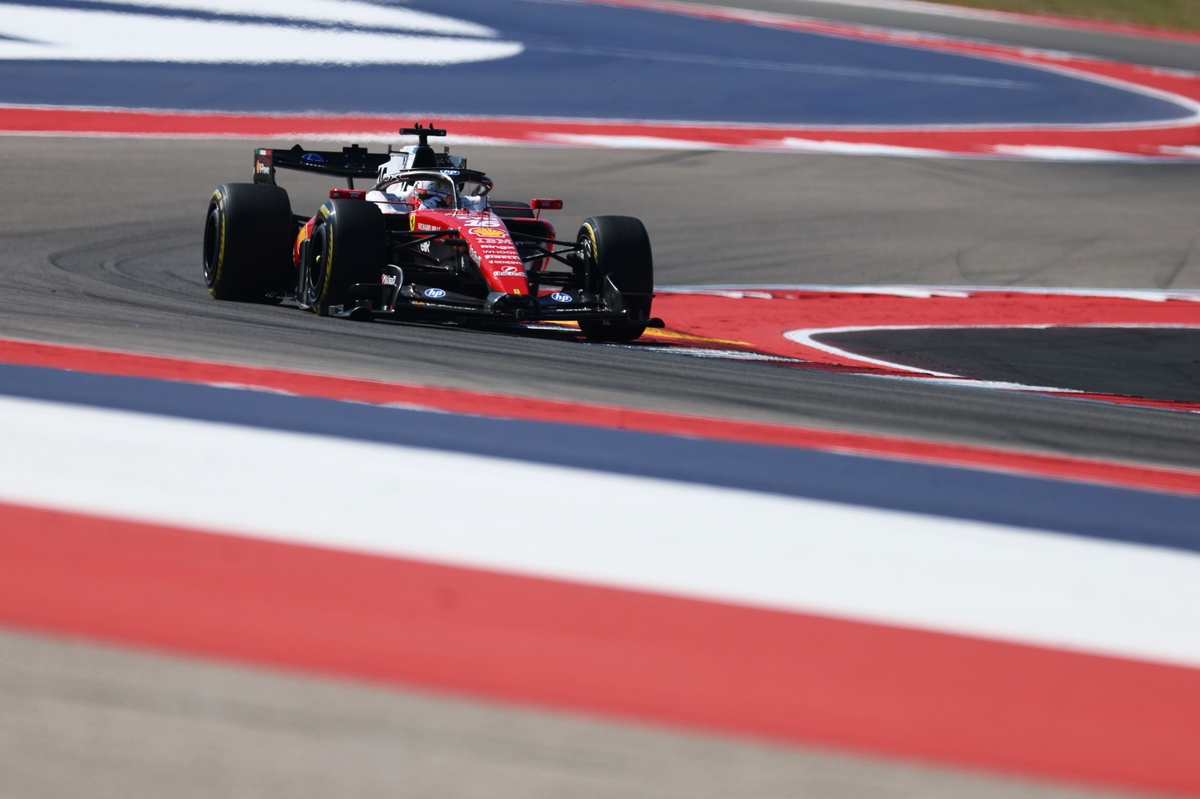
F1 United States GP FP1: live updates from Austin
Formula 1 returns to the Circuit of the Americas with FP1 setting the first clues for the United States Grand Prix weekend. The margins are tiny, and the stakes are not.
IndyCar Barcelona race confirmed for 2027 in major global push
IndyCar is heading to Barcelona in 2027, planting its flag at a venue built for global racing. For Alex Palou, it also lands like a homecoming with real stakes.

Kimi Antonelli United States Grand Prix title run: fun, fast and on the brink
Kimi Antonelli arrives at the United States Grand Prix with the title in reach and the calm of a driver who knows the math. Eight wins, a huge points cushion, and no reason to play scared.