
Washington Girls Cross Country Protest: A Race That Split the Line
When the starting gun fired, the real finish line had already moved.
 Beatrice Kensington5 min read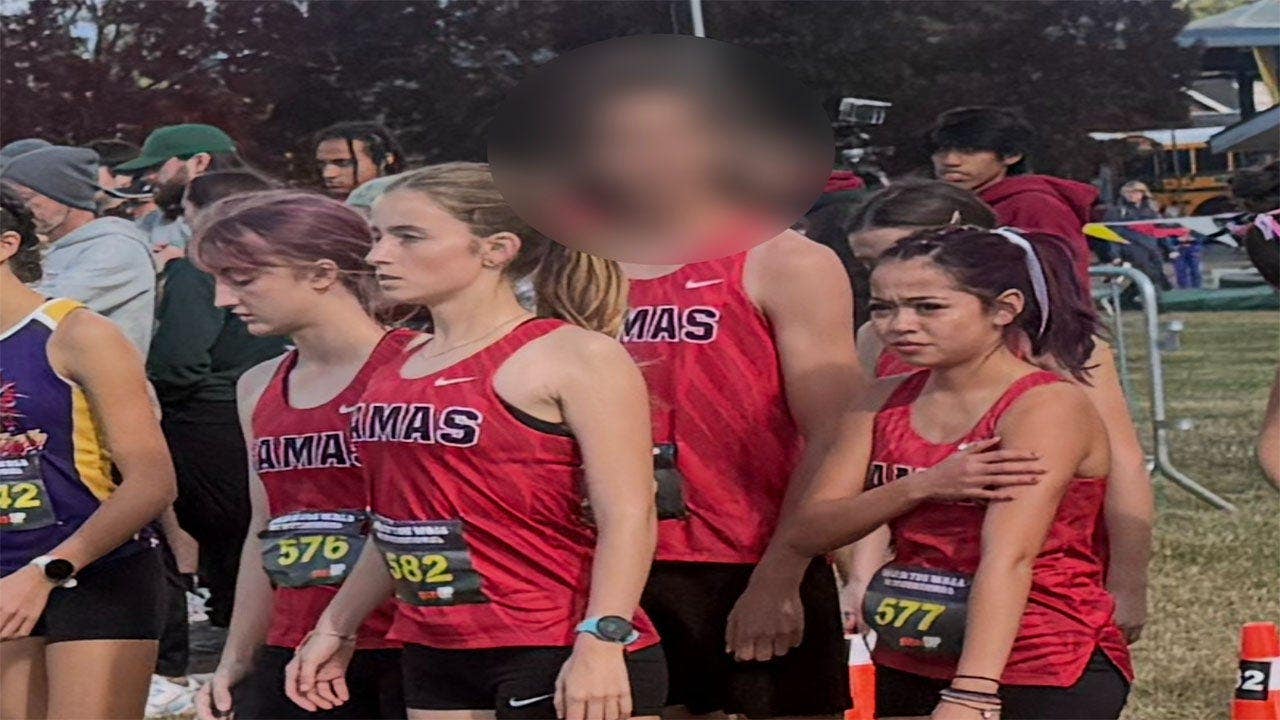
A race abandoned before the first mile
On a Tuesday in Washington, about a dozen girls did something that cannot be measured in split times or finish-place columns: they stepped away from the course. According to the account shared by Holly Burns’ family, the runners refused to compete in a cross-country race against an athlete who had started the season on the boys’ team and later appeared in the girls’ field. It was not a tantrum, and it was not theater. It was a refusal, plain and deliberate, made by teenagers in singlets and spikes who understood that the day’s most consequential decision would be the one not to run.
That is the part that lingers. Cross country is supposed to be one of the cleanest sports we have, stripped down to lungs, legs and the arithmetic of effort. Yet the sport has now been pulled into the larger fight over gender identity in sports, and the arguments that swirl around it have reached even the quiet, seemingly apolitical edges of scholastic competition. The girls on that Washington course were not handing down policy. They were responding to it.
The burden placed on teenage athletes
This is where the story stops being only about rules and starts being about the people forced to live under them. High school athletes are expected to absorb institutional decisions with grace, then line up and compete as if nothing is amiss. Adults write the regulations, administrators interpret them, and the girls in the chute are left to sort out the consequences with race bibs pinned to their jerseys.
Cross country, unlike many sports, is communal even in its loneliness. Runners do not collide, but they compare themselves constantly; every place, every second, every stride is visible in a way that can feel mercilessly public. If a team of girls believes a competition is no longer fair, the wound is not abstract. It lands in the body. It changes how the race feels before it begins.
There is a reason so many of these disputes have turned into school-board fights, courtroom battles and statehouse arguments. Title IX was built to widen the door for girls and women, not to leave them wondering whether the lane they fought for is still theirs. The law has been interpreted, challenged and reinterpreted in a society that is still trying to reconcile two legitimate instincts: inclusion and competitive equity. That tension has become impossible to ignore.
What this protest says about girls sports now
The Washington runners join a growing national pattern: young women are increasingly speaking, and sometimes walking, before adults can speak for them. Their protest does not settle the underlying question. It does, however, expose the cost of pretending that the question does not exist.
The emotional center of this story is not malice. It is unease. It is the feeling, common in youth sports, that someone else has drawn the boundaries without asking the athletes who must compete inside them. And once that sense takes hold, trust frays quickly. A meet that ought to produce memories of grit and mud and a hard-earned personal best instead becomes a referendum on legitimacy.
The uncomfortable truth is that girls are being asked to prove fairness has failed by refusing to play the game.
There is a broader civic lesson here, and it is not neat. In American sports, we often ask children to carry adult ideology without giving them adult authority. We tell them competition builds character, then act surprised when character shows up in the form of protest. These girls did not obscure the issue; they illuminated it.
I keep thinking about how often girls’ sports have been treated as a concession rather than a cornerstone. For decades, female athletes were told to be grateful for what they had, to accept smaller crowds, thinner budgets and lesser notice. Title IX forced the country to do better, but the culture around girls’ sports has never entirely caught up to the promise of the statute. That is why scenes like this cut so deeply. They are not just about one race, or one athlete, or one school district. They are about whether girls are finally expected to surrender not only the podium but the premise.
The parents, the officials and the widening fault line
Parents have become central witnesses in this fight because they are the first to see the strain on their children, and sometimes the first to realize how little control they have over the system surrounding them. Burns’ family, by speaking publicly about what happened, turned a local meet into a national symbol of the division now running through school sports. That is not necessarily what any of these families wanted. But silence has its own politics, and it tends to favor the side already holding the microphone.
For administrators, the path forward remains perilous. Any policy that tries to satisfy everyone will likely satisfy no one for long. Any policy that is rigid enough to calm one side will inflame the other. The result is a form of permanent instability, where every meet can become a test case and every lane assignment a headline.
The comparison that comes to mind is not one of victory or defeat, but of weather. This issue has moved from a distant front to a local storm system, and school sports are now standing in the rain. Some will call the girls’ walkout brave. Others will call it exclusionary. Both reactions are predictable. What matters, finally, is that the fracture is real and growing more visible by the week.
What to watch next in Washington
The immediate question is whether this protest remains a one-day act or becomes part of a larger movement among girls’ teams in Washington and beyond. The longer question is whether school districts and athletic associations will keep treating these moments as isolated disruptions instead of symptoms of a policy vacuum that no one wants to fill.
For now, the image that stays is not a finish tape snapping in the wind. It is a cluster of girls turning away from the start line. That kind of silence travels farther than a race result ever could.
And it will not be the last time we hear it.
More from Straight From The Bench
Comments
Join the conversation — sign in to leave a comment.
Sign in to commentRelated Stories

South Africa vs Australia: Proteas questions after heavy defeat
Australia blew South Africa away in Durban, and now the champions' short path to Lord's gets a hard reset. The margin was brutal, but the bigger issue is what it says about depth, durability and press

Commanders Dan Quinn Rumors: Why Washington Isn’t Firing Him
Washington’s latest stumble put Dan Quinn’s job talk back on the table, but the Commanders are sticking with the coach—for now. That buys time, not peace.

Atlanta Dream Finals Venue Move: 3,500 Seats Is Too Small
Atlanta is trying to get its WNBA Finals games into a bigger building, but the clock keeps ticking. This is about more than seating charts — it’s about what the league thinks its showcase is worth.