
White Sox Acquire Huascar Brazobán: Bullpen Reinforcement Arrives
Chicago keeps shopping for innings that can survive the late summer weather.
 Beatrice Kensington6 min read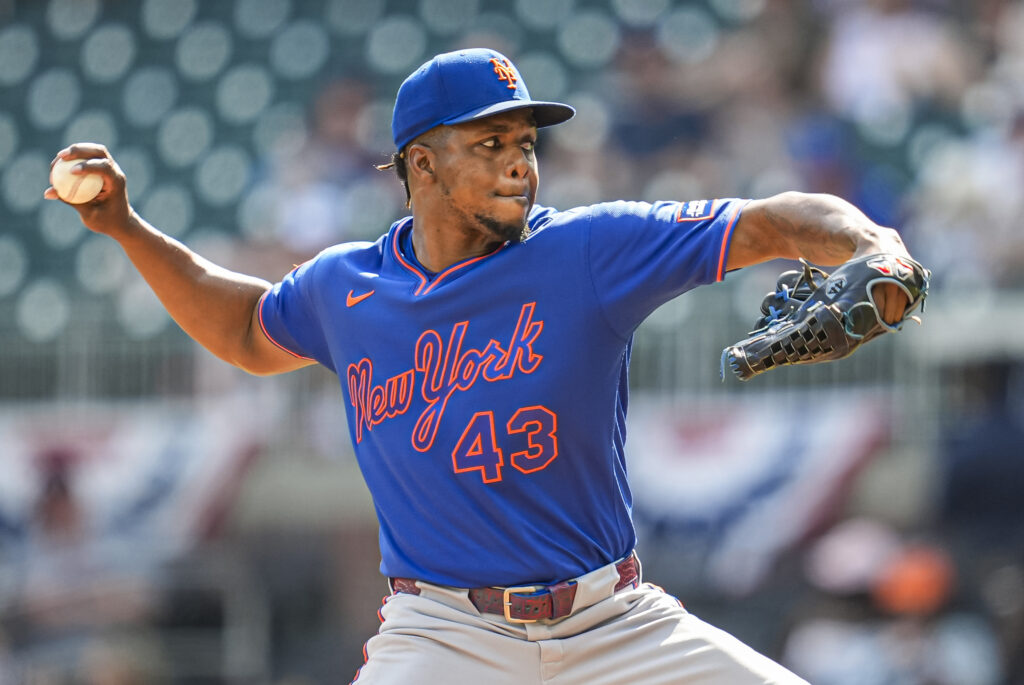
A small trade with a large meaning in Chicago
The White Sox are not pretending this season has already been wrapped in ribbon and stored away for the winter. Their reported acquisition of Huascar Brazobán from the Mets for minor league pitchers Gabe Davis and Zach Franklin is a modest transaction on paper, the kind that barely nudges the national radar. In Chicago, though, it reads like a front office reaching again for something sturdier than sentiment: a live arm, a chance at innings, a little more structure around a bullpen that has been asked to carry too much unevenness for too long.
Brazobán is the sort of pitcher contenders and rebuilders alike keep in their pocket. He throws hard, works from the right side, and brings the one thing every late-inning staff covets and every manager quietly craves: the possibility of missing bats without needing a full sermon from the mound. That matters for the White Sox, who have spent far too many nights watching leads fray, middle innings wobble, and leverage situations turn into public discomfort.
The deal is also a reminder that even in a market dominated by headline acts, there is still value in the unglamorous trade. Not every improvement comes wrapped in a former All-Star’s name. Sometimes it is a reliever with some helium in his arm and a club willing to take the modest gamble.
Why Brazobán fits the shape of this roster
Chicago’s bullpen has lived on the thin edge of trust for much of the year, and that is not merely a problem of talent. It is a problem of workload, sequencing, and the exhausting arithmetic of asking too few reliable relievers to solve too many innings. A hard-throwing right-hander like Brazobán does not fix everything, but he changes the texture of the relief corps. He can give a manager another option against right-handed pockets in the middle or late frames, and he can keep the nightly matchups from becoming a desperate spreadsheet exercise.
The White Sox have spent enough time looking for foundational pieces that a trade like this can seem too small to matter. It is not too small. Organizations are built in layers, and bullpen depth is one of the first places that a fragile team reveals whether it is serious about preventing collapse. If Chicago can find even one reliable bridge arm, the effect radiates outward. Starters are not asked to nibble quite as long. Younger relievers are not thrust into danger quite as quickly. Games become marginally more manageable, which is often the first step toward becoming respectable.
There is also a financial and developmental logic here. Trading from minor league depth for a controllable major league arm is the kind of transaction a club makes when it believes the most practical upgrade is the one it can actually slot into a game this week, not someday. That is baseball’s plainest truth: the calendar does not wait for your system to mature.
The Mets part with another useful arm, and that says something too
For the Mets, moving Brazobán is another reminder that roster decisions at this time of year are often less about sentiment than shape. Teams with postseason ambitions tend to sift their bullpen layers the way a jeweler sorts stones, keeping what best matches the role and letting the rest become inventory. Brazobán, for all his usefulness, became movable because the Mets had alternatives, needs elsewhere, or both. That is how deadline pressure works; it reveals not only what a team wants, but what it can afford to lose.
The return, Gabe Davis and Zach Franklin, tells you Chicago was willing to pay with upside rather than certainty. That is sensible. A rebuilding or retooling club should not hoard every marginal prospect as if each were a museum artifact. Sometimes a live major league reliever is worth more than a distant lottery ticket, especially if the bullpen has been one of the roster’s recurring weak seams.
This is also where a club’s patience can look less like drift and more like discipline. The White Sox have been around enough disappointment to understand that dramatic speeches do not stabilize the ninth inning. Pitchers do. Outs do. Clean frames do. There is dignity in that kind of pragmatism.
Bullpen trades rarely scream. They usually whisper a truth the rest of the roster cannot ignore.
Beatrice Kensington: the hidden value of boring competence
I have long believed the most revealing transactions are the ones that do not seek applause. They seek function. There is a romantic strain in baseball that insists every meaningful move must arrive with a marquee name, a prospect package that makes social media purr, or the kind of press conference polished enough to feel like civic theater. But seasons are won, and often salvaged, by less theatrical commerce.
The White Sox have earned the right to be suspicious of grand pronouncements. A club that has spent too much time explaining itself cannot afford to mistake noise for progress. So I find this move interesting precisely because it is unromantic. Huascar Brazobán is not the kind of acquisition that changes the mood music at Guaranteed Rate Field. He is the kind of addition that may prevent another late-game unraveling, and in a season like this, that is real currency.
There is also a broader lesson in the timing. Baseball’s middle class—the useful reliever, the swingman, the depth starter—has become one of the sport’s most important economic battlegrounds. If you cannot buy a star, you buy stability. If you cannot buy stability, you buy another chance to get through the night. Chicago is doing the latter, and there is no shame in it.
For readers tracking the broader deadline market, this fits neatly alongside the more aggressive bullpen and pitching pursuits we have already seen, from the Cubs’ rotation fix to the way clubs keep circling proven arms as if relief can be stockpiled in neat little boxes. It cannot. But it can be assembled, piece by piece, if a front office is honest about what it needs.
What to watch next in Chicago
The next question is not whether Brazobán can flash velocity. It is whether he can provide repeatable outs in roles that matter. Chicago will want to know how quickly he settles, whether his pitch mix holds up against left-handed hitters, and whether he can be deployed in higher-leverage spots without turning every inning into a fire drill.
Just as important, the trade hints that the White Sox are still evaluating the bullpen as an active construction site. That means more movement is possible, perhaps not dramatic, but purposeful. If this club continues to exchange minor league depth for short-term major league utility, it is telling you exactly where it believes the season can still be improved. Not in a miracle. In margins.
And margins, in baseball, are where reputations are made and ruined.
The White Sox have chosen an arm over a shrug. That is enough to notice. More may follow.
More from Straight From The Bench
Comments
Join the conversation — sign in to leave a comment.
Sign in to commentRelated Stories
Angels Zach Neto Trade Talks: Red Sox Face Rising Prospect Price
The Red Sox keep hunting for a controllable shortstop, but the Angels have made the ask expensive. Franklin Arias is now in the frame, and that tells you plenty.
Rangers Trade Deadline Outlook: Sweep Raises Selling Questions
Texas looked like a club trying to hold the line. Then the Astros swept them, and now the deadline math is getting louder by the day.

Rays acquire Freddy Peralta: Tampa Bay deadline deal shakes MLB
Tampa Bay lands Freddy Peralta and ships out three prospects, a classic Rays swing that says plenty about the deadline market. More moves could be coming fast.