
World Cup 2026: England to Wear All-White, Argentina Navy Blue
A semifinal in Atlanta will be dressed in history, not just color.
 Beatrice Kensington5 min read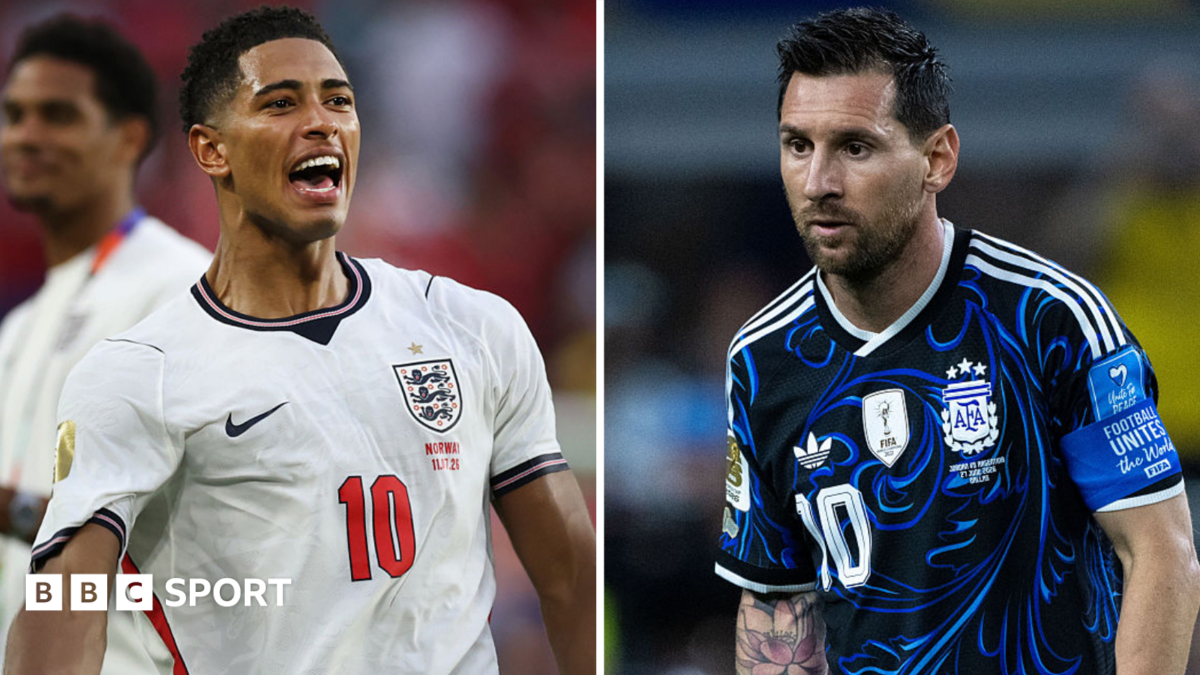
The kits tell you this is no ordinary semifinal
Atlanta will host a meeting that already feels burdened by memory, and now the uniforms have joined the argument. England will wear their all-white home strip, Argentina their navy blue away kit, and that detail, small as it sounds, adds a clean, sharp frame to one of the sport’s most consequential stages. The World Cup does this peculiar thing to clothing. It turns fabric into doctrine. White becomes tradition, blue becomes defiance, and every hem line seems to carry a century of expectation.
There is nothing casual about a semifinal. There is less still when the teams involved arrive with the kind of résumé these two carry. Argentina are the holders, accustomed now to playing with the knowledge that everyone else is measuring them against the trophy in their cabinet. England, perpetually burdened by the romance of their own promise, come dressed as themselves and yet also as a nation trying to step through a long, narrow door that has repeatedly narrowed on them in the final act.
Why the color choice matters more than it should
Kit assignments are, on paper, housekeeping. They settle television contrast, satisfy tournament protocol, and give kit men one less thing to lose sleep over. Yet at this stage, every visible detail picks up symbolic weight. White on England is not merely white. It is lineage, the old badge of football’s imperial self-image, a uniform that has carried both elegance and a kind of emotional restraint. Navy on Argentina is not just an alternate strip; it has become part of the modern myth, a darker skin for a team that has learned how to survive tension rather than merely express flair.
If you want the more practical angle, the contrast should help viewers immediately sort the game’s visual rhythm. If you want the human one, this is a reminder that the World Cup is not only played in boots and tactics but in inherited colors that carry the memory of every win, every missed chance, every old photograph pinned to a wall in a cafe or clubhouse. The shirt is never just a shirt once the stakes rise.
For a broader look at how the tournament’s cultural gravity keeps pulling in fresh audiences, our recent piece on Wimbledon celebrities packing Centre Court showed the same phenomenon in another arena: prestige doesn’t simply attract attention; it curates it.
England’s white shirt, Argentina’s dark edge
England in white and Argentina in navy blue also gives the match a pleasing visual argument. One side tends to be read as order, structure, composure; the other as instinct, improvisation, emotional force. Of course football is too messy to obey such neat binaries, but fans love them because they offer a way to narrate the anxiety. England supporters will see a team still chasing the old absolution, the idea that the next generation can finally do what the previous ones could not. Argentina supporters will see a side that has learned how to turn pressure into momentum, how to make a tournament feel less like a test than a claim.
There is also a psychological theater in the away strip. Argentina’s navy blue is a shade that can look sober, even severe, and that suits a team comfortable with the hard edges of knockout football. England’s white, by contrast, can appear almost ceremonial, which may be exactly the point. At the World Cup, ceremony is never decoration. It is a form of self-belief.
By the time a semifinal arrives, even the shirt color starts to feel like a verdict.
The broader tournament story behind a simple kit call
I have always thought the most revealing thing about a World Cup is how quickly the trivial becomes sacred. A turnstile queue becomes a civic ritual. A chant becomes a family heirloom. And a uniform choice, filed away as routine, suddenly feels like part of the narrative architecture. That is not because football writers are starry-eyed, though we are often accused of it; it is because major tournaments strip away the disguises. What remains is identity, and identity is rarely neat.
Here, the contrast between England and Argentina is especially rich because both teams have spent years being interpreted through symbols larger than the pitch. England, through the weight of history and the promise of reinvention. Argentina, through a national football culture that treats excellence as something both beautiful and combative, almost devotional in its intensity. The shirts, then, are not incidental. They are visual shorthand for the emotional weather around each camp.
I would go so far as to say the kit decision offers a quiet reminder of why the World Cup remains the sport’s last truly global pageant. Domestic leagues can be immense, lavish, and technically superior, but only here do you get the full export of national longing. The shirt, the anthem, the flags in the stands, the old arguments reopened in a single night. It is all there, lined up under the lights in Atlanta.
What to watch in Atlanta
There will be tactical questions, naturally. There will be the usual attention paid to who controls midfield, who blinks first, which full-back gets isolated, which striker finds space between center backs. But before any of that, notice the stagecraft. Watch how the white of England looks under the stadium lights. Watch how Argentina’s navy blue absorbs them. Watch how quickly supporters in the stands start reading the game through those colors, as if the shirts themselves are already speaking.
And if you are looking for the emotional center of this semifinal, it may not be a single touch or save. It may be the oldest thing in football: the sight of two nations standing opposite each other, dressed in their best arguments.
England and Argentina do not need color to make this encounter feel historic. But the kit choice sharpens the image. It gives the night its silhouette. Now the teams must supply the rest.
More from Straight From The Bench
Comments
Join the conversation — sign in to leave a comment.
Sign in to commentRelated Stories
Jayden Adams Death Investigation: South Africa Mourns a Promise
Police are investigating the death of South Africa’s Jayden Adams, found dead in Cape Town at 25 after recently appearing for his country. The grief is immediate; the answers are not.

Folarin Balogun FIFA Suspension: One Call Changed the Story
A suspension that should’ve been routine turned into a political flare-up. The Balogun saga says a lot about FIFA power, U.S. leverage, and how fragile trust is.

Cristo Fernandez Professional Debut: Ted Lasso Star Plays for El Paso
Cristo Fernandez’s first pro minutes for El Paso Locomotive were a small event in a box score and a big one in the story of sport’s long memory.