
World Cup Trophy Presentation: Trump Calls U.S. the Real Winner
The final is Spain vs. Argentina. The political theater belongs to Washington.
 Beatrice Kensington6 min read
The trophy is meant for one team, one final, one clean ending under the lights. Yet even before the first whistle of Argentina and Spain, the politics have begun to crowd the frame. President Donald Trump is preparing to present the FIFA World Cup trophy to the winner on Sunday, and he has already declared the United States the true beneficiary of the tournament. That is the sort of claim that lands with the force of a parade float rolling through a church parking lot: loud, symbolic, and designed to be seen from a distance.
The football itself will settle one thing. The speeches, the handshakes, the cameras, and the optics will try to settle another. That tension is the story now.
A trophy handoff with a second stage attached
The final in itself is enough to command the world’s attention. Argentina, with its old competitive gravity and the enduring aura of Lionel Messi, brings history to the grass. Spain carries the sleek confidence of a country that has spent decades teaching the game to move like water. These are not supporting players in anyone’s pageant.
And yet the setting matters. A World Cup final hosted in the United States is not merely a sporting event; it is a civic showcase, a business summit, a cultural audition. Every seat sold, every broadcast angle, every sponsor logo says something about who can stage the largest ritual on earth and make it look effortless. That is the part Trump is trying to claim as victory.
He is not wrong that the tournament is a windfall of visibility for the country. But visibility is not the same as ownership. America is hosting. America is benefiting. America is being watched. The game, though, remains stubbornly international. The ball does not salute the flag before it crosses the line.
Why Trump’s framing matters beyond the podium
There is a familiar American instinct here: to stand beside a global spectacle and insist it is really about us. The Olympics get this treatment. So do space launches, award shows, and trade fairs. Sports are especially vulnerable because they invite ceremony, and ceremony invites political trespass.
Trump’s language turns the final into a referendum on national prestige rather than a contest between two footballing powers. That may excite some supporters who want the United States to appear ascendant, cosmopolitan, and in charge of the biggest show on the calendar. It also risks flattening what makes the tournament meaningful in the first place: that it belongs to no single government, no single market, no single leader.
The danger is not only rhetorical. Whenever politicians reach too eagerly for a sporting stage, they begin treating athletes and fans as props in a larger narrative. That is an old American habit, and a weary one. The players are there to compete for a title, not to provide decorative backdrops for power.
The World Cup does not become America’s because a president says so; it becomes America’s only in the way the Super Bowl once became the world’s — by putting on a show too big to ignore.
The United States as host, not owner
There is a fairer, more interesting argument buried beneath the chest-thumping. The United States really is using this tournament to advertise itself, and not just to soccer fans. A successful final can deepen the country’s claim to be a reliable global host, a place able to absorb millions of visitors, marshal security, and stage a spectacle without dropping the baton.
That is not nothing. Hosting major finals has long been a form of soft power, and the U.S. knows it. The nation has already seen what a major soccer event can do to public imagination, infrastructure, and the appetite for the sport itself. Anyone tracking the rise of American soccer should also be reading stories like our look at LeBron James' next team and championship habits — not because basketball and football are the same, but because elite sports in this country now travel in the same commercial and cultural currents.
Still, a host’s pride should not metastasize into delusion. The World Cup is at its best when it forces Americans to sit, for once, in the audience. We are not the starring nation in every global drama. Sometimes we are the venue. That is a perfectly respectable role.
What Argentina and Spain are trying to protect
The teams on the field have their own claims to make, and they do not require a White House gloss. Argentina arrives with the weight of expectation that follows a team accustomed to turning pressure into romance and then into silverware. Spain arrives with a footballing philosophy that prizes control, patience, and technical clarity. One side plays as though memory is a burden it is willing to carry. The other plays as though the future is already arranged in triangles and passing lanes.
For both, the trophy is not a talking point. It is a ledger entry in the long record of national football identity. That is why this kind of political framing can feel so small beside the thing itself. Tournament finals are among the few sporting occasions where history, style, and country all sit at the same table without needing introductions.
The United States may be the host nation, but the match belongs to the sides that earned it. That distinction should remain visible, even if the podium speech wanders.
My view from the press box
I have spent enough years watching powerful people drape themselves over sports to know the move when it arrives early. It is usually a sign of hunger, not confidence. The deeper a politician reaches for the symbolism of a game, the more he wants the game to lend him legitimacy he has not quite manufactured on his own.
This is why the Trump posture around the World Cup feels so revealing. It is less about football than about authorship. He wants his name written into the final sentence of a global event that was never designed to flatter any one leader. I think that tells us something important about the state of modern spectacle: everyone wants to stand at the center of the photograph, even if they had nothing to do with the score.
And yet the sport tends to outlast the spin. That is its blessing, and its quiet revenge.
The whistle will sound. The trophy will rise. The cameras will hunt for meaning. The game, mercifully, will keep its own counsel.
More from Straight From The Bench
Comments
Join the conversation — sign in to leave a comment.
Sign in to commentRelated Stories

Spain vs Argentina World Cup Final: Spain wins in extra time
Spain didn’t just beat Argentina. It turned the final into a long, hard lesson in control, then finished the job in extra time.
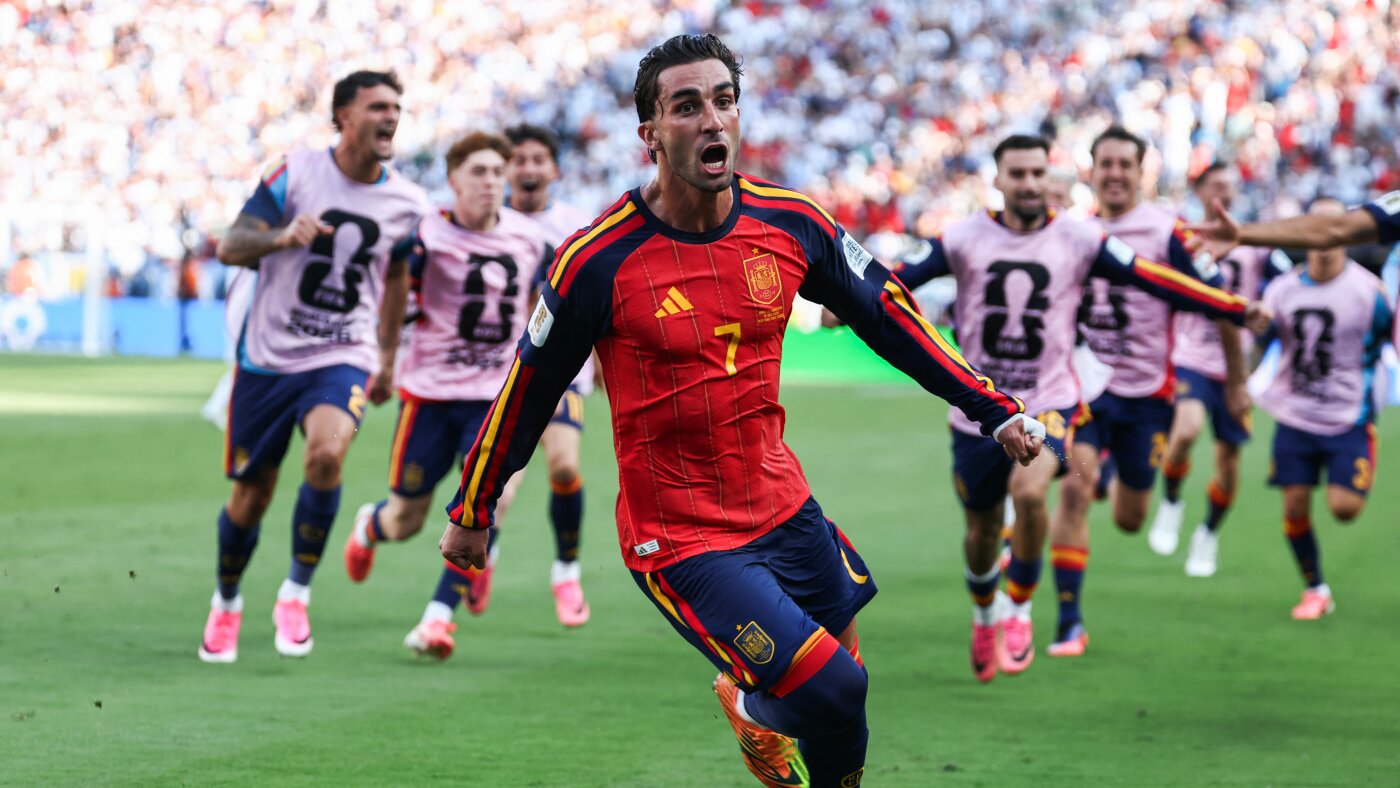
Spain vs Argentina World Cup Final: Defensive Masterclass Wins
Spain took the 2026 World Cup with a 1-0 extra-time win over Argentina, doing it the hard way and the smart way. Four top-10 scalps and one goal allowed tell you all you need to know.

FIFA World Cup Final Halftime Show: Madonna, BTS Barely Seen
FIFA tried to turn halftime into a global playlist. Instead, the biggest names barely got a breath.