
Alex Palou IR28 Testing: Track Records Could Fall in 2028
The future arrived slick and quick at Indianapolis, even with rain on the windshield.
 Beatrice Kensington5 min read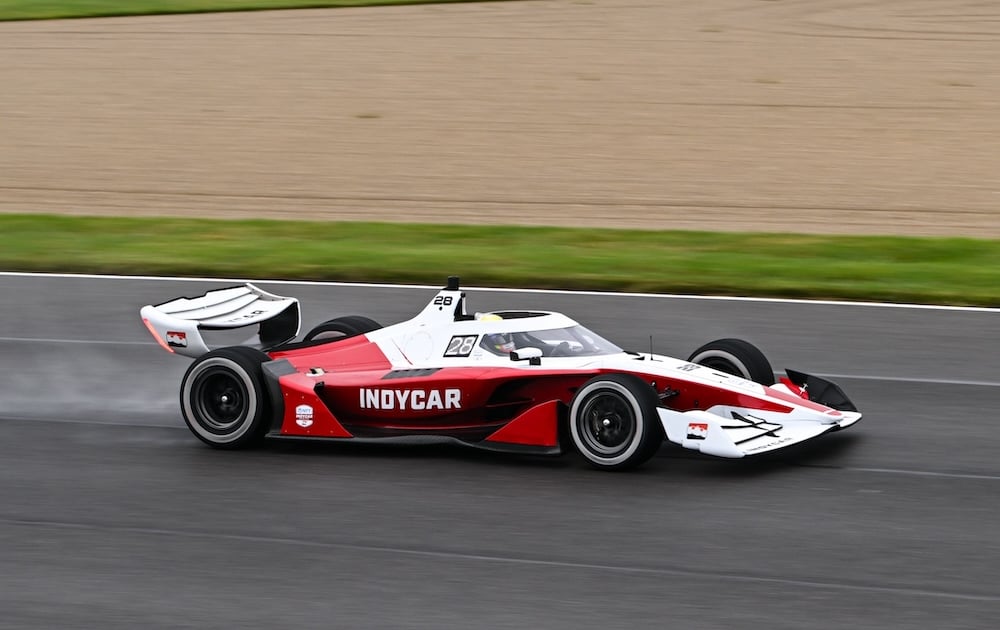
Rain, runway, and a glimpse of 2028
The weather did what weather does at Indianapolis Motor Speedway: it reminded everyone that motorsport is still a negotiation with the sky. Rain stole much of the day’s useful running, and yet the most revealing detail from the second day of testing the new Dallara IR28 was not what the cars could do in ideal conditions, but what Alex Palou believed they might do once the calendar catches up to the machinery.
Palou’s read was plain enough. The new car, he suggested, has the kind of latent pace that can drag track records down across the board. That is not a casual observation from a driver polishing a sound bite. It is the sort of remark that lands with weight because it comes from the reigning IndyCar champion, a man who understands the difference between a fast lap and a fast ecosystem.
Speed is never only speed in this sport. It is leverage. It is danger, cost, spectacle, and, if you are an owner or a sanctioning body, an argument waiting to happen.
What Palou’s feel for the IR28 really means
The next-generation car was not unveiled for nostalgia’s sake. It exists because the series keeps trying to solve the same old riddle in a new century: how do you make racing feel modern without sanding off its soul? The answer, inevitably, lives somewhere between power and restraint, between engineering ambition and the hard limits of safety.
That is why Palou’s reaction matters. When a driver of his stature says a car can break records on all kinds of tracks, he is not simply praising a tidy engineering package. He is describing a machine that may reshape the competitive math for everyone from the front-row hopefuls to the midfield survivors who have spent years chasing the leaders with one eye on tire wear and another on turbulence.
There is a temptation, in these moments, to treat speed as an uncomplicated virtue. It is not. A quicker car can open passing opportunities, reduce the parade effect, and sharpen strategy. It can also make small mistakes more expensive and amplify the gap between organizations with deep simulation budgets and those working with thinner margins. The stopwatch is democratic only in theory.
Indianapolis as the sport’s old measuring stick
Indianapolis has always been more than a venue. It is a scale. A place where optimism gets tested in public. When teams bring a new chassis to the Speedway, they are not merely collecting data; they are asking the oldest possible question in American open-wheel racing: how much faster can this thing go before the sport has to decide what kind of speed it wants?
The rain complicated Sunday’s work, but it did not erase the value of the exercise. In fact, it sharpened the point. Limited track time forces drivers and engineers to lean on instinct, memory, and the small truths that emerge in imperfect conditions. A driver can tell when a car speaks clearly through the steering wheel, when it settles over bumps instead of fighting them, when it feels like a platform rather than a compromise.
That is the language beneath the headline. Not lap charts. Feel.
And feel matters because the IR28 is not being judged in a vacuum. It arrives into a sport that has spent years balancing its identity between brute-force Americana and the clean, global logic of modern race engineering. If the car is fast enough to threaten records, it may also force a conversation about whether the series wants races defined by raw pace or by the width of the strategic chessboard. Usually, the truth is some uneasy blend of both.
The next IndyCar car cannot merely be quicker; it has to make speed look intelligent.
Why the rest of the field should pay attention
There are winners and losers hidden inside every chassis change, long before a wheel is turned in anger. The obvious beneficiaries are the drivers with exceptional adaptability — the ones who can sense grip shifts before the data screen catches up. Palou belongs in that company. So do the technicians and race engineers who can translate a driver’s vague “the rear is alive” into setup changes that are worth tenths.
But a new car also redraws the human map of the paddock. Some teams will discover a fresh start. Others will find that their old habits no longer fit the new geometry of competition. That is especially true in a series where performance is shaped not only by engineering brilliance but by budget discipline, pit execution, and the ability to learn faster than your rivals.
I keep thinking about how often racing sells us on the promise of fresh machinery as though hardware alone can renew a sport’s spirit. It cannot. New cars expose the same old truths more starkly. They reward organizations that think deeply and punish those that lean on reputation. They ask drivers to be both bold and exact. They make a line of carbon fiber and suspension arms into a referendum on discipline.
That is what makes Palou’s assessment feel larger than one testing day in the rain. He is not just saying the IR28 is quick. He is hinting that the next era of IndyCar may be decided by who can turn speed into control without losing the emotional edge that makes fans lean forward in the first place. We have seen this before in motorsport, in different accents and different decades: the new car arrives, the faithful bristle, then the stopwatch starts rewriting loyalties.
The real test comes when the weather clears
For now, the takeaway is less dramatic than the headlines want and more useful than they admit. The IR28 has already impressed one of the series’ best drivers in less-than-ideal conditions, which is usually a strong sign that the concept is alive. The real answer will come when the track dries, the program opens up, and the engineers can chase the edges instead of the middle.
That is when records either tremble or stand their ground.
And if Palou is right, the sport is about to find out just how much faster its familiar places can feel when the future finally shows up in full daylight.
More from Straight From The Bench
Comments
Join the conversation — sign in to leave a comment.
Sign in to commentRelated Stories

Women’s Pro Baseball League opening anthem: why the moment mattered
The first pitch was only part of the story. In a debut shaped by music, memory, and scrutiny, the league found itself under the harshest kind of spotlight.
Angels Zach Neto Trade Talks: Red Sox Face Rising Prospect Price
The Red Sox keep hunting for a controllable shortstop, but the Angels have made the ask expensive. Franklin Arias is now in the frame, and that tells you plenty.

White Sox Acquire Huascar Brazobán: Bullpen Reinforcement Arrives
The White Sox add a hard-throwing right-hander in Huascar Brazobán, another sign this bullpen is being rebuilt one arm at a time.