
Arthur Fery’s Centre Court surge is the kind of Wimbledon shock the sport never forgets
 Zane Miller5 min read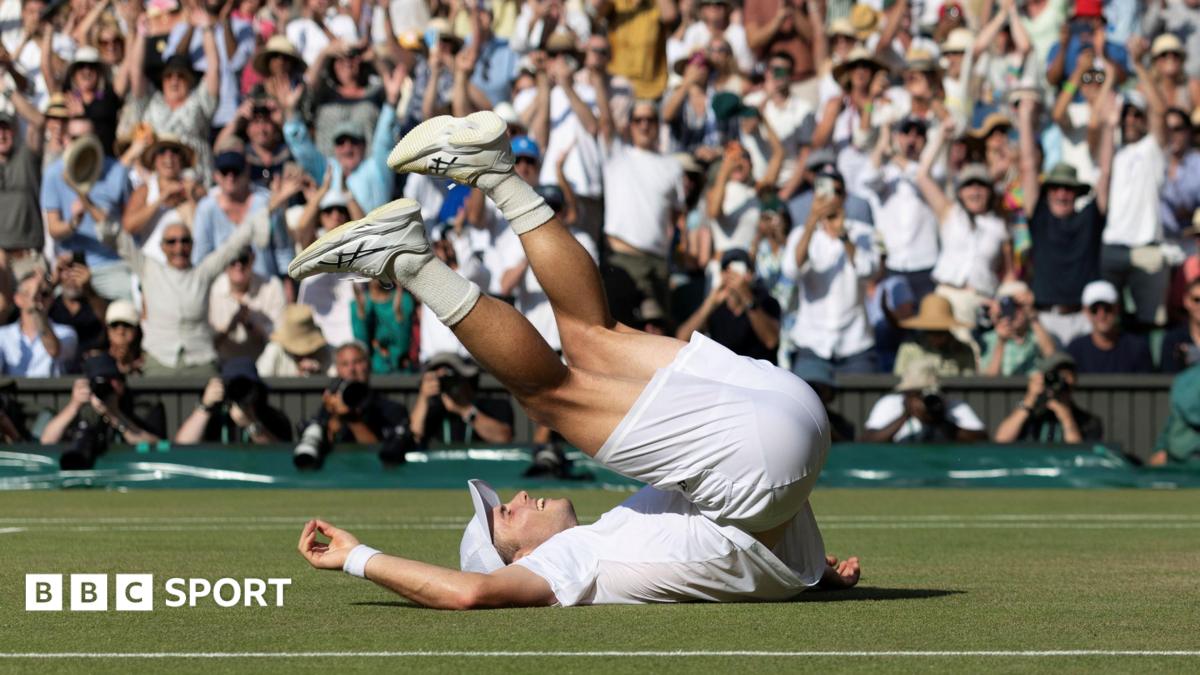
Arthur Fery didn’t just take a seat at the table on Centre Court. He kicked the door off the hinges and kept walking. A British wildcard into the Wimbledon semifinals is already the sort of sentence you pause on, but the bigger point is this: Fery has turned a tournament built on hierarchy into a live grenade. He’s now only the fifth British man to reach the Wimbledon Championships semifinals in the Open era, and that alone puts him in rare air. The wildcard part makes it even louder. In a sport that usually rewards seeding, repetition, and the comfort of known quantities, Fery is making noise from the outside lane.
Wimbledon’s old order just got rattled
This is what makes Wimbledon such a brutal, beautiful stage. The surface rewards clean patterns, but it also exposes nerves fast. A wildcard advancing this far is not a gimmick run or a lucky break anymore. That’s over. By the semifinal round, the draw stops being a novelty and starts becoming a mirror. You don’t get here unless you can handle the pressure points, the match-by-match tactical adjustments, and the suffocating weight of every British crowd shift that comes with it.
Fery’s run also lands in a very specific part of the sport’s memory bank. British men’s tennis has had its moments, but they haven’t come easy and they haven’t come often. The list of homegrown men who’ve made the final four at Wimbledon in the Open era is short enough to memorize. Fery is now in that club, and the significance isn’t just national pride. It’s proof that the old pathway to relevance in men’s tennis can still be cracked from the margins.
For the tournament, this is catnip. For everyone else in the draw, it’s a warning label.
The wildcard label stopped mattering a while ago
Wildcards usually mean promise, local interest, or a player the tournament wants to put on a bigger stage. Sometimes they’re developmental. Sometimes they’re a courtesy. Once in a while, one becomes a problem for the rest of the field. Fery has crossed from “nice story” to legitimate threat, and that is where the sport changes how it treats you.
Only a tiny handful of men have made a Grand Slam) semifinal as a wildcard, which tells you how rare this is even before you add the Wimbledon stage and the British context. This isn’t the sort of run that happens because the bracket opened up for a few days. It happens because a player is serving his way through tension, returning with purpose, and refusing to let the moment become bigger than the tennis.
That matters for the rankings picture too, even if the full math isn’t the headline. A deep Slam run changes how opponents scout you, how agents frame your value, how sponsors look at your ceiling, and how the locker room talks about your next six months. The market loves a player who can suddenly look inevitable.
Centre Court is the worst place to fake it
There’s nowhere to hide on Centre Court. Every weak second serve gets noticed. Every passive stretch gets punished. Every shift in crowd energy turns into a pressure wave. That’s why players who look fearless there tend to keep looking fearless everywhere else. Fery’s path says he’s not shrinking under the brightest lights, and that’s usually the first box a major-era player has to check before the game starts taking him seriously.
You also have to understand the weight on the British side of the ledger. Home pressure at Wimbledon is not romantic. It can be suffocating. The country has spent decades searching for the next men’s breakthrough, and every summer brings another round of projections, hope, and usually disappointment. When someone like Fery actually delivers, it changes the emotional temperature around the sport back home. Juniors notice. Parents notice. British Tennis officials notice. Everyone starts asking whether this is a one-off or the start of a real pipeline.
A wildcard making the Wimbledon semifinals isn’t a feel-good subplot. It’s the sort of run that can tilt a career and rewrite a federation’s entire conversation.
What this run says about the next six months
Here’s my read: Fery’s real value now is not just the semifinal result itself. It’s the credibility he has banked. Tennis is still a sport where belief compounds fast once the results begin to stack. One big week can get you attention. Two can change how the next season is played against you. Three can alter your seat at the table.
I’ve seen enough of these runs to know the temptation is to over-romanticize them. Don’t. The sport is full of one-off sparks. But this one has the kind of profile that tends to linger because it happened at Wimbledon, on Centre Court, with the home crowd watching every point like it was a referendum. That combination is powerful. It can lift a player into a different tier of expectation almost overnight.
And from a business angle, this is exactly the type of story Wimbledon can sell without trying. No manufactured drama, no bracket artistry, no promo reel necessary. Just a British wildcard, a historic semifinal, and a tournament that keeps proving it can still throw a curveball at the entire tennis ecosystem.
The semifinal stage will tell us whether Fery is here for a moment or for a much bigger conversation. Either way, the door is open now, and everybody in tennis heard it slam.
Comments
Join the conversation — sign in to leave a comment.
Sign in to commentRelated Stories

Zverev Finally Breaks Through at Wimbledon — and the Bracket Feels It
Alexander Zverev blasted past an injured Taylor Fritz to reach his first Wimbledon semifinal and finally flip a matchup that had become a mental roadblock.

Clark, the WNBA, and the Politics of Pressure
A letter from 11 lawmakers just turned a basketball foul debate into a full-blown governance test for the WNBA. Caitlin Clark is now at the center of a much bigger fight.

Candace Parker Calls Out the Clark Vote, and the WNBA’s Old Guard Isn’t Smiling
The WNBA All-Star vote turned into a referendum on Caitlin Clark, and Candace Parker isn’t buying the answer. That’s a problem the league can’t shrug off.