
Big Ten 24-team CFP: Tony Petitti pushes 2027 expansion
The conference’s power play is getting louder — and the playoff math is getting uglier.
 Zane Miller5 min read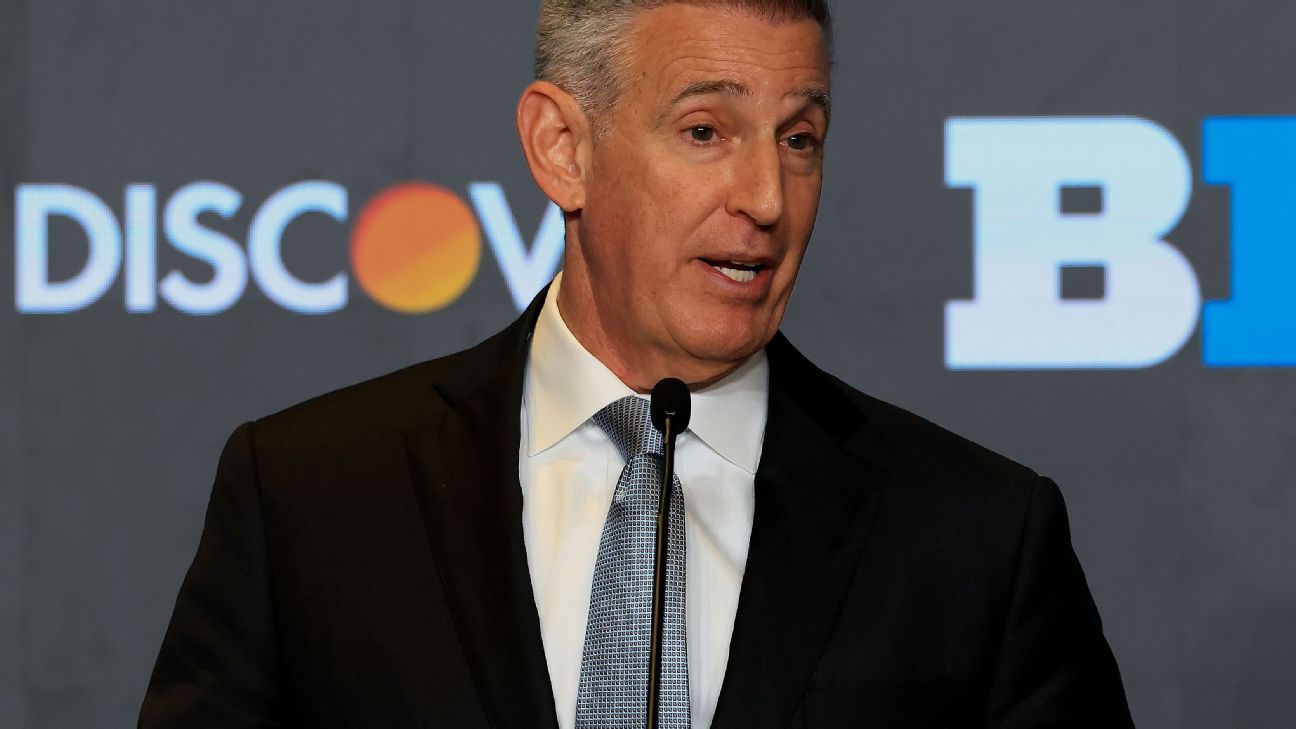
Tony Petitti spent the first day of Big Ten media days doing what Big Ten commissioners do best now: pressing the leverage button in public.
The message was plain. The Big Ten wants a 24-team College Football Playoff by 2027, and Petitti made it clear his league is still moving in that direction. He even said the faster the change comes, the easier it gets. That’s not commissioner-speak for “we’ll see.” That’s a clock ticking.
The timing matters. The sport is already living through a playoff transition, with the current format still relatively fresh and the next round of realignment politics always lurking. Petitti isn’t tossing out a random idea for debate club. He’s putting a stake in the ground while the Big Ten’s size, influence and TV pull give it enough weight to make everybody else pay attention.
The Big Ten is playing the long game
This is about more than adding teams to a bracket. It’s about control, access and protecting value in a sport that now runs on inventory. More games mean more content, more late-season relevance and fewer programs left praying for one perfect Saturday to salvage a season.
For the Big Ten, that’s a feature, not a bug. A larger field helps create a path for more of its teams, especially in years when the league is deep but not necessarily stuffed with national title contenders. That matters in a 16-team conference where the difference between No. 3 and No. 8 can be a single midseason stumble.
Petitti’s angle also fits the modern business model. The College Football Playoff is no longer just an event. It’s a product. Expanding that product means more games, more windows and more room to sell the sport as a national postseason instead of a gated club.
And yes, the Big Ten knows exactly what it’s doing by saying this out loud in July.
Why 2027 is the real target
The 2027 timeline is the part worth watching. That gives the sport a runway, which is exactly what these kinds of changes need. Nobody serious wants to jam a massive format shift through just to say it happened. The math, logistics and selection model all need time to catch up.
A 24-team playoff also forces a fresh conversation about byes, seeding and how much the regular season is worth. That’s where the resistance lives. Coaches will complain about preserving the sanctity of the schedule. Administrators will worry about turning November into an elongated qualification series. And plenty of fan bases will hear “24 teams” and immediately think the regular season just got diluted.
That argument has teeth. College football’s selling point has always been urgency. Every game can wreck your season. The risk in expanding too far is obvious: if too many teams can still get in, what’s the cost of a September loss? What’s the cost of a November loss? You can’t wave that concern away just because more schools want a postseason paycheck.
Still, the direction of travel is hard to miss. The playoff has already moved from exclusive to expansive. Petitti is simply saying the next step should happen sooner rather than later.
What this means for the rest of the sport
This is where the power struggle gets interesting. A 24-team format doesn’t just open doors for the Ohio State and Michigan Wolverines types of the world. It reshapes how the rest of the sport plans roster-building, nonconference scheduling and conference title race strategy.
More teams in means more wiggle room for programs in the second tier of the power structure. It also means the last two months of the season could become even more brutal in the best possible way, because the line between “in the hunt” and “playing for seeding” gets wider.
That creates winners and losers.
Winners: deeper leagues, brands with travel appeal, and schools that can sell a playoff path even after an uneven start.
Losers: the purists, the sleepwalkers in the middle, and any school that has built its identity around the old myth that an 11-1 record should be a golden ticket.
College football keeps acting like it wants the postseason to feel bigger and the regular season to matter the same. Those two things are fighting each other.
My read: the Big Ten knows the sport is headed here
I’ll be blunt: this is not the Big Ten floating a fantasy. This is the Big Ten trying to shape the final destination before someone else does it for them.
That’s how this league operates now. It’s the conference that helped force the sport’s latest financial and structural rethink, and it understands a basic truth — if you wait until everybody agrees, you’re probably already behind. Petitti isn’t just lobbying for more teams. He’s signaling that the Big Ten sees expansion as the natural endpoint of the way college football is being monetized.
I think that matters because this sport rarely reforms itself out of pure sporting logic. It reforms when the money, access and political pressure line up. That’s where we are. The playoff doesn’t need to be perfect to move. It needs to be sellable, survivable and fair enough that the biggest stakeholders can live with it.
And the Big Ten, for all the noise around it, has the muscle to make that happen.
The other leagues know it, too. That’s why Petitti’s words land harder than a standard media-days talking point. He’s not speaking into a vacuum. He’s speaking into a room full of people calculating how many slices they get if the pie gets bigger.
The next fight is already here. The bracket is just the headline version of it.
Watch the push, watch the counterpush, and keep an eye on how quickly the calendar tightens toward 2027. This one is not going away quietly.
More from Straight From The Bench
Comments
Join the conversation — sign in to leave a comment.
Sign in to commentRelated Stories
Iowa Football NIL Imbalance Warning: Ferentz Sounds the Alarm
Kirk Ferentz didn’t dress it up at Big Ten media days. He said the money gap in college football is widening, and the rest of the sport better notice.
Notre Dame jersey patch deal: why the Irish just won big
Notre Dame’s latest patch deal is more than a sponsor swap. It’s a signal that premium college brands can still dictate the market.
UNC Football GM Michael Lombardi Placed on Leave
Michael Lombardi’s sudden paid leave at UNC is more than an office move. It asks what kind of football program North Carolina wants to be — and who pays when the machine stalls.