
Braves Release Kyle Farmer: Atlanta’s Roster Squeeze Tightens
A routine move on paper, a small warning light in the clubhouse.
 Beatrice Kensington5 min read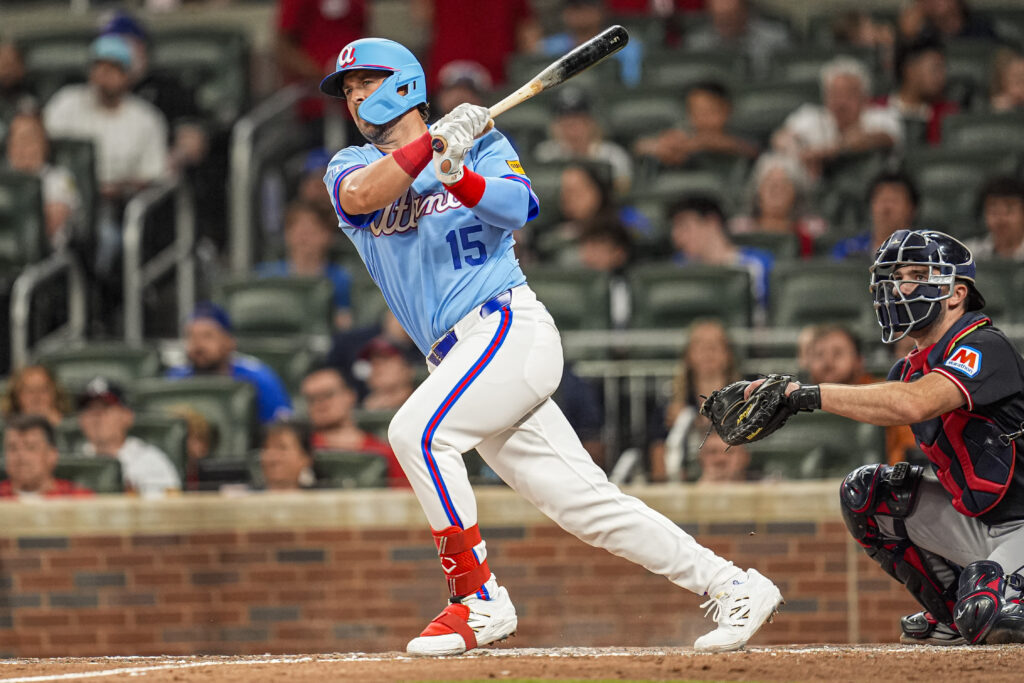
The Braves are not making a grand statement here, only one of those compact, almost clerical baseball decisions that tells you a great deal if you linger over it long enough. Mike Yastrzemski is back from the injured list. Kyle Farmer is gone. And in the tidy machinery of a contending club, the 26-man roster has once again revealed its coldest truth: somebody useful has to be cut loose so the next man can breathe.
Farmer’s release is not a scandal. It is not, in the strictest sense, even surprising. But it does speak to the pressure inside Atlanta right now, where marginal players are not being evaluated in the abstract; they are being measured against the immediate needs of a team that expects to live in October. The Braves have spent years building toward that standard. The bill comes due in moves like this.
A roster move with the feel of a verdict
Farmer arrived as depth, the sort of veteran infielder who can absorb innings, survive the daily grind, and keep a team from reaching too far down its organizational ladder. Those players matter more than fans often want to admit. They are the planks beneath a contender’s floor, the reason a club can withstand a week of sore legs or a month of bad luck without asking a minor leaguer to become something he is not.
But depth pieces live on a narrow ledge. Once a healthier, more established bat returns — in this case Yastrzemski, whose presence changes the shape of the bench — the arithmetic gets merciless. Atlanta chose the player who better fits the current construction, and Farmer became the odd man out. That is the business of a team that sees itself in the postseason mirror.
The Atlanta Braves have earned the right to be picky. They are not shopping for warm bodies; they are hunting for fit, versatility, and enough offense to survive the inevitable dead stretches of summer. If a player cannot clearly carve out a role, the club will not sentimentalize the spot.
What Mike Yastrzemski’s return changes
Yastrzemski’s reinstatement from the injured list is the real hinge here. A healthy outfield bat alters bench construction, late-game substitutions, and how the club manages days off for regulars. It can also push a utility infielder from “needed insurance” to “nice to have,” and in a tight roster ecosystem, that distinction is fatal.
This is the invisible economy of a contender. A club likes having a spare glove until it needs a little more thump. It likes the idea of flexibility until the lineup is being balanced against the bullpen, the schedule, and the next road trip. Then flexibility becomes a euphemism for scarcity.
Farmer’s departure, then, is less about a judgment on his character or professionalism than on the roster math around him. He was useful in the way many veterans are useful: dependable enough to keep the machine moving, limited enough to be replaced once the machine demands something more specific.
The hidden cost of “just a depth move”
Baseball teams talk endlessly about depth because depth feels like security. In practice, depth is often a waiting room. Players sit there in a kind of professional limbo, one illness, one slump, one rehab assignment away from being summoned — or erased. A release is business; it is also a human coda.
In a contender’s clubhouse, the difference between stable employment and a suitcase on the floor can be one healthy outfielder.
That line is the hard edge of it. Farmer will become a free agent, and while he is far from finished as a big leaguer, the market for veteran utility players is a cruel one. They are asked to be available, adaptable, and invisible until the moment they are needed. When the call comes, they must be ready to hit, field, and understand three different roles without complaint. When the call doesn’t come, there is very little noise.
Atlanta’s decision also hints at the broader strain of staying competitive in a National League race. The MLB season is not won by the glamorous names alone. It is won by the fine print — by the series in which a club can use the right bench bat, the right defensive replacement, the right platoon edge. The Braves know this better than most. Their recent years have been a master class in squeezing value from every corner of the roster. That kind of efficiency is admirable until it becomes ruthless, and then it is simply how championship teams survive.
My read: Atlanta is betting on certainty, not sentiment
I’ve always thought the most revealing roster moves are the ones that look administratively dull. They usually are not dull at all. They are the moment a front office chooses certainty over familiarity, ceiling over comfort, and a slightly cleaner fit over the quiet insurance of a veteran who has done nothing wrong. Baseball is full of these small evictions.
Farmer’s release carries the particular chill of a team that knows exactly where it stands. The Braves are not experimenting for the sake of it. They are trying to stack as many trustworthy pieces as possible around a core that has spent the better part of a decade raising expectations to a dangerous height. That creates a harsh standard for the fringes. The fringes are where careers bend.
And there is a larger lesson here for anyone reading the tea leaves of roster churn: in modern baseball, especially for a club with postseason ambitions, the bench is no longer a place for sentiment. It is a tool kit. If a bat does not fit the next inning, the next matchup, or the next injury, it can be replaced before it ever gets warm.
The Braves have made their choice, and it is a familiar one for teams carrying October aspirations. Keep the pieces that best serve the moment. Clear the rest. The calendar does not care who is popular in the clubhouse.
Farmer will land somewhere else, because players of his type usually do. Atlanta, meanwhile, keeps narrowing its margin for error. That is the price of ambition. And the season is still collecting it, one move at a time.
More from Straight From The Bench
Comments
Join the conversation — sign in to leave a comment.
Sign in to commentRelated Stories
Shohei Ohtani Injury Update: Dodgers Pause His Pitching Plan
Shohei Ohtani’s knee issue is now affecting more than one part of his game. The Dodgers are slowing the pitching side down, and that changes the whole calculus.
Caitlin Clark WNBA 3-Point Contest: Decline Shakes All-Star Weekend
Caitlin Clark’s decision to pass on the WNBA 3-Point Contest is bigger than one empty spot. It dents an All-Star Weekend the league hoped would orbit her gravity.

Dustin Poirier Bud Light Contract Cut: What the Split Means
Dustin Poirier says Bud Light ended the relationship immediately after his public drunkenness arrest. The UFC star’s brand value and timing now matter more than ever.