
Caitlin Clark WNBA 3-Point Contest: Decline Shakes All-Star Weekend
The league built the stage. Clark still chose not to walk onto it.
 Beatrice Kensington6 min read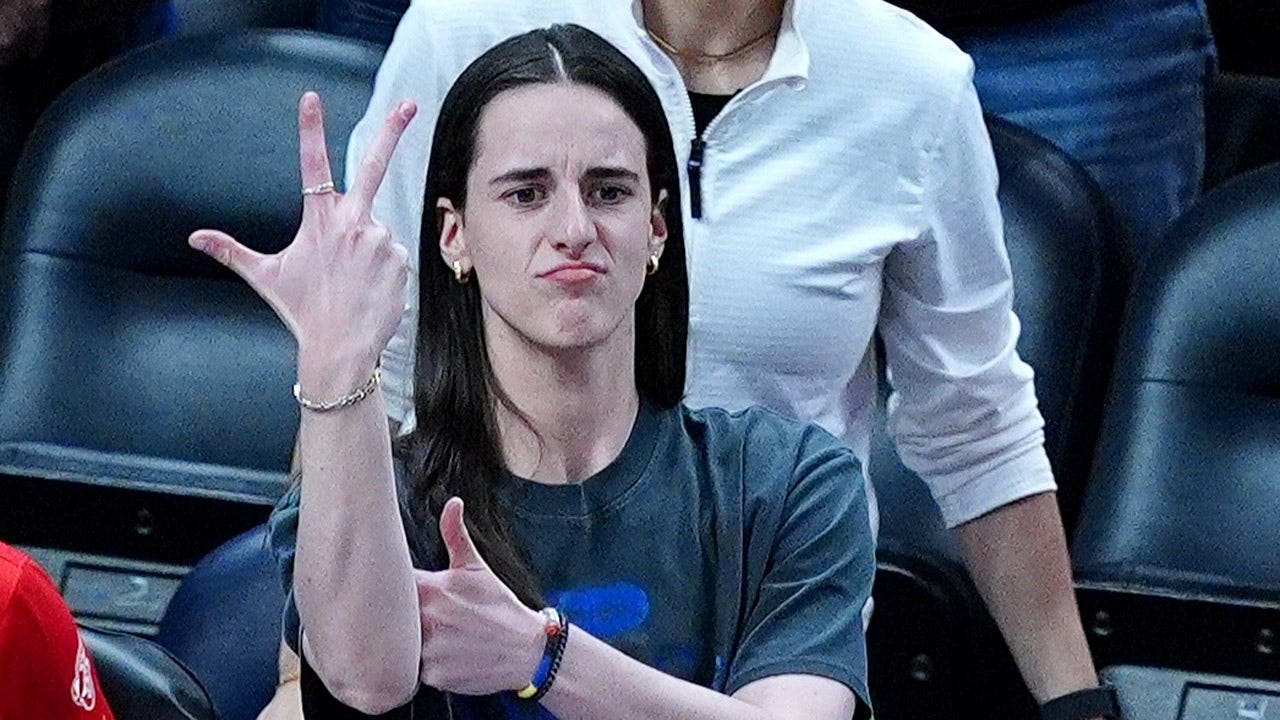
Caitlin Clark’s refusal to step into the WNBA 3-Point Contest was not a scandal, exactly. It was something more uncomfortable for the league: a reminder that even the brightest star in the sky does not belong to the people arranging the telescope.
The omission lands with particular force because the contest had been shaped, at least in spirit, around Clark’s long-range fame. The league had leaned into the spectacle of the deep ball, the logo drape, the crowd’s collective lean forward when she rises from several feet beyond the arc and sends the shot with that familiar, almost insolent confidence. And yet when the invitation came, the answer was no. Quiet. Firm. Costly, perhaps, for the weekend’s marketing plan.
The league wanted a coronation. It got a blank space.
There is no way around the business of this. Clark is not simply one of the Indiana Fever’s best players; she is the axis on which a great deal of modern women’s basketball now turns. Television numbers follow her. Arena crowds follow her. The argument around her, which is often as loud as the applause, follows her too.
So when the WNBA unveiled its 3-Point Contest field and Clark was not in it, the absence felt louder than an entry list usually has any right to be. This is the modern sports economy in miniature: visibility is currency, and Clark, whether she likes it or not, is the league’s most bankable bearer note. The league knows this. ESPN knows this. Fans know this. Clark knows it best of all.
And still, she declined.
The league can build the stage. It cannot force the star to perform on cue.
That is the sharp edge here. The WNBA has spent years — decades, really — fighting for oxygen in a sports landscape that still too often hands the loudest microphone to men’s basketball by default. Clark has helped change that atmospheric pressure. She has pulled more casual viewers into the room than any promotional campaign ever could. But a player, even a transformational one, is not a mascot. She is not obliged to serve as a prop for a bigger television moment.
What this says about celebrity, labor, and leverage
There is a temptation, especially in this country’s sports culture, to treat popularity as public property. Once an athlete becomes a phenomenon, we begin speaking as if the phenomenon belongs to the audience. We want the smile, the shot, the extra event, the little bit of theater that justifies our attention.
Clark’s decision pushes back on that habit. Maybe she wants rest. Maybe she wants to avoid another pressure cooker in a season already surrounded by scrutiny. Maybe the calculation is simpler: why volunteer for a contest that could reduce her to a single skill, when her value to the game is larger, messier, and more interesting than a shooting exhibition?
Any of those reasons would be reasonable. Athletic labor has a shape, and sometimes it needs borders. The WNBA’s calendar is not a museum of endless availability, and one player’s gravitational pull should not become a mandate for constant display.
Still, the league’s predicament is real. All-Star Weekend depends on faces as much as formats. If Clark is the face of the moment, the event is diminished without her. That is not a moral failing on her part. It is the consequence of a league that has, for good reason, chosen to ride the wave of her fame while also trying to preserve the dignity of a broader product. Those goals do not always travel peacefully together.
There is a parallel here to the way the sport has handled other transcendent figures. Superstars are asked, over and over, to become entire weekends. Sometimes they say yes and the machine hums. Sometimes they say no and the machine reveals its own fragility. The public rarely notices how much of an event’s glamour is borrowed from one player’s willingness to show up and make it glow.
Why the All-Star weekend blow is larger than one event
The practical hit is obvious. A WNBA All-Star Weekend without Clark in a marquee shooting event loses some of its shimmer, and perhaps some of its casual reach. The league had every reason to believe a Clark appearance would have become a social-media bonfire, the kind of clip that travels from basketball circles into the wider internet without asking permission.
But the deeper loss is symbolic. The WNBA has worked hard to sell not just one player, but a league of players. The problem is that mainstream attention is often lazy. It wants a shorthand, a single face, a single shot, a single storyline. Clark gave the sport that shorthand almost by accident, and now the league is learning the limits of any growth strategy that depends too heavily on one body, one jumper, one 22-year-old with a nationwide spotlight on her shoulders.
I think this matters because it exposes the tension at the center of the sport’s current boom. Growth brings money, but also expectation. It brings coverage, but also intrusion. It brings the long-awaited mainstream gaze, then asks players to absorb every demand that comes with being seen. That is not a fair bargain if the athlete never truly agreed to be the public’s answer to every promotional need.
And so yes, this is a blow to the weekend. It is also a healthy reminder that a league’s rise cannot depend on one star saying yes to every shiny invitation. The WNBA should want more than that. It should want depth, texture, rivalry, and time — the slower, sturdier building blocks of a durable audience.
Clark’s no is not a rejection of the league
It would be easy, and lazy, to treat the decision as a snub. That would make for tidy outrage and very little understanding. Clark declining the contest does not read, to me, like contempt for the league. It reads like a player drawing a line around her own workload, her own brand, and her own sense of what serves her best.
That line may frustrate people who wanted the show. It may irritate executives who were counting on a tidy highlight package. It may even disappoint fans who wanted to see the deep shots under a special-event spotlight.
But if the WNBA is going to grow into the fuller, richer league it deserves to become, it will have to survive the moments when its biggest name refuses to be drafted into every sideshow. That survival is part of maturity. Part of adulthood.
The league should take the message plainly: Clark is the engine of much of this new attention, not its property. Treat her like a centerpiece, yes. Do not confuse that with ownership.
More than one weekend in July will remember that distinction.
The contest goes on. The conversation does not end here. And the WNBA, finally powerful enough to feel disappointment, now has to prove it can keep building even when the brightest name in the room chooses to sit one dance out.
More from Straight From The Bench
Comments
Join the conversation — sign in to leave a comment.
Sign in to commentRelated Stories
NBA Summer League: 10 players who stood out in Las Vegas
Las Vegas gave the NBA its first real look at this year’s top lottery class and a few unexpected names. The early read: some stock is rising fast, and some front offices have homework to do.
Lu Dort Trade: Sam Presti Calls It a Financial Decision
Oklahoma City moved Lu Dort and got three second-round picks back. Sam Presti says it was about money, and in the NBA that usually means more is coming.
Thunder trade Lu Dort: Hawks land stopper, Mavs get Risacher
Oklahoma City moved Lu Dort in a three-team trade, sending Zaccharie Risacher to Dallas and reshaping the market around value defenders and young wings.