
Braves vs Phillies Wild Card: Riley's homer flips Game 1
Atlanta punched first. Philadelphia now has to chase the series, and that changes everything.
 Zane Miller5 min read
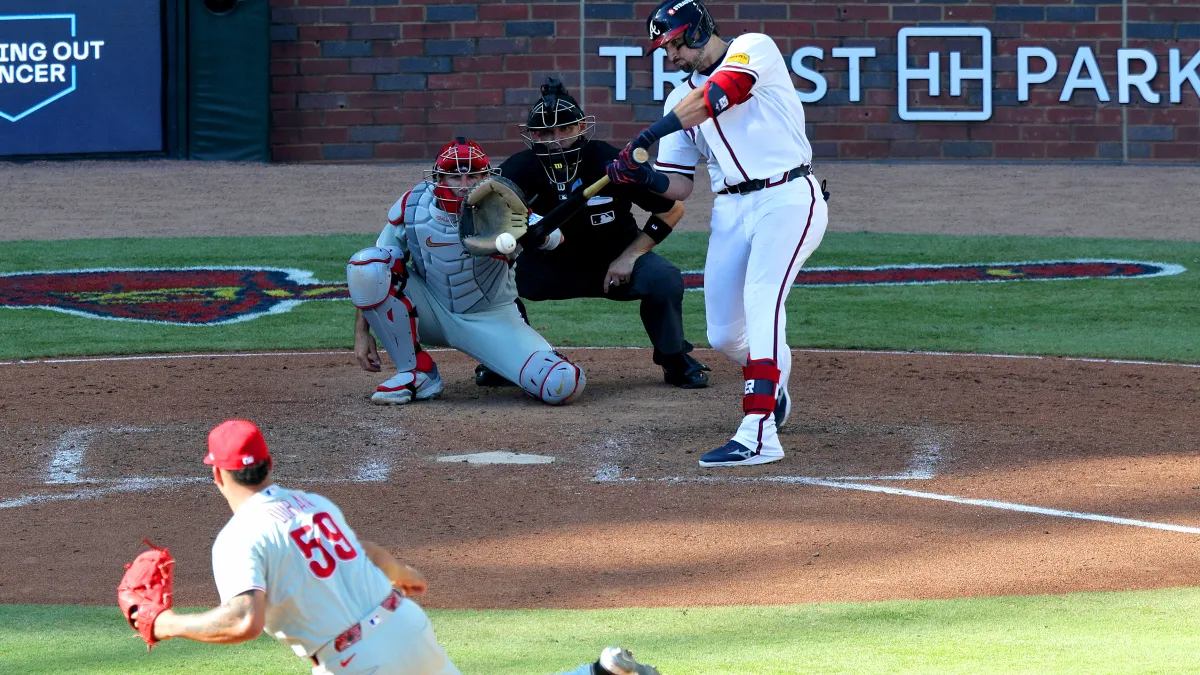
Austin Riley didn’t just hit a homer. He slammed the door on the kind of October game that usually hangs around until somebody blinks. Atlanta’s 5-3 win over Philadelphia in Game 1 of the Wild Card series was defined by one swing in the eighth, but the real story is bigger than that. The Braves got the first punch, the Phillies lost the cleanest path to control, and now the series shifts with all the weight that comes with it.
This is exactly why the Braves keep showing up in October with a very specific look: they don’t need the game to be pretty. They need one inning. One pitch. One mistake. Riley supplied all of it with a go-ahead three-run homer in the bottom of the eighth, and suddenly the home dugout had life, the stadium had volume, and Philadelphia was staring at the kind of loss that lingers overnight.
Riley changed the temperature in one swing
The score tells you this was tight. The swing tells you it was not.
A 5-3 game in a short series has a way of lying to you. It can look like a back-and-forth grinder on paper and still feel like a gut punch in real time. That’s what happened here. Atlanta stayed close, waited, and then cashed in when the opening appeared. Riley’s homer wasn’t just timely. It was the exact type of swing that changes how both clubs talk about the rest of the series.
And that matters because postseason baseball is a leverage sport masquerading as a nine-inning game. The team with the lead gets to manage stress. The team that blows the lead has to solve tomorrow on the fly. That’s a different mental tax, and in a three-game format, the bill comes due fast.
The Phillies now have the expensive kind of pressure
Philadelphia doesn’t have time to overthink this, but it also can’t ignore it.
Dropping Game 1 means the margin for error shrinks to almost nothing. The Phillies came in expecting to control the tone, especially with the way their roster is built for October violence: power, patience, and enough veteran edge to turn a series into a street fight. Instead, they now have to respond. That is the wrong direction for a favorite.
The biggest shift is not just tactical. It’s emotional. When a club like Philadelphia loses a game it should have had within reach, every plate appearance in Game 2 gets a little louder. Every runner stranded becomes a replay in the dugout. Every missed chance turns into a bigger conversation about approach, sequencing, and whether the offense is pressing.
That’s why the Braves landing first is a problem. A team with Atlanta’s lineup depth can win a game without being perfect. A team like Philadelphia often needs to force the issue early, especially in a compressed series where bullpen usage and pinch-hit decisions become chess moves by the fifth inning.
In October, the first clean swing usually matters more than the prettiest box score.
Why this series feels like a trap now
The best playoff teams do one thing well: they make the other side play their game.
Atlanta did that here. Not by flooding the bases or winning every inning, but by staying attached long enough to steal the leverage moment. That’s the trick in short-series baseball. Nobody remembers who won the second inning. Everybody remembers the one swing that changed the run expectancy and forced the opponent to answer.
For Philadelphia, the concern is simple: if the offense is going to lean on the long ball, it needs traffic. Solo shots are fine when you’re in control. They’re a lot less useful when you’re chasing a series. The Phillies can’t afford to become a team waiting around for the three-run swing, because Atlanta just showed what that looks like when it lands on the other side.
For the Braves, the formula is cleaner. They don’t need to win a track meet. They just need enough at-bats to create one late opening. That’s dangerous because it travels well, and it holds up under pressure. It’s also the kind of October identity front offices love because it doesn’t ask for a perfect roster day. It asks for one big inning and a bullpen that can protect it.
What it says about Atlanta’s October profile
I’ve said this for years: the teams that survive October aren’t always the most explosive. They’re the ones that know exactly who they are when the game tightens.
Atlanta knows. That’s the part contenders hate. The Braves have lived in this space long enough to understand that a postseason series is often decided less by talent gaps and more by who handles the late innings without panic. Riley’s homer is the visible part. The hidden part is the organizational confidence that comes from believing one swing can still be enough.
That’s a luxury and a warning sign for the rest of the field. When a lineup has that kind of latent power, every opposing manager starts managing with one mistake in mind. Pitching plans get conservative. Bullpen hooks come earlier. And suddenly the game starts bending around Atlanta instead of the other way around.
If you want the bigger picture, this is the kind of win that can snowball. Not because Game 1 decides the series on its own, but because it hands Atlanta the better emotional math. The Braves are now the club with the answer. The Phillies are the club trying to avoid the sequel.
What to watch in Game 2
The next game is all about response.
Can Philadelphia turn the page without dragging the eighth inning into the next night? Can Atlanta keep the pressure on without overplaying its hand? Those are the questions now. The scoreboard said 5-3. The real advantage is measured in calm, and Atlanta has it.
This series just got narrower for Philadelphia and wider for the Braves. That’s the October effect. One swing, one lead, one very uncomfortable night for the team that let it slip.
More from Straight From The Bench
Comments
Join the conversation — sign in to leave a comment.
Sign in to commentRelated Stories
White Sox vs. Astros Game 1: Chicago Ends Playoff Drought
Chicago opened its Wild Card series with a 6-3 win over Houston, snapping a postseason drought that had hardened into memory.
Braves vs Phillies Wild Card: Riley's homer breaks Game 1
Austin Riley’s three-run blast turned a tight October opener into a bruise. The Phillies now face a familiar and unforgiving truth: one bad inning can bend a season.

White Sox vs. Astros Wild Card: Hagen Smith, AJ Blubaugh Open Game 1
The Astros got here with a rotten record and a division crown anyway. Now they’re asking AJ Blubaugh to start the opener while the White Sox hand the ball to Hagen Smith.