
Chicago Sky Enes Kanter Freedom Ban: What It Says About the WNBA
A courtside confrontation turned into a boundary line the league would rather not redraw.
 Beatrice Kensington5 min read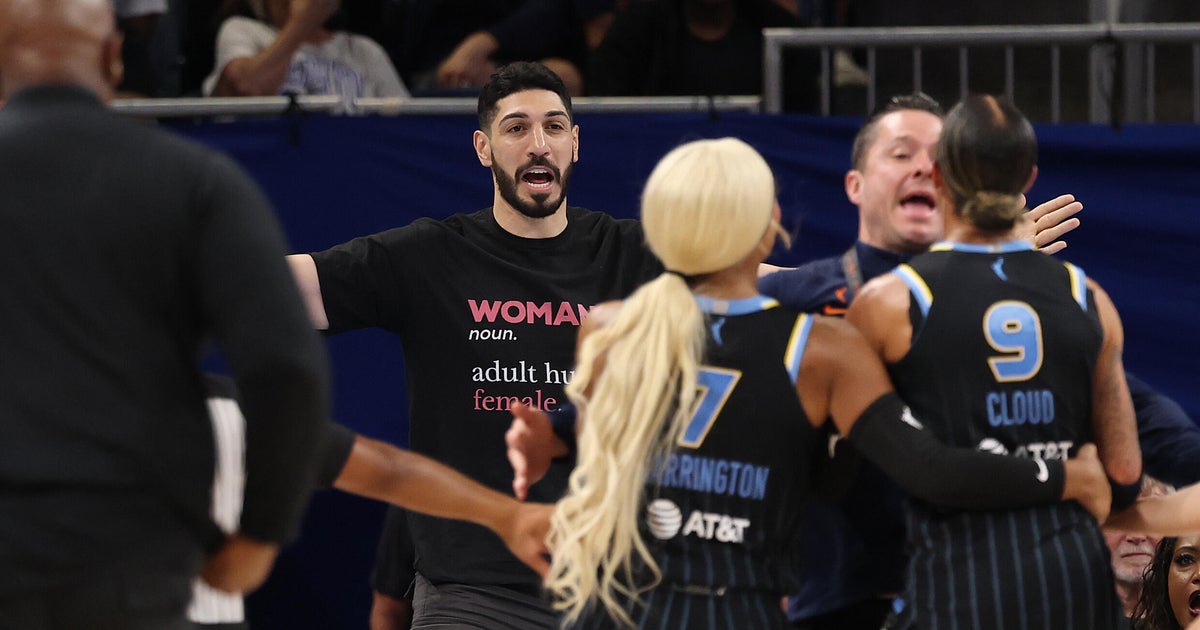
The Chicago Sky have drawn a hard line around their home floor, banning Enes Kanter Freedom from future games after Sunday’s ugly interruption against the Indiana Fever. It is the sort of decision that looks administrative on paper and political in practice, a reminder that the modern arena is no longer merely a place to watch basketball. It is a stage, a pressure cooker, and sometimes a court of public opinion with better lighting.
Freedom, the former NBA center whose name has become synonymous with public activism and confrontation, was removed from the game after a sideline exchange with Sky guard Natasha Cloud. The details matter here, because the center of gravity is not the score sheet but the atmosphere: a WNBA game that became, for a moment, less about ball movement and defensive rotations than about who gets to occupy space without turning it into theater.
The Sky are policing the perimeter
Michael Alter’s decision to bar Freedom from future home games was not a gesture made lightly. Teams do not usually invite more heat onto themselves unless they believe the alternative is worse. In this case, the Sky seem to have concluded that what happened Sunday crossed from uncomfortable into intolerable.
That boundary matters. Professional sports live on access — to players, to emotion, to the raw edge of competition — but access without limits can become a kind of license for disruption. The WNBA has spent years expanding its audience, broadening its cultural footprint, and making itself a destination for people who care deeply about the sport and, sometimes, about the arguments orbiting it. The league cannot afford to let every courtside feud metastasize into a sideshow.
There is also a plain competitive truth: the Sky, like every team, need their arena to feel like home. Not a seminar. Not a referendum.
Natasha Cloud, and the league’s culture of collision
Cloud is not the type of player to shrink from contact, verbal or physical. That is not a criticism; it is part of the résumé. She has built a reputation as one of the league’s sharper voices, the kind of player who understands that today’s women’s basketball is not only fought in the paint but in the public square. A confrontation involving Cloud was always going to carry more voltage than the average courtside dust-up.
The WNBA has never been a sterile product, and that is part of its appeal. It is intimate, emotionally charged, and increasingly visible. But visibility has a price. Every flashpoint gets magnified, then packaged, then re-litigated online until the original moment is almost lost. What began as a single removal can quickly become a broader debate about respect, safety, policing dissent, and who is allowed to speak loudly in a women’s sports space.
The league does not need more noise. It needs more control over the kind that actually affects play.
This is where the Sky’s move feels less like overreaction than self-preservation. A team can tolerate criticism. It cannot tolerate a home game becoming a weekly spectacle around one outside figure whose presence draws attention away from the players themselves.
The business of a loud league
The WNBA is in a strange and potent moment. Attendance is strong in the places that matter, the cultural interest is real, and the league has become a venue for larger arguments about gender, visibility, race, and power. Those debates can help build a fan base. They can also swallow the sport whole if every arena becomes a battleground for something other than basketball.
That tension is especially sharp in Chicago, where the Sky have had to navigate the demands of a growing league audience while still protecting the integrity of their own game environment. There is a reason teams establish conduct standards; not every uncomfortable guest becomes a banned one. But when a pattern begins to look less like fandom and more like provocation, the response gets firmer.
For a league trying to sell both excellence and access, this is a delicate balance. The WNBA wants to be open, vibrant, and culturally resonant. It also needs its players to feel protected enough to compete without treating every baseline interaction like a potential incident report.
I have covered enough sports to know that organizations rarely act this decisively unless they believe the event itself is becoming the story. And once that happens, the game has already paid a cost. In a lesser league, this would be dismissed as noise. In the WNBA, where every arena, every star, every confrontation is examined with a bright and often unsparing lens, the line between relevance and intrusion can vanish in an instant.
What this means beyond one arena
The broader question is not whether Freedom has a right to show up, nor whether players have a right to respond when they feel crossed. Those questions are already being answered in real time, and rarely cleanly. The larger issue is whether women’s sports can keep growing without allowing every charged personality to turn a building into a platform.
That concern is hardly unique to Chicago. It is part of the bargain of modern sports culture. The audience wants access to the human drama, but the athletes need enough peace to make that drama happen on the floor, not in the stands. The Sky’s ban is a signal to every other team trying to draw that line in an era when everyone believes they belong courtside and every disagreement arrives with a camera.
It also raises a harder, quieter point: women’s sports are no longer fighting for legitimacy in the old sense. They are fighting for control over the terms of their visibility. That is a different battle. And a more complicated one.
The Sky have chosen order over spectacle. They were right to do it.
Now comes the harder part: holding that line when the next noise arrives, and it will arrive soon enough.
More from Straight From The Bench
Comments
Join the conversation — sign in to leave a comment.
Sign in to commentRelated Stories
Caitlin Clark Arm Photo: WNBA Physical Play Debate Grows
A fresh photo of Caitlin Clark’s arms has put the WNBA’s physical edge back on the front burner. The league’s brightest star keeps taking a beating while still carrying the show.
Dallas Wings Playoff Berth: Paige Bueckers Reaches the Postseason
The Wings finished the job with force, beating Portland and locking down the WNBA’s last playoff spot. For Paige Bueckers, the wait is over.
Angel Reese WNBA rebounding record: 26 boards rewrite history
Angel Reese didn’t just have a big night in Atlanta’s win over the Sparks. She turned the glass into her own territory and set a new WNBA single-game rebounding record.