
College sports bill: Cruz and Cantwell back sweeping reform
A rare bipartisan lift for a system built on compromise and collision.
 Beatrice Kensington6 min read
College sports has spent years living in the fog between amateur idealism and professional reality, and now the fog is being pushed aside by a bill that tries to govern the game by statute instead of slogan. Senator Ted Cruz and Senator Maria Cantwell have released legislation aimed at reshaping the modern business of college athletics, and the very fact that it has the blessing of the two largest conferences tells you where the leverage sits. The power brokers want a framework. The athletes’ advocates want a different one. And somewhere in the middle, the old fairy tale about unpaid purity is finally being asked to leave the room.
The conferences want order; the athletes want a seat
The most revealing part of this push is not the bill itself, but who can live with it. The country’s biggest conferences, the kind that now operate less like regional associations and more like media empires, have seen enough legal drift to know that chaos is expensive. They want rules that can survive court challenges, create a stable recruiting market, and give schools some shelter from the endless whiplash of name, image and likeness disputes, transfer turbulence, and the broader threat of employment claims.
The opposition is just as instructive. Athlete groups and labor advocates do not hear “stability” and think fairness; they hear a chance to lock in a system before players win more of the rights that have been withheld from them for decades. That divide is the whole story. College athletics is not just a sports issue anymore. It is a labor issue, a governance issue, and, increasingly, a political one. The scoreboard is only the loudest part of it.
For context, the landscape has already shifted dramatically since the NCAA spent years insisting it could manage the future with selective reform. The modern era was cracked open by NCAA litigation, then battered by NIL realities, then scrambled again by the transfer portal. A bill like this is Congress stepping into a house already in partial renovation and deciding it would prefer the blueprints to stop changing.
A familiar bargain with a modern cost
There is a reason this matters beyond the statehouses and committee rooms. The largest conferences — especially those most often discussed in the same breath as television money and playoff access — have no interest in returning to the old amateur script. They are protecting inventory. They are protecting scheduling certainty. They are protecting the very architecture that keeps the whole enterprise valuable. If you want a reference point for how much has changed, look at the money orbiting the Big Ten Conference and the Southeastern Conference, where tradition now lives beside television windows and legal risk.
The bill’s backers understand a basic truth: college sports has become too lucrative, too visible, and too legally exposed to remain in a perpetual state of improvisation. Schools want a line they can read. Coaches want a line they can recruit from. Commissioners want a line they can defend in front of presidents and lawyers. What they do not especially want is a line that empowers athletes to bargain collectively in a way that could change the economic terms of the entire enterprise.
Stability, in college sports, often means the powerful have found a way to make uncertainty belong to everyone else.
That is the sharp edge of this legislation. The language may be about reform, but the stakes are about who gets to define reform. If athletes remain outside the room while the rulebook is rewritten around them, then the bill will look, to many of them, like a polished lock on an old door.
What this means for athletes, schools, and fans
Fans tend to want two things at once: a fair system and the comforting illusion that the system has always worked this way. Those desires collide constantly in college sports, where Saturday pageantry has been subsidized by an arrangement that asked players to absorb immense physical and commercial value without much control over the structure around them. The public has become more comfortable with athletes earning through NIL, but comfort is not the same as consent to a legal settlement that could limit future rights.
Schools, meanwhile, are desperate for predictability. Administrators are tired of living under a patchwork of court rulings, conference directives, state laws, and NCAA improvisation. Some of them genuinely believe that a federal framework is the only way to stop the bleeding. Others simply want fewer ways for power to move away from the institutions that have long held it.
This is why the bill’s coalition matters. Bipartisan support can give the appearance of inevitability, and in Washington that is often half the battle. But legislation in this space has a way of revealing who is willing to compromise and who is being asked to surrender. The last several years have taught athletes to be skeptical of any proposal sold as a final peace treaty.
I have watched enough college sports over enough seasons to know this much: whenever the language gets grand and the promises get clean, somebody is usually trying to preserve a broken hierarchy with better stationery. I do not doubt that some version of federal intervention is coming; the legal environment has become too unstable to ignore. But I do doubt that a bill written with conference approval and athlete resistance can be called a genuine settlement. A true settlement would not simply protect the largest stakeholders from the worst of the uncertainty. It would have to acknowledge that the players are not decorative participants in the business. They are the business.
That is where the politics of this moment become so revealing. Congress loves to arrive after the market has already transformed the field, then present itself as the only adult in the room. Yet college sports did not wander into this mess by accident. It was built, patiently and profitably, on a contradiction: insistence that the athletes were amateurs, while everyone around them behaved like professionals.
The road ahead is legal, political, and deeply personal
If this bill gains real traction, the next fight will not just be about whether the conferences endorse it. It will be about whether athletes, labor groups, and courts view it as protection or containment. Expect the rhetoric to grow more intense, because college sports always reveals the country’s favorite habit: moral language wrapped around money.
For the college sports audience, the immediate question is not whether change is coming. It is whether the change will arrive as shared governance or as a carefully managed truce for the institutions with the loudest microphones. That distinction will shape recruiting, roster building, and the next decade of competition.
The game is being redrawn in real time. The only honest question now is who gets to hold the pen.
More from Straight From The Bench
Comments
Join the conversation — sign in to leave a comment.
Sign in to commentRelated Stories
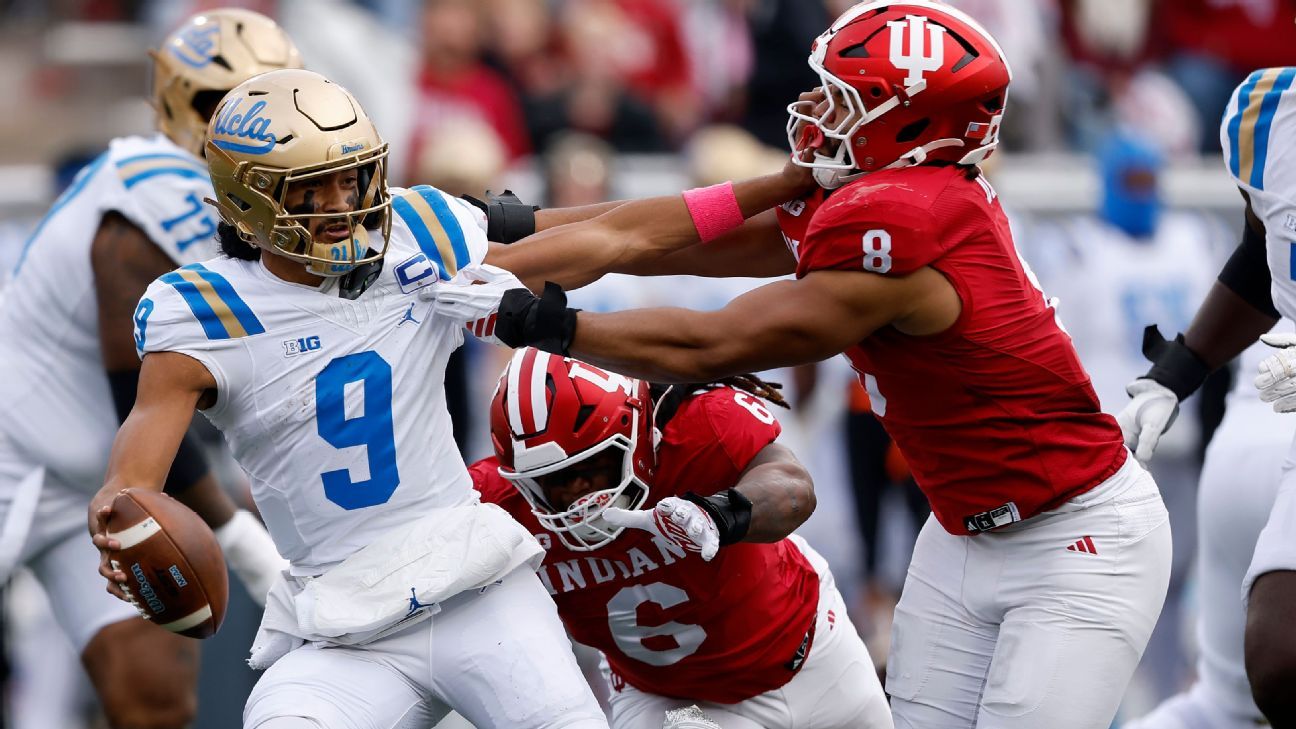
Indiana DL Stephen Daley Return: Hoosiers Get Fifth-Year Boost
Stephen Daley’s fifth-year return gives Indiana a proven Big Ten body up front and keeps the Hoosiers from starting over in the trenches.

Ohio State preseason Top 25: Coaches Poll puts Buckeyes No. 1
Ohio State opens No. 1 in the US LBM Coaches Poll for the first time since 2015, with the Big Ten and SEC stacked near the top. The preseason pecking order already has playoff implications.

Notre Dame vs USC Rivalry: College Football's 2030 Return
Notre Dame and USC are pausing one of college football’s cleanest annual tests, then bringing it back in 2030. That matters for scheduling, TV, and the sport’s identity.