
Cowboys Defensive Coordinator Christian Parker: Rough Start in Dallas
A familiar Eagles problem is spreading under the Lone Star lights.
 Beatrice Kensington5 min read
Christian Parker arrived in Dallas with the sort of résumé that usually buys a coach a little grace. Young. Respected. Connected to a proud defensive lineage in Philadelphia. Yet a few weeks into this marriage, the Cowboys are looking less like a team that hired a fresh set of ideas and more like one replaying an old cautionary tale at a higher volume.
The early results have been jagged, the kind of defensive football that leaves you checking the sideline not for answers, but for a plan. This is not merely about a coordinator being young on the job. It is about a franchise with a brittle sense of trust on defense, a team that can smell pressure in the walls and begins to twitch the moment the season stops feeling orderly.
Dallas did not hire Christian Parker to inherit a panic room
The Cowboys brought Parker in because the league now worships adaptability, and because the old certainties — disguise, pressure, communication, the ability to survive on Sundays against offenses that get every call in their favor — demand a teacher more than a cheerleader. The Dallas Cowboys have lived long enough with their own self-image to know that the expectation tax is real. In Dallas, a bad defensive series is rarely just a bad defensive series; it becomes a referendum.
Parker’s connection to the Philadelphia Eagles only sharpened the microscope. A coach who came out of that defensive ecosystem was supposed to bring some version of the discipline and structure that has made Philadelphia a persistent problem for the rest of the NFC. Instead, the Cowboys have looked loose in the wrong places, and loose defenses do not survive long in a conference where the best quarterbacks punish hesitation like a felony.
There is a difference between growing pains and identity drift. Dallas is flirting with the second.
The Sean Desai shadow is impossible to ignore
There is an almost cruel symmetry to this moment. The Cowboys did not go into the market for a reboot only to land back in the neighborhood of the same old questions. Sean Desai learned in Philadelphia how quickly a coordinator can become the most visible man in a collapsing room, even when the problem is broader than one headset. Parker now finds himself standing beneath a similar floodlight, where every busted fit, every late rotation, every pass allowed in the soft middle of the field feels personal.
In Dallas, a defense does not get judged by its intent. It gets judged by its scars.
That is the burden of coaching in a place where the brand is louder than the roster and the ghosts are never far away. The Cowboys have long sold themselves as a physical team, one that can bully you when it wants to. But modern defense is less about posture than precision. Miss your communication on third down and you are not just surrendering a conversion; you are feeding the emotional furnace that burns through an entire sideline.
The cruelest part for Parker is that he does not need to be perfect. He needs to be believable. Right now, Dallas does not look fully convinced.
What this means for Dak Prescott, Micah Parsons and the whole operation
The consequences travel well beyond the coordinator’s office. If the defense keeps leaking, Dak Prescott is dragged into games he would rather manage, not rescue. The rhythm of the offense changes. Decisions tighten. The margin for patience disappears. A team built to play layered football starts living in the hurry-up emotional state that so often belongs to lesser rosters.
And then there is Micah Parsons, whose brilliance can cover only so much broken plumbing. Elite defenders become more valuable, yes, but they also become more exposed when the structure around them is unstable. Parsons is the sort of player who should tilt the table. When the table itself is wobbling, even a force of nature can look overextended.
This is why early defensive failures carry outsized weight. They do not stay in their lane. They seep into game management, into snap counts, into how an offense handles field position, into the mood of a fan base that has seen enough promising starts collapse into autumn frustration. A shaky coordinator can become the first domino in a chain reaction that touches every unit.
I have seen this movie, and Dallas never likes the ending
I keep coming back to the old NFL truth that coaching reputations are often built less on what a man can design than on what he can repair after the first crack appears. That is where Parker is now. Not in catastrophe. Not yet. But in the dangerous middle ground where everyone can still imagine the fix, which is precisely when the league starts asking whether a fix exists at all.
My own read is that Dallas hired Parker for the same reason so many teams chase assistants with pedigree: they want fresh language without losing institutional memory. Fine. Reasonable. But the Cowboys have too often mistaken access to a good defensive tree for proof of a functioning forest. The NFL punishes that laziness. It punishes it hard. The league is a weekly audit, and coordinators rarely get to plead context for long.
Parker’s challenge now is not to prove he belongs in the building. It is to prove the building still stands on sound foundations. That means simplification if the calls are too ambitious, clearer answers on early downs, and an end to the sort of confusion that makes even talented players look like they are reading the play one beat too late. If Dallas gets that, the season can still bend back toward competence. If it does not, the story writes itself.
And in this town, stories like that do not fade quietly. They echo.
By next Sunday, the Cowboys need fewer excuses and more stops. Dallas can live with ugly. It cannot live with drift.
More from Straight From The Bench
Comments
Join the conversation — sign in to leave a comment.
Sign in to commentRelated Stories
Sean McVay overtime call: Rams coach regrets Bills loss
Sean McVay didn’t hide from it after the Rams’ overtime loss to the Bills. The call got cute, the kick got blocked, and the regret landed hard.
Fantasy Football Week 6 Defense Rankings: DST Streamers to Target
Week 6 defense ranks are a reminder that DST is about matchups, not logos. The right stream can swing a head-to-head before Sunday night.
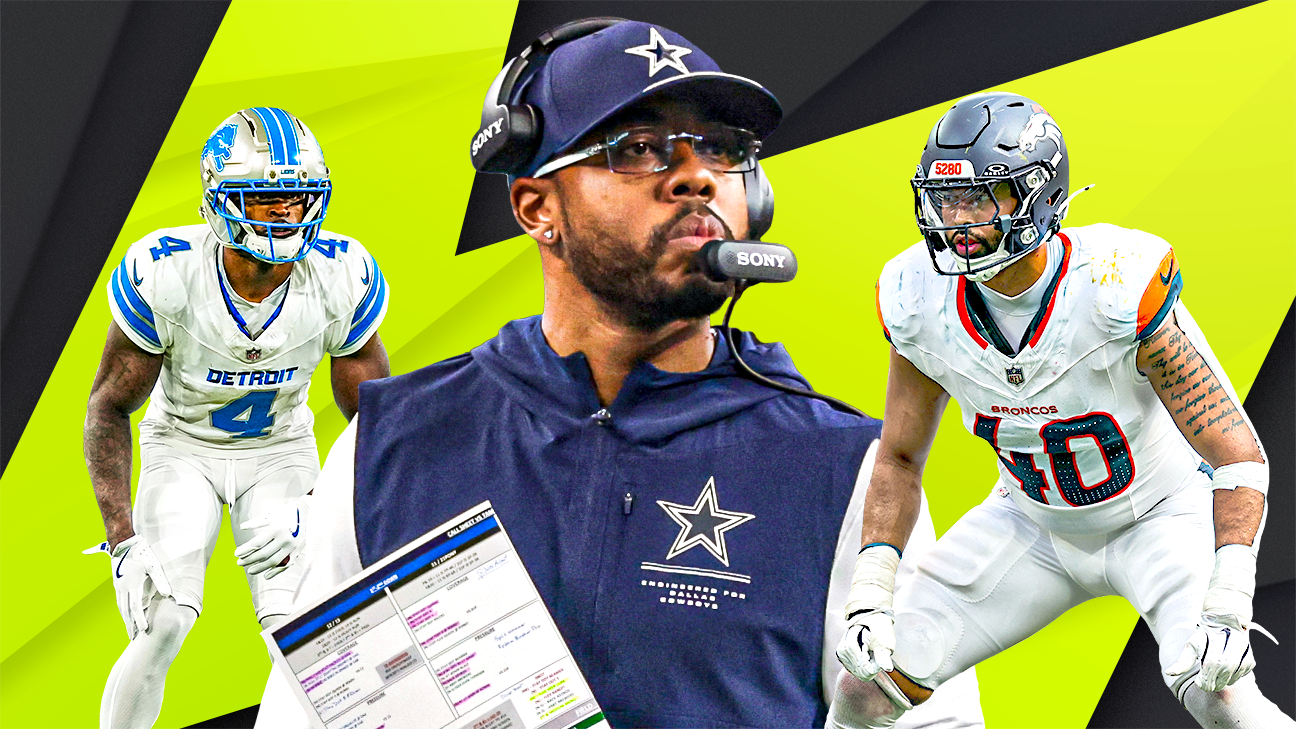
2026 NFL Power Rankings: Defense Is the Week 6 Mess
Week 6’s NFL stack is a noisy little snapshot: more offense, more busted coverages, and a whole lot of defensive problems nobody can hide anymore.