
Sean McVay overtime call: Rams coach regrets Bills loss
A gut punch in Buffalo, and a coach left staring at his own headset.
 Leo Lupo6 min read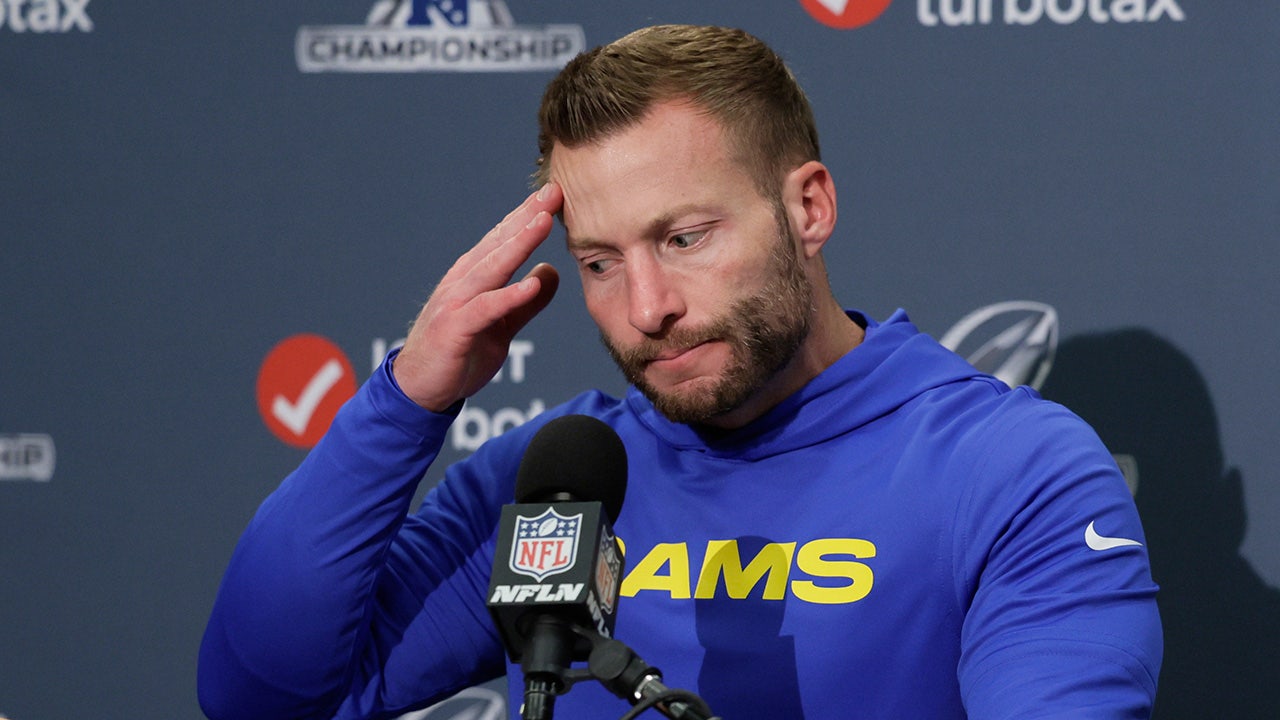
McVay took the blame, and he should
Sean McVay came out after the Rams’ overtime loss to the Bills and sounded like a man who’d just dropped a wrench through the engine block. “Sick” was the word, and it fit. You could hear the same thing in the way he owned the third-down call that helped set up the blocked field goal. No dancing, no coach-speak fog machine, no pretending it was some grand chess move gone wrong by a half-inch. It was a bad ending. The kind that sits on your chest all night.
That’s the part worth remembering here. Not the block itself — special teams chaos has a long and ugly NFL history, and Buffalo has lived through enough of those swings to know the smell of one coming. No, the real story is the decision tree before the kick. McVay put the game in a spot where one call, one protection flaw, one bad rep could swing the result. It did. Football still punishes arrogance faster than it rewards it.
If you want the broader backdrop, this wasn’t some isolated hiccup in a vacuum. It landed in the same ugly neighborhood as the kind of late-game second-guessing that’s been chewing up coaches all season. We’ve already seen how thin the line is in games like Ravens clutch win territory, where one sequence can flip a whole night and leave everybody arguing over one timeout, one formation, one inch of grass.
The third-down call is where the blame lives
Third down in overtime is where a coach either looks wise or winds up in the mud. McVay’s call didn’t just fail. It shortened the runway for the field goal unit and invited the kind of pressure that good defenses love to eat for breakfast. That’s the cold truth. In a league built on margins, you can’t always get cute and still expect the protection to hold up like a brick wall.
This is the old NFL lesson, the one teams relearn every few weeks like a drunk forgets his own tab. If you take points for granted, if you treat the operation like it’s automatic, the league will slap you with a hammer. A blocked kick doesn’t happen in a vacuum. It starts with the play call, continues with the setup, and ends with somebody in the backfield wearing the biggest grin of the night.
McVay’s problem is that his reputation cuts both ways. When it works, he looks like the smartest guy in the building. When it doesn’t, everybody gets a front-row seat to the same ugly question: did he outthink himself? This one sure smells that way.
Great coaches don’t just know when to push the button. They know when to leave the button alone.
Buffalo got the last laugh because it kept its nerve
Give the Bills this much: they stayed alive long enough to let the Rams crack under their own pressure. That’s not flashy, but it wins games. Buffalo didn’t need a miracle offense in overtime if the Rams were willing to hand over a bad sequence and ask the kick team to clean up the mess. That’s not how you survive in this league, and Buffalo knew it.
This is also where the Rams’ loss starts to sting in the standings and in the room. Games like this don’t just count once. They echo. They turn into the stuff players hear from coaches on Wednesday film and again on Friday when the practice noise starts up. “If we had one more clean rep,” “if we had one better call,” “if we’d just protected the edge.” That’s football’s favorite lullaby, and it puts teams to sleep if they let it.
Meanwhile, fans are left with the same old NFL medicine: one team celebrating a survival act, the other filing paperwork on a miserable what-if. For a coach like McVay, the scar tissue is different because the expectations are different. Nobody pays premium prices for “almost got it right.”
This is what pressure looks like on a modern coach
I’ve been around long enough to remember when coaches could hide behind a run game and a muddy field and call it strategy. Not anymore. The modern NFL has cameras on every sideline twitch and instant replays for every muttered curse. If you botch a late call, it’s on the screen before the echo dies in the stadium.
And that’s why McVay’s regret matters more than a simple blown overtime sequence. It tells you he knew the decision had too much risk baked into it. That matters. A coach can live with a loss. What he can’t live with, not for long, is the kind of game that makes everybody in the building stop trusting the finish. You lose enough of those and the locker room starts playing not to fail, which is another fine way to get run out of the building.
I’ve seen this movie with plenty of smart coaches. The smart ones eventually learn that late-game football is not a laboratory. It’s a bar fight with notebooks. You take the clearest path, the most reliable path, and you live with the result. McVay has earned the benefit of the doubt over the years, sure. He’s also earned the right to be judged like the big-brain coach he’s become. That means the bad ones count twice.
What comes next for the Rams
The Rams don’t get to spend all week admiring the bruise. They have to turn this into a clean answer, and fast. That starts with protecting the kicker better, which sounds basic because it is. It also starts with McVay simplifying the late-game menu when the margin is razor-thin. The league has enough ego in it already. You don’t need to serve extra sauce on a field goal attempt.
There’s also the human side, and it matters. A head coach publicly owning a mistake can steady a room if he does it the right way. Players know when they’re being sold a story. They also know when the guy in charge is looking in the mirror instead of pointing at the nearest scapegoat. McVay did the latter, and that buys him some credibility.
Still, this won’t vanish. It’ll follow the Rams until the next tight game, the next fourth-quarter clock burn, the next decision that asks whether the coach wants to trust his defense, his kicker, or his own hunch. That’s the business. One bad choice can become a season’s little ghost.
The Rams don’t need sermons. They need cleaner endings. And McVay, for all his polish, just got reminded that in this league the last call is the one folks remember longest.
More from Straight From The Bench
Comments
Join the conversation — sign in to leave a comment.
Sign in to commentRelated Stories

Cowboys Defensive Coordinator Christian Parker: Rough Start in Dallas
Christian Parker’s early days in Dallas already feel uncomfortably familiar. The Cowboys hired a coach with a promising résumé; what they have so far is a defense searching for its footing.
Fantasy Football Week 6 Defense Rankings: DST Streamers to Target
Week 6 defense ranks are a reminder that DST is about matchups, not logos. The right stream can swing a head-to-head before Sunday night.
2026 NFL Power Rankings: Defense Is the Week 6 Mess
Week 6’s NFL stack is a noisy little snapshot: more offense, more busted coverages, and a whole lot of defensive problems nobody can hide anymore.