
Cowboys Quinnen Williams Extension: Dallas Pays for the Middle
A massive check, and a loud declaration about what kind of defense Dallas wants to be.
 Beatrice Kensington6 min read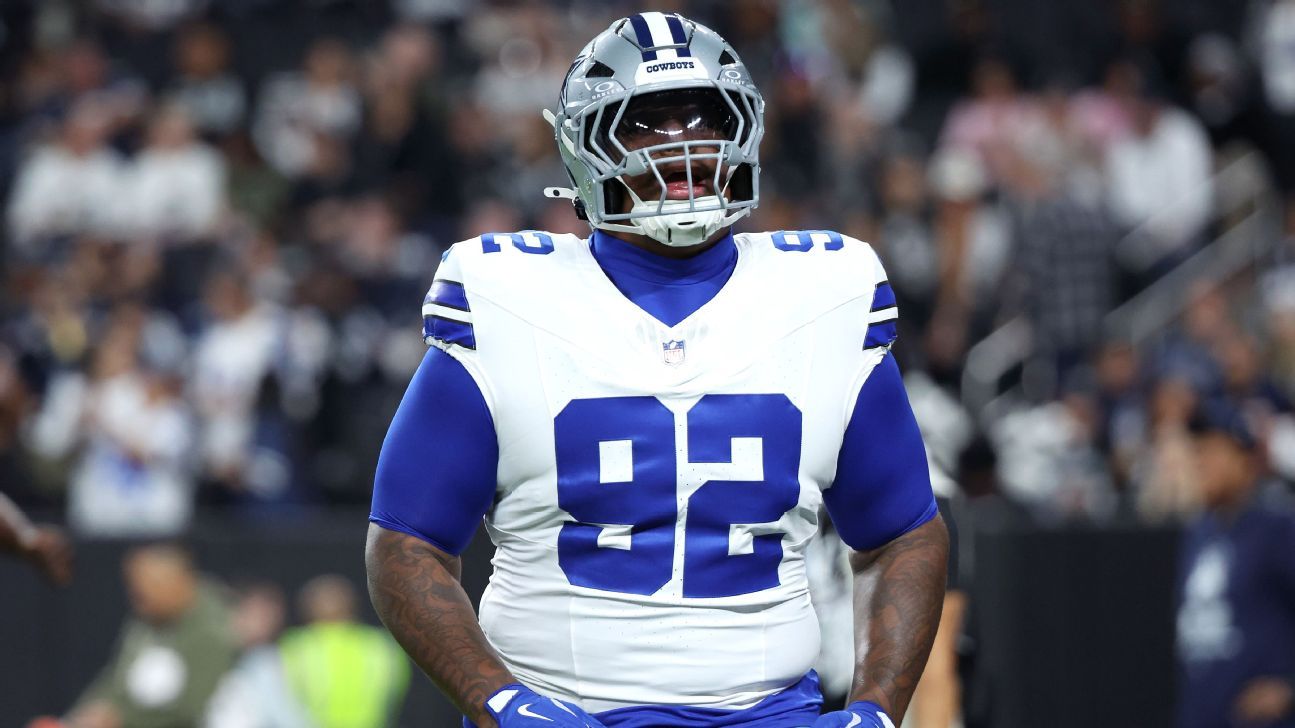
The Dallas Cowboys have done what ambitious teams eventually must do when they see a force they cannot casually replace: they paid it. Quinnen Williams, the kind of defensive tackle who changes the geometry of a play before the quarterback even reaches the top of his drop, has agreed to a three-year extension worth $105.9 million. The number lands like a hammer strike. It is not subtle, and it is not meant to be. Dallas has decided the middle of its defense is worth premium money, premium attention, and premium expectations.
For years, the Cowboys have lived with the tension that comes from being built around spectacle. Their roster tends to draw the eye toward the edges — the edge rushers, the cornerbacks, the star power that flashes on the periphery of the formation. Yet the truth of modern football is often uglier and more elemental. Games are won in the narrow, bruising space between center and guard, where a quarterback’s comfort can be stolen one shove at a time. Williams occupies that space with a sort of violent grace. He is not merely a run-stuffer, though he can anchor against the run. He is not merely a pass rusher, though he can collapse a pocket and force an offense to tilt protection in his direction. He is a disrupter, and disruption is a currency that never goes out of style.
Dallas finally pays for the place where games are bent
This is the kind of investment that tells you the front office is done pretending the roster can be assembled with half-measures. The Cowboys have spent enough seasons watching opposing quarterbacks grow comfortable against them, enough autumn Sundays where the defense looked formidable only until the moment a powerful interior lineman from the other side changed the temperature of the line of scrimmage. Williams gives Dallas something sturdier than a highlight and more valuable than a sack total. He gives them leverage.
That matters because the NFL’s most efficient offenses are built on speed and timing, but those things unravel quickly when a defense can force congestion from the inside. Edge pressure looks glamorous on television; interior pressure is what ruins lunch. It turns clean pockets into wobbling ones. It shortens route concepts. It makes play-action less elegant. It keeps quarterbacks from stepping into throws with confidence. In that sense, the Cowboys are not merely paying for a player. They are paying for stress.
There is also a broader roster truth here. Big-money defensive lines are never just about the man getting paid; they are about everyone around him. A tackle of Williams’ stature makes edge rushers more dangerous because the quarterback cannot simply drift away from the heat. He can make linebackers cleaner because guards have to stay home. He can make a defense feel more coordinated than it is, because the rippling effect of his presence touches every level behind him.
The NFL has become a league of accounting as much as accumulation. To keep your stars, you must decide what kind of star you are buying. Dallas is buying the kind that influences every snap, whether his name lands in the box score or not. That is a more mature use of money than a splashy one. It is also more demanding, because the return on investment can be measured in the ugly arithmetic of third downs and fourth-quarter leads.
Quinnen Williams changes the shape of the Cowboys' defense
Williams is now one of the highest-paid defensive linemen in the league, and that is not a ceremonial distinction. It places him among the defenders teams have to scheme around before they even take the field. For Dallas, that should mean fewer static answers and more variation up front. Stunts, twists, overloads, and disguised pressure packages all get a little more dangerous when the offense has to account for a centerpiece like this.
It also sharpens the pressure on the rest of the defense to be worthy of the contract around the line. A premium tackle cannot be asked to save a unit all by himself; that is how good investments become unfair burdens. The Cowboys need this move to unlock the secondary and widen the lane for everyone else to breathe. They need it to make their defense less dependent on perfect coordination and more able to survive imperfect Sundays, which are the only Sundays that matter in December.
The contract also speaks to the reality of the market. Elite defensive linemen are expensive because they are scarce, and scarcity gets costlier every year. That has been true across the league for a while now, from the way clubs chase pressure to the way they protect quarterbacks with nearly religious devotion. If you want a player who can wreck an offense from the inside, you pay like it. If you hesitate, somebody else eventually does. Dallas did not hesitate.
The Cowboys’ bet echoes a league-wide theme we have been seeing in other corners of the sport, too: teams are becoming less sentimental and more surgical about the premium positions that truly move outcomes. In that sense, the recent NFL shift around replay challenges and the broader chess match of decision-making feels of a piece with this one. Organizations want control, leverage, and fewer wasted possessions. They want every edge they can buy.
Dallas is not paying for a name on the jersey. It is paying to make the quarterback feel the game closing in.
The price tag carries its own kind of pressure
I have long believed there is a quiet taxonomy in football finances. There are contracts that reward production, contracts that chase hope, and contracts that announce an identity. This one leans heavily toward the last category. It says the Cowboys believe their defense should be built from the inside out, and that the center of the line deserves the kind of money usually reserved for the league’s most feared game-wreckers.
There is wisdom in that. There is also risk. Big defensive contracts can harden quickly into expectations that are impossible to satisfy if the surrounding cast is ordinary or the scheme is timid. Williams will be judged not only by tackles for loss or sack numbers, but by whether Dallas becomes harder to move, harder to rush against, and harder to survive in obvious passing situations. He will be measured in pressure rates, yes, but also in what the eye can see: linemen retreating, quarterbacks hurrying, coordinators reaching for answers earlier than planned.
That is the burden that comes with becoming one of the highest-paid players at your position. The money changes the conversation, but it also raises the standard for every conversation after it. Nobody will ask whether Dallas likes Quinnen Williams. They will ask whether Dallas built something durable enough around him to matter in January.
The answer will not arrive on a press release. It will arrive in muddy second halves, in red-zone stands, in a cold game where the pocket collapses and the season hangs on one snap. That is where this deal will be tested.
And that is where Dallas has chosen to place its faith.
The check is written. Now the defense has to cash it.
More from Straight From The Bench
Comments
Join the conversation — sign in to leave a comment.
Sign in to commentRelated Stories
Patriots Trade Caedan Wallace to Dolphins: Minor Deal, Major Meaning
The Patriots moved Caedan Wallace to Miami and added a sixth-rounder swap, then brought back long snapper Niko Lalos. Small moves, loud message.
NFL Replay Challenges: Coaches Can Now Delegate the Trigger
The league is handing coaches a little less chaos and a little more help. It might save a timeout, or it might just save a grown man from looking like he forgot his own job.

49ers Kyle Shanahan Tesla Crash: Autopilot and Responsibility
Kyle Shanahan says his Tesla was on Autopilot when he reached for a dropped phone and crashed. The damage is physical, but the larger warning is cultural.