
Daniil Medvedev China Open Disqualification: Djokovic Advances
A match that slipped from theater into farce — and Medvedev paid the price.
 Beatrice Kensington5 min read
Daniil Medvedev arrived in Beijing with the sort of combustible aura that turns a routine quarterfinal into a live-wire event. By the time his night ended in a disqualification against Novak Djokovic, the script had become stranger than the tennis itself. This was not one of those gray, debatable collapses that invites endless argument over line calls and body language. It was a hard stop. A match cut off by conduct, not by rhythm, and one more entry in the file marked Medvedev: gifted, infuriating, impossible to dismiss, impossible to fully trust.
The Russian has built a career on friction. He plays like a man who enjoys tilting the room, who can turn irritation into fuel and then into a ledger of winners. That edge has carried him to the top tier of the sport and kept him there. It has also made him a walking stress test for officials, opponents, and, on nights like this, himself. The 2024 China Open, staged at Beijing’s National Tennis Center), did not simply produce a result. It produced a reminder that talent without restraint remains a precarious bargain.
Djokovic benefits, but the larger story is Medvedev's leash
For Djokovic, this was the kind of passage through a tournament that champions accept without apology and rivals hate with good reason. At 37, every extra hard-fought set costs him something, even if his body and brain are still calibrated like a master watchmaker’s instrument. A disqualification removes the ambiguity of late-set pressure, the kind of toll that can show up two days later in the legs or the shoulder. He moves on, fresher than he might have been, and that matters in a stretch of the calendar where the margins are as thin as acetate.
But the more instructive figure here is Medvedev. He is not merely volatile; he is a player whose whole method depends on keeping a volatile state just below the boiling point. His best tennis often comes from a place of controlled irritation, a method of survival in a sport that rewards stillness and punishes public unraveling. The problem is that the line between sharpened and scorched is rarely visible until it is already crossed.
Medvedev does not just flirt with disaster; he courts it, then acts surprised when the bill arrives.
That is what made this so predictable, even if the precise shape of the punishment was not. Medvedev has long sold himself as the anti-prototype of the polished champion, the player who can be sardonic in defeat, icy in a dispute, and then charming enough in interviews to make the whole enterprise feel like a performance piece. He remains one of tennis’s most watchable figures because he seems to be playing two matches at once: one on the court, and one against his own nervous system.
The cost of being the sport's best agitator
There is a reason fans lean toward Medvedev even as officials brace for him. He is funny, lucid, self-aware in moments of calm, and often uncommonly honest about his own flaws. That helps. It buys patience. But patience is not immunity. The same qualities that make him compelling — the staccato pacing, the dark little jokes, the body-language eruptions, the sense that he is perpetually testing the temperature of the room — also make him vulnerable to nights like this one, when the room answers back.
I have long thought Medvedev is one of those athletes who reveals something uncomfortable about elite sport: we celebrate edge until it becomes liability, and then we pretend to be shocked by the outcome. He is not unique in this. Tennis has always contained players who lived close to the line, from the grand theatrics of John McEnroe to the more modern, subtler acts of abrasion that precede a racket toss or an official complaint. Yet Medvedev feels especially contemporary, a player whose volatility is folded into his brand and amplified by the relentlessly exposed nature of the sport itself.
That is what makes discipline such a cruel currency in tennis. You can win matches with serve, return position, pattern recognition, and nerve, but your temperament is always there in the background, waiting to be audited. There is no bench to cool you off, no teammate to absorb the momentum swing. One bad sequence, one argument stretched too far, one flash too many, and the whole evening can tilt from drama to damage.
Beijing is another lesson in how thin the line can be
For the tournament, this is a loss of oxygen. Medvedev is box-office because he brings complication, and complication is the lifeblood of the second week in a hard-court event. His absence from the finish line changes the texture of the draw, especially for the players now looking at Djokovic’s side of the bracket with a little more daylight than they expected. Tennis is full of these small weather shifts that only look minor until they alter a title run.
For Medvedev, the larger concern is not one match, but the accumulation. A player can survive one bad night; what becomes expensive is the habit of flirting with self-sabotage. The great champions have a way of learning how to keep their own fire in the fireplace, not across the curtains. Medvedev has not done that consistently enough. He still gives away too much emotional leverage to the court, the crowd, the chair, the moment, the invisible grievance that seems to follow him like a shadow.
And yet the fascination remains. That is the contradiction at the center of his career. Even in disqualification, he generates interest because he embodies tension so completely. He is a tactician and a temper in the same frame. He can frustrate a legend, delight a press room, and then turn a single lapse into a tournament’s defining image.
The next stop will tell us whether this was an ugly exception or another chapter in a familiar pattern. Either way, the sport’s most combustible polymath is once again left to explain himself. That, too, has become part of the show.
More from Straight From The Bench
Comments
Join the conversation — sign in to leave a comment.
Sign in to commentRelated Stories

Novak Djokovic China Open Title: No. 102 and the old order
Djokovic’s 102nd title is another rung on a ladder that seems to reach the rafters. Alcaraz’s Japan triumph reminds us the chase is no less serious.
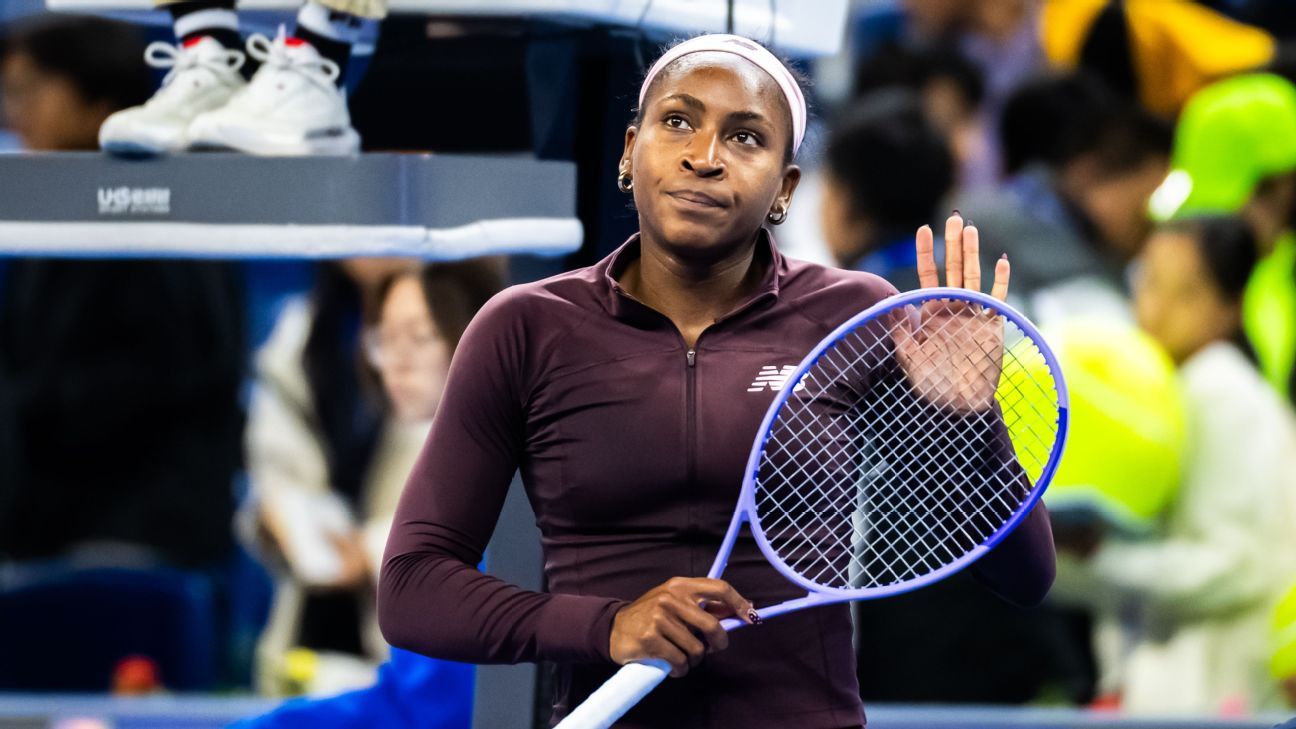
Coco Gauff racist comments after China Open match spark backlash
Coco Gauff says she was hit with an “insane” wave of racist comments after a disputed point in Beijing. The match is over; the noise around it isn’t.

Daniil Medvedev Disqualification: China Open Semifinal Blowup
Medvedev got himself tossed at the China Open after a ball into the stands struck a spectator. Djokovic moved on, and tennis got another reminder that control matters.