
Dean Kremer Trade to Twins: Why Minnesota Bet on Depth
A modest arm, a meaningful wager — and another reminder that pitching is never just pitching.
 Beatrice Kensington6 min read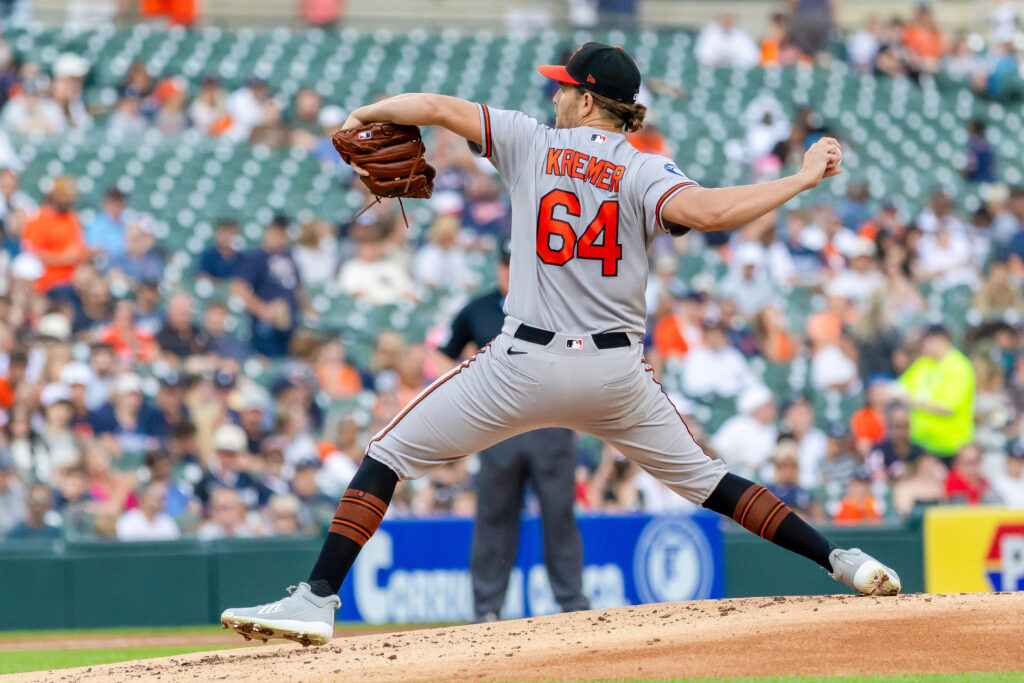
The Twins did not land a headline-grabber here, and that is precisely why the move deserves a second look. Dean Kremer is not the kind of starter who sets a winter hot stove ablaze or sells a season by himself. He is, instead, the sort of pitcher front offices keep circling when they are trying to patch innings without tearing up the budget. In a sport that often mistakes splash for substance, Minnesota has chosen substance.
Baltimore, meanwhile, has chosen the familiar language of roster management. The Orioles have become one of the cleaner-thinking organizations in baseball, and cleaner-thinking organizations tend to make transactions that can look cold from the outside and perfectly sensible from the inside. Dean Kremer moved to Minnesota for outfield prospect Jhomnardo Reyes, and that tells you the exchange was built on asymmetry: the Twins wanted present-tense innings, and the Orioles wanted future depth. No romance. No theater. Just the kind of baseball commerce that keeps both clubs awake into August.
Minnesota needed a starter who could take the ball
The Twins’ rotation has been forced to carry too much of the season’s emotional weight for too long. Pitching staffs do not merely absorb attrition; they are made visible by it. Every trip through a rotation reveals the seams, and the Twins have spent enough recent seasons watching those seams fray to know that a back-end starter can be the difference between a staff holding together and unraveling at the edges.
Kremer fits the brief. He is not arriving with the aura of an ace, nor should he be expected to wear that burden. What Minnesota gets is a starter with major-league experience, enough resilience to matter, and a profile that can steady a staff without demanding the franchise bend itself around him. After last night’s A.J. Minter deal, the message is plain enough: the Twins are collecting useful pitchers, not collecting applause.
That approach carries a certain wisdom. Teams too often spend themselves chasing the idea of a postseason rotation and forget that October is usually built in the small, unglamorous innings of May and June. The difference between a contender and a cautionary tale is often not the top of the staff. It is the fifth or sixth arm who can survive a day when the strike zone shrinks, the defense goes quiet, or the bullpen has already been taxed by the night before.
In baseball, depth is not a luxury. It is the tax you pay for surviving the calendar.
Baltimore keeps making the hard, unpretty choices
For the Orioles, this is the kind of deal that reflects where they stand in the sport’s life cycle. There is a point in a team’s rise when it stops being precious about every decent piece and starts asking whether that piece is blocking the next wave. Baltimore has reached that point, which is a sign of health even when it stings.
Kremer has been part of an Orioles pitching structure that has had to bridge development and competition at the same time. That is an awkward job. It asks a pitcher to be both dependable and disposable, both part of the present and a possible trade chip for the future. The front office has decided the prospect return mattered more. Whether Jhomnardo Reyes becomes a useful player or merely a name on a transaction log is unknowable now, but that is the currency of these moves. You buy uncertainty because certainty is too expensive.
Baltimore fans may grumble, and they would be justified in doing so if they feel the club has a habit of turning credible arms into abstract possibility. Yet this is also what ambition looks like from the inside. When a young team starts believing it can sustain contention, it begins to treat pitching not as sacred, but as renewable. That shift can be healthy. It can also become dangerous if the arms leaving never quite equal the ones arriving. The ledger always asks for payment.
The real question is what Minnesota thinks it is building
This trade says less about Kremer alone than it does about Minnesota’s self-image. The Twins are not behaving like a club that expects to win with a single, dramatic stroke. They are behaving like a team trying to widen the floor under a staff that has already shown it can be vulnerable. That is a grown-up move.
I have always thought the most revealing baseball transactions are the ones that do not flatter anyone. No one gets a parade for acquiring a fourth or fifth starter. No one frames the press release. And yet these are often the moves that keep a season from tipping into chaos when a club’s more glamorous plans go sideways. Minnesota has seen enough of that kind of fragility in recent years to know that the soft underbelly of a roster is usually where a season gets wounded.
There is also a broader truth here that front offices sometimes learn only after costly mistakes: pitching staff construction is less about perfection than about insulation. You want options before you need them, not after. You want an arm who can take a turn without forcing three others to do emergency labor. You want the freedom to survive the bad week, because the bad week always arrives.
A small deal with bigger implications for the deadline race
This is the kind of trade that can vanish under a pile of louder moves by Friday, which would be a mistake. Deals like this define the deadline ecosystem as much as the star-chasing blocks do. They tell us which clubs are insulating themselves against collapse, which clubs are converting present value into future assets, and which clubs believe they are still close enough to justify being aggressive without being reckless.
For Minnesota, the fit is obvious enough: add innings, preserve flexibility, keep the rotation from buckling. For Baltimore, the calculus is equally clear: move a useful piece, extract a prospect, and trust the machine that has made the franchise so much more interesting than it was a few summers ago.
The deadline will deliver its usual noise, of course. The big names will draw the cameras. The wider baseball public will talk itself into winners and losers before the dust has even settled. But the quieter trades often tell the more truthful story. They reveal the clubs that understand how thin the margin is between a season that breathes and one that gasps.
That is where this one lives.
Minnesota just bought a little more stability. Baltimore bought another roll of the dice. We will know soon enough which side found the better bargain.
More from Straight From The Bench
Comments
Join the conversation — sign in to leave a comment.
Sign in to commentRelated Stories

Jarren Duran Outburst: Red Sox Should Have Set a Harder Standard
Duran’s latest flash of anger deserved more than a shrug. The Red Sox keep talking accountability while acting like it’s optional.
Tarik Skubal Trade Rumors: MLB Deadline Dominoes Ready to Fall
Tarik Skubal chatter has the deadline market holding its breath. Now the real question is which club blinks first and starts the pileup.

Giants Harrison Bader Injury Update: Payment Suspension Explained
San Francisco’s decision to suspend payment on Harrison Bader’s contract turns a strange injury into a business matter. The baseball is simple; the human piece never is.