
Deebo Samuel returning to 49ers on 1-year deal: what it means
San Francisco keeps a familiar edge while betting on need, memory and one more run.
 Beatrice Kensington6 min read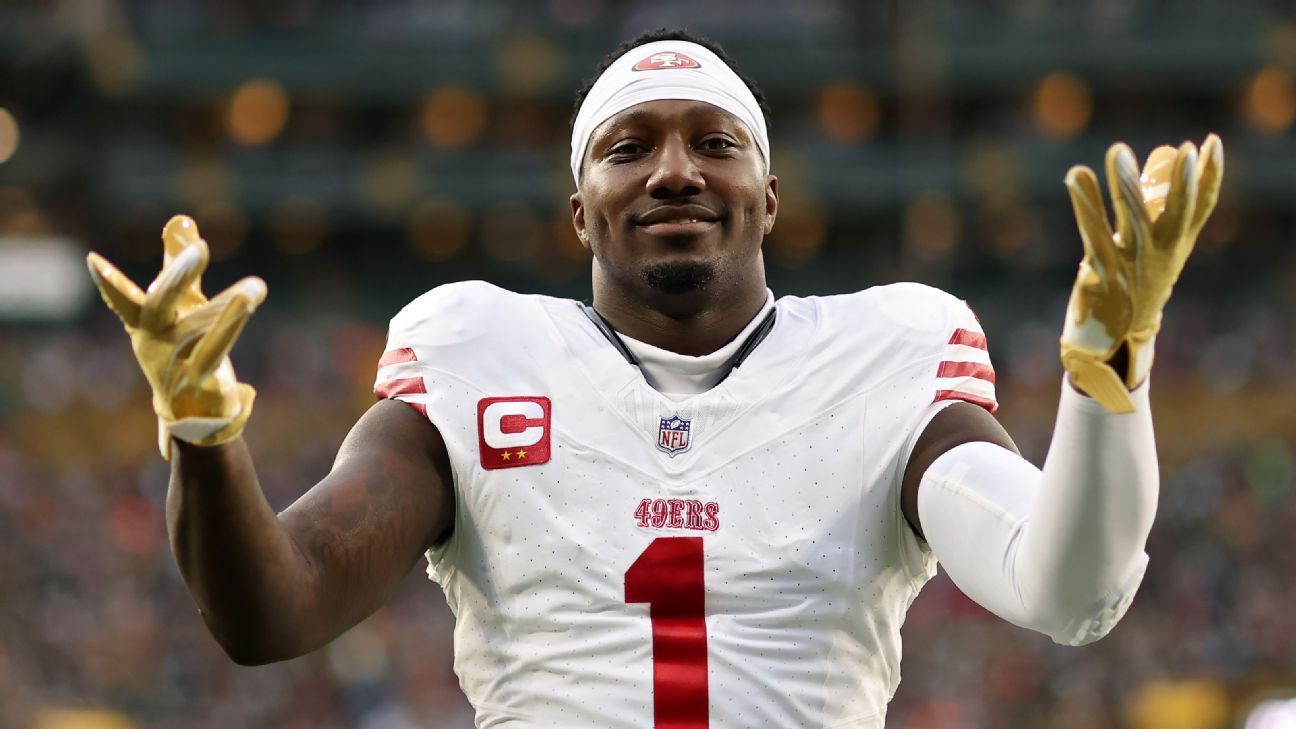
The 49ers have spent enough winters learning how thin the line is between ambition and attrition. So when news lands that Deebo Samuel is returning on a one-year deal, with the value potentially climbing to $7 million, it does not read like a sentimental reunion so much as a practical truce. San Francisco knows exactly what it is getting: a bruising, multipurpose receiver who can turn a shallow cross into a chain-moving uppercut, a player whose usefulness has always been measured not only in catches but in the gravity he bends around himself.
This is not the move of a team pretending to be finished. It is the move of a contender patching a familiar seam.
A reunion built on necessity, not nostalgia
The timing tells the story. With concern lingering around the status of receiver Ricky Pearsall’s injured right knee, the 49ers are leaning on a man who has lived inside their offensive language for years. In Kyle Shanahan’s system, familiarity is not a luxury. It is oxygen. Routes, motions, leverage, timing — all of it depends on players who can read the same script at speed, and Samuel has long been one of the few San Francisco weapons who can make the playbook feel elastic.
That matters because the 49ers are entering the season with the usual load of expectation and the usual threat of physical wear. They have been a team built on elegant violence for years, on the idea that if you can keep your best pieces on the field, the whole machine hums. But football is less a machine than a weather pattern. It shifts, it breaks, and then it asks you to improvise. Bringing Samuel back is an admission that the 49ers would rather trust a known storm than wait for the forecast to improve.
What Samuel still gives this offense
Samuel at his best is not merely a receiver. He is an argument against categorizing football too neatly. He has been a backfield runner, an intermediate target, a cracked-open red-zone option, and a player who can make defensive coordinators spend an entire Thursday night losing sleep over one motion across the formation. The San Francisco 49ers have always valued that kind of offensive disobedience.
What he may no longer be, at least not every week, is the sort of player who can carry a passing game by himself. That is where the one-year structure feels wise. The 49ers are not marrying themselves to a long decline curve. They are buying leverage, buying insurance, buying the chance that in the right moments Samuel still looks like the same problem he has always been for defenses: too strong for corners, too sharp for linebackers, too compact for safeties to tackle cleanly in space.
Short-term deals are sometimes the clearest sign a team still believes it can contend now.
The structure also hints at a broader truth about modern roster building. Clubs love continuity until it costs money; then they rediscover the poetry of “flexibility.” San Francisco’s move says both things at once. It keeps the door open for Samuel to be part of the offense without forcing the organization to pretend the future must be paid for with the same credit card as the past.
Pearsall’s injury and the 49ers’ depth chart reality
Ricky Pearsall’s knee situation is the kind of injury update that does not merely affect one player. It ripples. It touches target distribution, route hierarchy, and the fragile trust of a quarterback trying to identify reliable hands before the snap. When a young receiver’s availability is uncertain, the easiest instinct is to hope another young receiver can simply grow faster. The smarter instinct is to add a veteran who already knows where the doors in the offense are.
That is why Samuel’s return feels more consequential than a standard depth signing. It is not just about filling a roster slot. It is about preserving the identity of an offense that can look ordinary when the chain of trust is interrupted. The 49ers have enough talent to survive most regular-season turbulence, but the NFC is not a place where teams get many passes for uncertainty. The margin between a deep January run and a disappointing postseason exit is often a single injury, a single missed read, a single possession where a trusted player is no longer there.
For a club that also has to keep one eye on contract balances and long-term roster health, the move fits the same practical logic that shaped other recent decisions around the league. You can see similar roster calculus in the way teams make short, targeted additions when pressure mounts, whether it is the Baker Mayfield contract update in Tampa Bay or the stubbornly transactional mood that surrounds every MLB trade deadline prospects conversation. Different sport, same principle: continuity is cheapest when the stakes are highest.
Beatrice Kensington: the 49ers are choosing memory as strategy
I have long believed the NFL has a soft spot for amnesia disguised as reinvention. Teams spend fortunes trying to manufacture what they once had for free: chemistry, timing, institutional memory, the shared language that lets a third-down play feel inevitable before the ball is even snapped. Samuel’s return is a rebuttal to that vanity. The 49ers are not pretending they have discovered a new corner of football. They are reaching back to the part of themselves that once made them dangerous in the first place.
And yet there is melancholy in it, too. This is how contenders age. Not with one dramatic collapse, but with a series of practical compromises, each one sensible on its own, each one carrying the faint aroma of a team trying to keep the furniture from sliding when the floor starts to tilt. Samuel returning for a year suggests San Francisco still believes the window is open. It also suggests the window is no longer assumed to stay open on its own.
The league is full of organizations that mistake churn for progress. The better ones know when to call a familiar name.
What to watch once Samuel is back in the building
The first thing to watch is usage. If Samuel is immediately deployed as the same hybrid force he once was, that tells you the 49ers still see him as more than a situational fit. If his role is narrower, more scripted, then the signing may be less about fireworks and more about stabilizing the floor beneath the offense.
The second thing is how the ball gets distributed if Pearsall’s knee lingers. San Francisco does not need a hero so much as a dependable geometry. Someone has to occupy the defender’s attention, and Samuel has made a career of being the object defenses cannot quite solve. Whether he still has the same explosiveness is a fair question. Whether he still changes coverages is the one that matters most.
A year from now, this will either look like the kind of efficient veteran reunion that keeps a contender relevant, or the sort of nostalgic detour teams take when they know the cupboard is thinner than it used to be. For now, it is both a football move and a statement of intent.
The 49ers are not done trusting the old ways. And neither, apparently, are they ready to stop chasing the same finish line.
More from Straight From The Bench
Comments
Join the conversation — sign in to leave a comment.
Sign in to commentRelated Stories
Seahawks Training Camp Pads: First Full Hitting Day After Super Bowl
Seattle finally turned the volume up at the VMAC. Pads came on, the hitting started, and the first real camp tells you a lot about who’s ready.
Baker Mayfield Contract Update: Bucs Offered Two-Year Deal
The Buccaneers have put a two-year offer on Baker Mayfield’s desk, a signal that Tampa Bay wants continuity at the most fragile position in sports.
Chris Olave Contract Extension: Saints lock in their WR1
The Saints are betting big on Chris Olave, handing their top receiver a deal that can reach $132 million. It’s a roster signal as much as a payday.