
Dollar Tree 301 at New Hampshire: NASCAR Cup Series Race Updates
The Magic Mile arrives at a nervous moment, where playoff math and flat-track patience meet.
 Beatrice Kensington5 min read
New Hampshire offers no place to hide
The New Hampshire Motor Speedway has a way of sanding down illusions. At 1.058 miles, flat as a table and stubborn as old lumber, the track north of Concord asks drivers to earn every inch rather than bully their way to it. The Dollar Tree 301 is not a place for theatrical heroics so much as a test of discipline, rhythm, and the quiet cruelty of tire wear. On a weekend like this, the race does not merely reveal speed; it reveals temperament.
That is why New Hampshire so often feels bigger than its place on the calendar. The NASCAR Cup Series is reaching the narrow gate before the postseason, and the “Magic Mile” sits there like a stern examiner. A driver can enter with confidence and still leave with bruised points, a bent strategy, and a fresh understanding that short tracks reward the patient more than the loud. The race has a habit of making even seasoned teams look a little mortal.
The playoff pressure is doing its work
The timing matters because New Hampshire lands as one of the final real checkpoints before the Chase picture hardens. Every stage point can alter the shape of the field. Every restart can tilt the mood of an organization. And every pit call becomes a miniature act of faith. This is where teams begin to race the calendar as much as the cars.
That pressure changes how the race is lived. A driver running 12th may be having a better afternoon than a rival in second if the points table says the former is safe and the latter is skating on thin ice. This is the part of NASCAR that casual viewers sometimes miss: the race within the race, the quiet bookkeeping that can matter just as much as the checkered flag. The track itself encourages that kind of chess match. Passing is possible here, but never easy, and never free.
New Hampshire does not reward the loudest car. It rewards the most civilized chaos.
Flat-track patience is still a hard skill
The appeal of New Hampshire is not mystery. It is friction. On flatter ovals, the car must rotate cleanly, the driver must manage the throttle with exquisite restraint, and the crew chief must decide how much risk is worth the reward when the field cycles through pit road. That is a demanding little triangle of trust.
For fans, this is one of the sport’s more honest tests. Speed alone does not buy certainty. A fast car can be trapped by traffic, a strong restart can be undone by a single lapse entering turn one, and a team that overreaches can spend the afternoon clawing back what it should have protected. The track has the shape of a simple oval, but it behaves more like a long argument.
I have always believed these are the races that tell you the most about a title hopeful. Not the glamorous superspeedway wins, with their drafting roulette and their confetti of unpredictability. Not the road-course flashes, where specialists can ambush a field. A place like New Hampshire asks a different question: can you stay composed when the margins are microscopic and the afternoon keeps narrowing? That question has ended more championship dreams than the highlight reel ever remembers.
Who benefits when the track gets tight
The obvious beneficiaries at a place like this are the teams that can maintain balance over long runs and adapt quickly when the grip goes away. Drivers with soft hands and a taste for restraint often look especially strong here, because New Hampshire punishes impatience with almost educational severity. If the car steps out even a little, the wall and the apron are always waiting, patient as debt collectors.
That also means the race tends to expose organizations that have been floating on raw horsepower. The NASCAR garage is full of teams capable of looking sharp for a handful of laps. Fewer can stay sharp when the tires fall off, the lane choice gets weird, and the field compresses after a caution. New Hampshire is a useful truth serum.
If you want a broader frame for why this race matters, look at the recent season arc. Fans who have been tracking other storylines, including the fine margins and strategic turbulence that shape modern competition, will recognize the same theme in our coverage of the sport’s weekly pressure points — from the instability that can haunt a favorite, as in Max Verstappen’s Dutch GP crash, to the small resets that sometimes precede a cleaner run, as with Man City’s season reset around Erling Haaland. Different arenas, same old truth: when the margins shrink, identity shows through.
The Dollar Tree 301 is really about nerve
There is a temptation to treat a race like this as a clean data problem. Who had the best long-run pace? Who gained on pit road? Who made the least noise and therefore the fewest mistakes? All useful questions. None of them tell the whole story.
Because NASCAR is still, underneath the telemetry and strategy charts, a human contest. The driver has to absorb the contact, the disappointment, the frustration of getting boxed in behind someone slower. The crew has to stay calm when the day threatens to tilt sideways. The spotter has to keep the voice steady when the field stacks up like a deck of cards in a windstorm. New Hampshire strips the sport to its essentials and asks everyone to stand there in the bright light.
That is what gives the Dollar Tree 301 its edge. Not spectacle. Not volume. Pressure. The kind that settles into the shoulders and makes every decision feel a little heavier.
The race will sort itself out soon enough, and the leaderboard will tell part of the story. But the better lesson is already plain. At New Hampshire, the brave thing is often not the wild move. It is the measured one. The one made before the moment gets loud.
And when the laps wind down, that difference tends to decide who leaves with momentum and who leaves with regret.
More from Straight From The Bench
Comments
Join the conversation — sign in to leave a comment.
Sign in to commentRelated Stories

Max Verstappen Dutch GP Crash: Typical Driver Error Ends Home Run
Max Verstappen called his Dutch Grand Prix exit a plain old driver mistake, and that’s the nasty little truth of racing. One lap, one touch, one ruined home race.

IndyCar Washington DC Race: Freedom 250 Turns the Capitol Up
IndyCar is taking over the streets around the Capitol for a Fourth of July showcase that blends speed, politics, and pageantry. The setup is massive, the optics are louder, and the pressure is real.
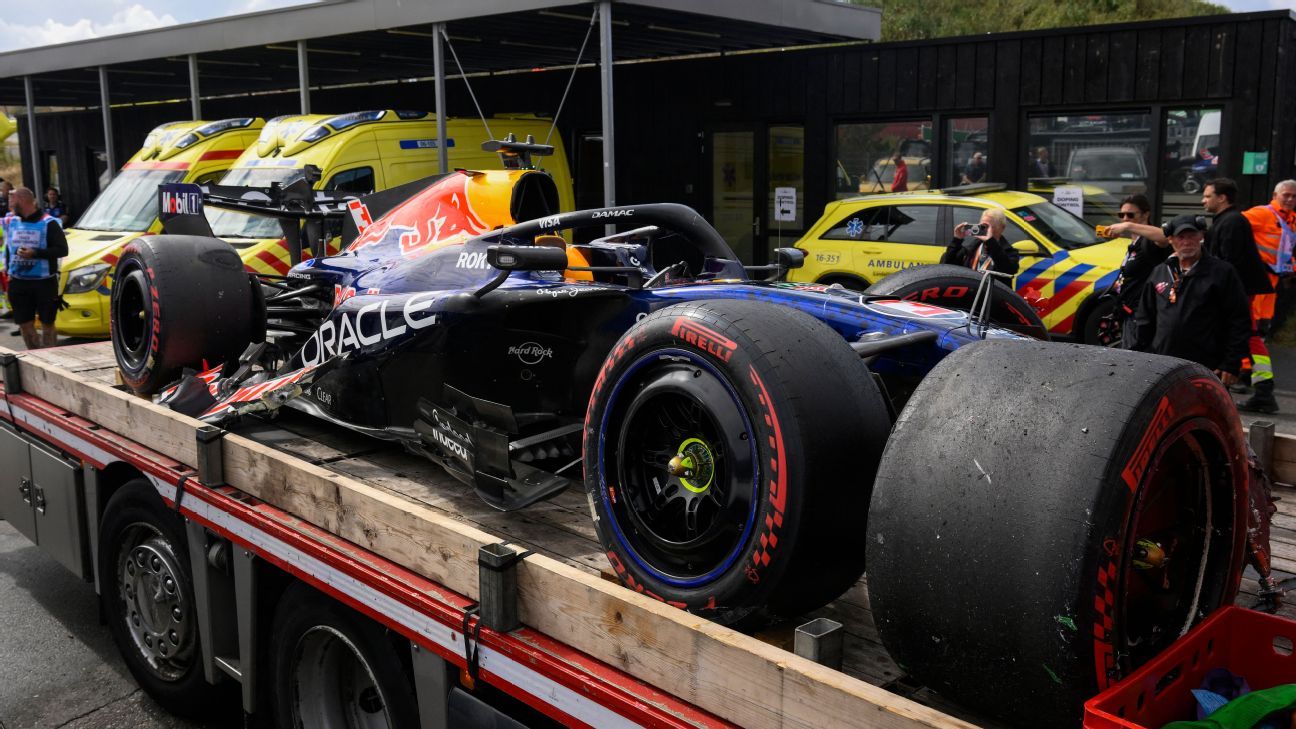
Max Verstappen Dutch Grand Prix Crash: Early Exit Shocks Zandvoort
Max Verstappen’s Dutch Grand Prix ended in the guardrails before it ever got rolling. A brutal reminder that even the king of Zandvoort can be humbled fast.