
IndyCar Washington DC Race: Freedom 250 Turns the Capitol Up
Street racing, spectacle, and a very D.C. kind of gridlock
 Zane Miller5 min read
When 185 mph meets the streets of Washington, D.C., you don’t get subtle. You get a rolling billboard of American spectacle, with the Capitol in the background and carbon fiber screaming past the National Archives Building. That’s the pitch for the Freedom 250 Grand Prix, and it’s the kind of event that only works if everybody involved understands the assignment: sell the sport, respect the setting, and don’t botch the moment.
This is not a normal street race. It’s a political-city race, a holiday race, and a TV race all at once. And those are three very different constituencies to satisfy.
D.C. streets are the headline, not the backdrop
The most obvious story here is also the most important one: IndyCar is trying to do something the sport rarely gets to do in a place this symbolic. These cars aren’t just racing past office buildings. They’re threading through one of the most recognizable urban canvases in America, with landmarks doing what they always do in these situations: making the cameras look bigger than the track itself.
That matters. Street races are already a premium product because they create visual chaos without sacrificing legitimacy. You get concrete walls, braking zones, strategy, mistakes, and all the little bits of tension that make open-wheel racing feel alive. Drop that into the heart of D.C., and the sport gets a stage that normal permanent circuits can’t touch.
The catch is obvious. Street racing in a city built for monuments, traffic control, and federal security is a logistics monster. It has to feel epic without feeling messy. If the event looks sloppy, the whole thing turns into a headache. If it works, it becomes the kind of annual date IndyCar can market for years.
The Freedom 250 is a branding play with real upside
The number 140,000 gets attention for a reason. That’s the sort of projected crowd figure leagues and promoters love because it instantly signals scale. More than that, it suggests this isn’t being treated like a novelty lap around Washington. This is a major event with tourist gravity, national symbolism, and a built-in holiday audience.
That’s where the business side gets interesting. IndyCar has spent years fighting for oxygen in a crowded American motorsports market where Formula 1 owns the global glamour lane and NASCAR still has the deepest domestic footprint. A D.C. street race gives IndyCar a chance to do what it often does best: present racing as accessible, fast, and deeply American without pretending it needs to be something it’s not.
There’s also the obvious optics play. A race near the Capitol on the Fourth of July is not accidental. It’s patriotic marketing wrapped in horsepower. For a series that survives on local promoters, strong host cities, and sharp television framing, this is the kind of event executives will point to when they talk about growth without having to invent a new buzzword.
If the race works, it won’t just be a novelty. It’ll be one of those rare events that makes people ask why it took so long.
Drivers will have to earn every inch of this one
Street circuits punish impatience, and D.C. is likely to be even less forgiving than the average temporary layout. The walls are close, the scenery is distracting, and the margin for error gets microscopic fast. That means the race should reward the drivers who can stay clean under pressure, manage tire falloff, and read chaos before it arrives.
That’s where the story gets more than ceremonial. A race like this can produce a legitimate competitive knife fight. Temporary courses tend to compress the field, especially when visibility, bumps, and braking zones get weird. Strategy suddenly matters more than raw speed. So does composure. So does the ability to survive the first 20 laps without turning a patriotic showcase into a caution-heavy mess.
For the drivers, there’s a career angle too. Big-event races are remembered differently. Win one in D.C., and that sticks. It becomes part of the résumé in a way a midseason oval win sometimes doesn’t. The backdrop does some of the memory work for you.
Zane Miller’s read: this is bigger than one race
I like this move more than most people probably should. Not because every city race automatically works — plenty don’t — but because motorsport in America needs fresh stages, not just more press releases. The sport has spent too much time preaching growth to people who already know where the entrances are. This one reaches beyond the core.
What I’m watching isn’t just whether the race delivers on Sunday. It’s whether the event feels like a proof of concept for a new kind of IndyCar presentation. The sport has a strong identity when it leans into precision, speed, and raw consequence. Put that against the civic theater of Washington, and suddenly you’ve got something with crossover appeal.
The best version of this is not a one-off stunt. It’s a template. Civic spectacle, real racing, and enough chaos to make people care without making the sport look toy-like. If you can pull that off in the shadow of the Capitol, you can sell just about any market on the calendar.
What to watch once the green drops
The first thing is simple: how cleanly the race starts. Temporary street events are often won or lost in the opening laps, when everyone is still figuring out grip and sightlines.
The second is whether the event can avoid becoming caution-dependent. Too many stoppages can flatten momentum and make a showcase feel brittle.
And the third is the one promoters care about most: what does the broadcast make this look like? Because if the cameras catch speed, landmarks, and pressure in the right balance, this race sells itself next year.
For now, the setup is enough to make noise. The real test comes when those cars fire off and Washington gets a reminder that its streets can host more than motorcades and protests.
On Sunday, the city becomes part of the race. That’s the point. And if IndyCar nails it, the Freedom 250 won’t feel like a one-day stunt. It’ll feel like the start of something bigger.
More from Straight From The Bench
Comments
Join the conversation — sign in to leave a comment.
Sign in to commentRelated Stories
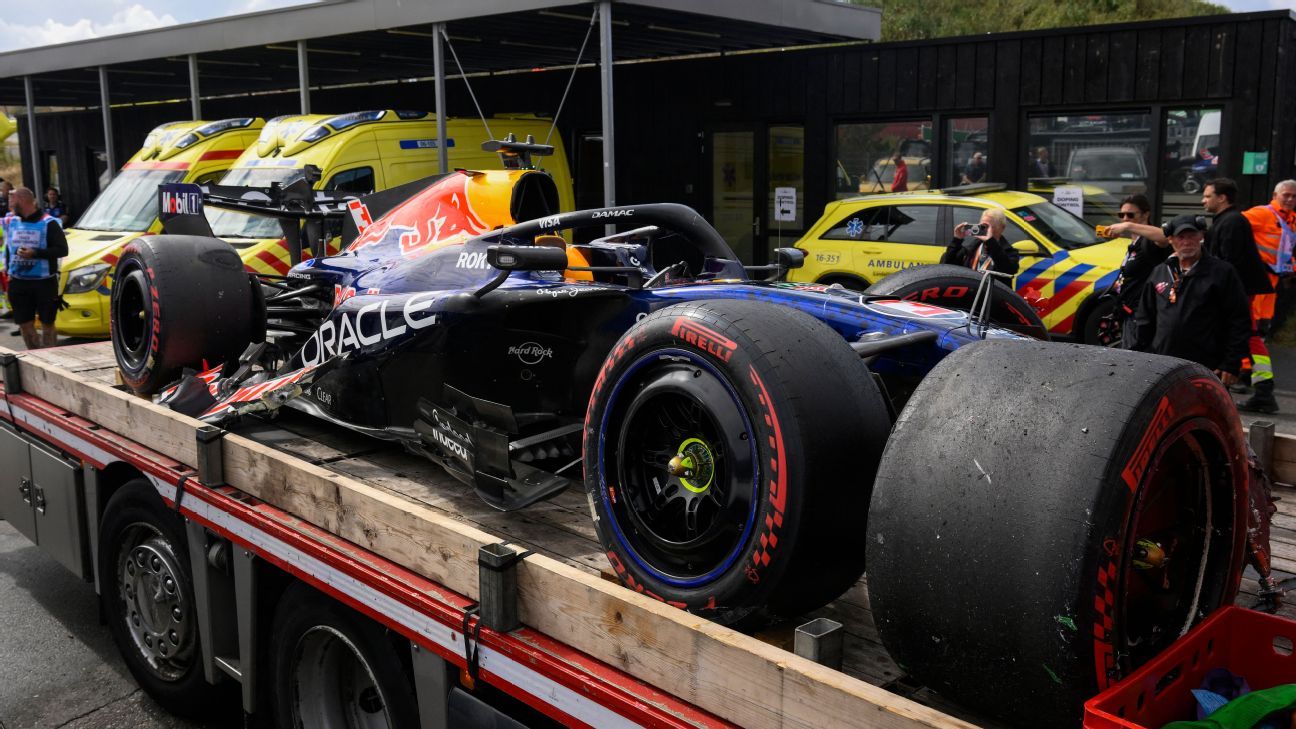
Max Verstappen Dutch Grand Prix Crash: Early Exit Shocks Zandvoort
Max Verstappen’s Dutch Grand Prix ended in the guardrails before it ever got rolling. A brutal reminder that even the king of Zandvoort can be humbled fast.
IndyCar Washington DC Race: Trump Kicks Off Freedom 250
IndyCar brings real velocity to Washington’s streets, with Trump set to kick it off from the Beast. It’s part race, part show, and all federal-stage theater.

NASCAR Practice Cheat Sheet: New Hampshire 10-30 Lap Speed Watch
New Hampshire practice is all about who holds up when the tires go away. The 10, 15, 20, 25 and 30-lap averages should tell the real story.