
NASCAR Practice Cheat Sheet: New Hampshire 10-30 Lap Speed Watch
The long-run numbers matter more than the shiny one-lap buzz at Loudon.
 Zane Miller5 min read
Loudon practice is where the weekend starts telling the truth
New Hampshire Motor Speedway doesn’t usually lie to you for long. A driver can flash in a single lap at Loudon, smile for the cameras, and still get swallowed alive when the run stretches out. That’s why the 10, 15, 20, 25 and 30-lap average chart matters here. It’s not a novelty. It’s the whole point.
This track has always rewarded patience, brake management, and a car that stays settled through traffic. In NASCAR terms, that means practice metrics are not just decoration for the fantasy crowd — they’re a map of who can actually race on Sunday. Short speed can hint at qualifying upside. Long-run speed tells you who can survive when the field gets stretched and the tires start talking back.
Why the long-run averages are the real cheat sheet
At a place like New Hampshire, the first lap times can trick everybody into overreacting. The surface is flat, the corners are rhythm-based, and the margin between “fast” and “fading” can be tiny. That’s where the 10-lap and 15-lap averages start separating the cars that look sharp in clean air from the ones that can hold pace under load.
By the time you get to 20, 25, and 30 laps, the conversation changes. Now you’re measuring balance, tire falloff, and whether a setup is built for one quick shot or an entire stage. That’s the stuff crew chiefs care about. That’s the stuff bettors care about. And yes, that’s the stuff fantasy players should care about most.
If you’ve watched enough of this track, you know the pattern. A driver with a respectable single-lap number can still be the wrong answer if the car gets loose off the corner after a dozen laps. The teams that hit on long-run pace usually do it with a car that doesn’t punish the driver every time the rear tires give up a little grip. That stability is everything here.
What to watch in the setup race
This is the part of the weekend where the garage starts narrowing the field. Teams aren’t just chasing speed; they’re chasing predictability. A car that rotates too freely early often pays for it late. One that’s too tight can be a brick for the first half of a run and then never recover the track position it lost.
New Hampshire has never been a pure horsepower track. It’s a handling track, and handling tracks always make the same point in different ways: if the driver has to overwork the car, the long-run averages will expose it. That’s why the best practice sheet is the one that shows which cars are still in the conversation after 20-plus laps.
For the playoff-minded teams, this matters even more. Loudon can hand out stage points and race position to the cars that stay composed. A fast qualifying run helps, sure, but the ability to keep the left-side tires alive and maintain corner exit speed is what turns a decent afternoon into a trophy shot.
At New Hampshire, the stopwatch on lap one is entertainment. The stopwatch on lap 30 is evidence.
The fantasy angle is baked into the data
I know how this game goes. Everybody wants the highlight lap. Everybody wants the pretty number. But practice sheets built around 10-30 lap averages are where the edge lives. That’s especially true at a short, flat oval where race flow can be messy and track position can harden fast.
If a driver is top-tier in the short run but drops off badly by lap 20, that’s a red flag for Sunday value. If another driver is quietly strong across the longer averages, that’s the kind of profile that tends to return both place-differential upside and stage consistency. You don’t need a heroic lap to matter at New Hampshire. You need a car that doesn’t evaporate when the run gets real.
For anyone tracking the broader NASCAR weekend, this is also a reminder that practice still has teeth. It’s easy to dismiss it in the age of sim models and data feeds, but the garage hasn’t changed that much. The people making decisions still care about feel, tire wear, and whether the car drives the same way on lap 25 as it did on lap 5. The sheet just translates that into something the rest of us can use.
My read: trust the car that stays calm, not the one that peeks
I’ve covered enough of these Loudon weekends to know the trap. A flashy first impression can send people chasing the wrong name all afternoon. The better bet is usually the driver whose average speed barely falls apart as the run gets longer. That’s not sexy. It’s not supposed to be.
What this track has taught me over the years is simple: the fastest car in practice is not always the best car in the race. New Hampshire rewards the one that can keep making the same corner over and over without the driver fighting it every lap. That sounds basic. It’s also exactly why so many Sunday predictions get blown up by the third stage.
I’d lean into the teams that show balance across the full range of runs, especially if their 20-lap and 30-lap numbers stay competitive. That’s the profile that travels. That’s the profile that survives long green stretches. And that’s the profile that usually ends up looking smarter than the headline lap once the race starts throwing elbows.
The real decision point comes after the long runs settle
Practice at New Hampshire is less about bragging rights and more about identifying who has the race car, not just the fast lap. If the 30-lap average holds up, that’s the kind of signal worth following. If it drops off a cliff, no amount of hype is going to patch it by Sunday.
The chart will sort itself. The only question is whether the market notices before the green flag.
More from Straight From The Bench
Comments
Join the conversation — sign in to leave a comment.
Sign in to commentRelated Stories

F1 Dutch Grand Prix Pole: Norris Edges Russell at Zandvoort
Lando Norris grabbed pole at Zandvoort, beating George Russell and putting Kimi Antonelli in the top three. The title race just got another layer of dust on it.

Dutch Grand Prix Qualifying: Russell Splits McLarens at Zandvoort
Russell put Mercedes in the middle of a McLaren sandwich as Zandvoort’s qualifying picture sharpened. Verstappen still looms, but the margins are thin and unforgiving.
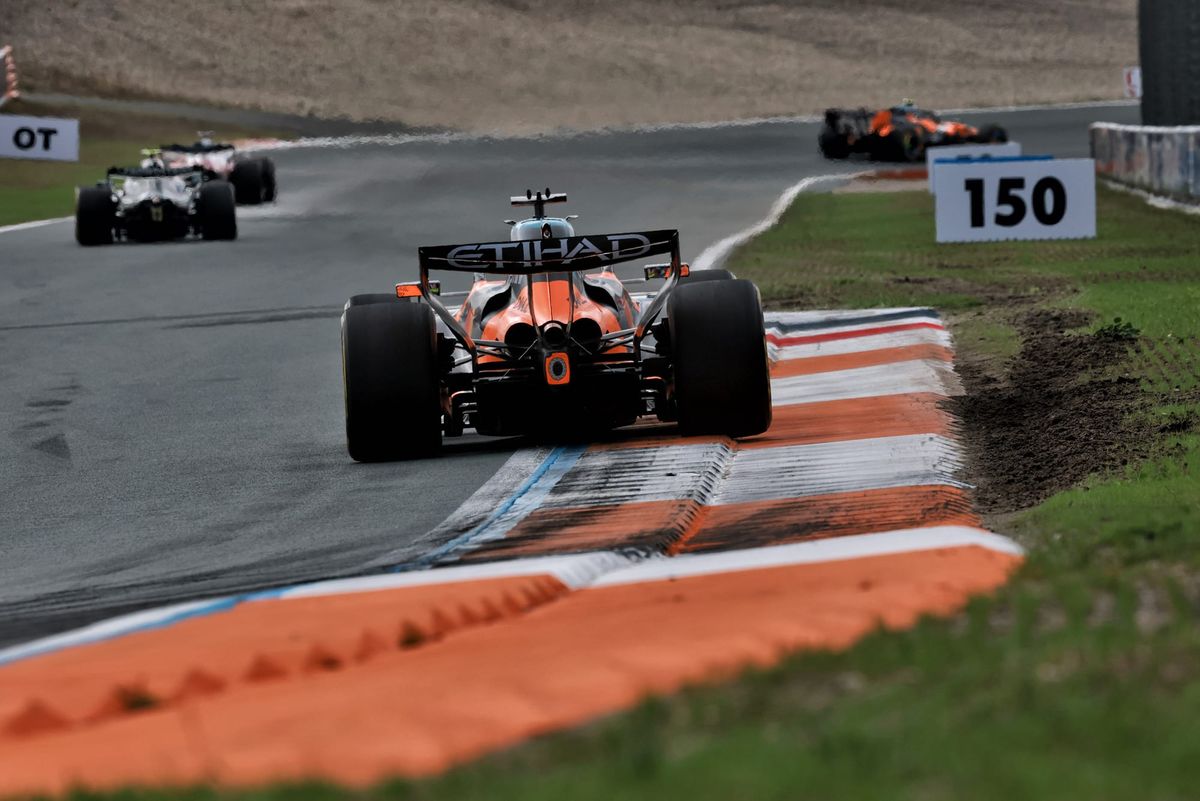
Dutch GP Sprint Race: Winners and Losers from F1's Zandvoort
Zandvoort's sprint race didn't exactly set the grandstands on fire, but it still told the truth about who handled the pressure and who drifted off.