
Dylan Larkin Trade Rumors: Wild Face a Price They May Hate
Minnesota wants the pivot; Detroit’s old captain may cost more than comfort allows.
 Beatrice Kensington6 min read
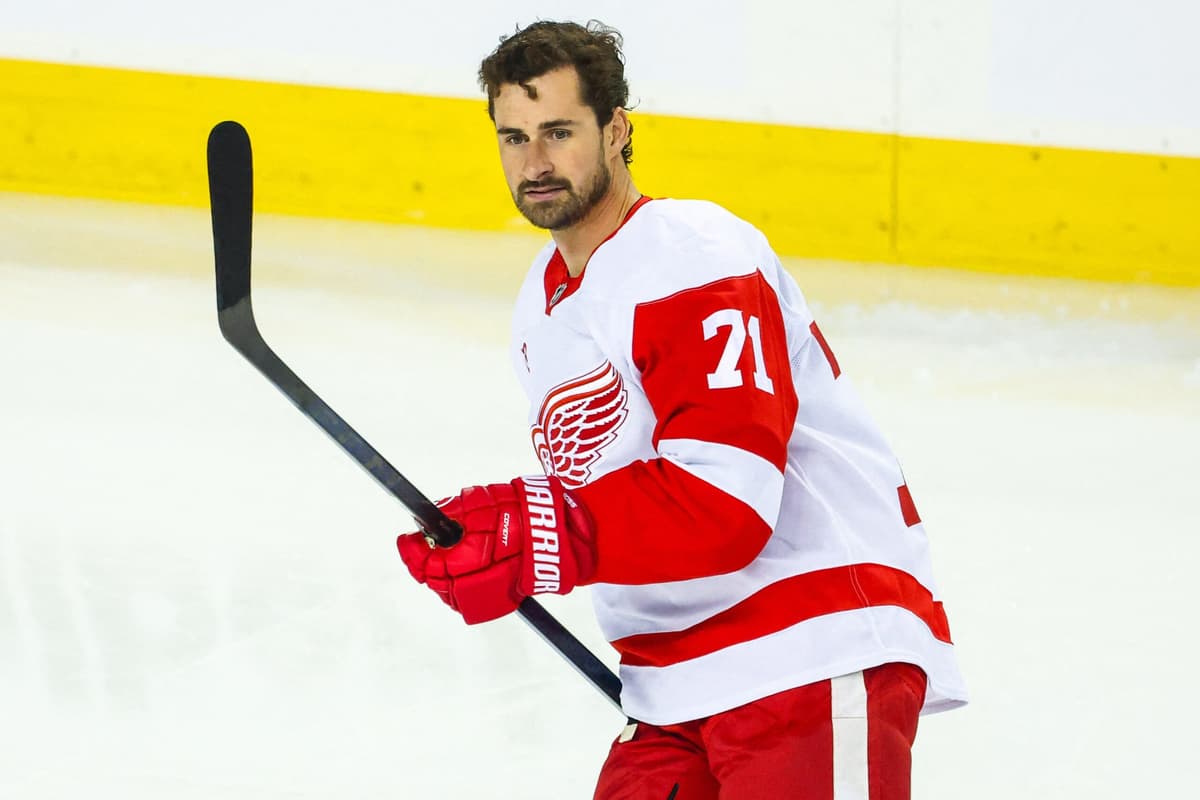
A familiar name, and a very expensive dream
Dylan Larkin has become the sort of trade target that sets a front office’s pulse racing and its accountants reaching for antacids. For the Minnesota Wild, the appeal is obvious: a proven center, a leader, a player whose pace and two-way habits can change the shape of a team that has spent too many winters trying to force offense through locked doors. But desire is not the same thing as leverage, and in the hard arithmetic of the NHL, the asking price for a player like Larkin usually arrives wearing a mask and carrying three separate bill folders.
The tip here is simple enough. The Wild want him badly. The obstacle is not interest. It is inventory. If this conversation is really moving toward a deal, the kind of deal that survives scrutiny from all sides, then the question is not merely what Minnesota would give up. It is whether the pieces they have are the kind that can entice the Detroit Red Wings or satisfy a third club willing to take on the awkward middle work of making the numbers and value line up.
Why Larkin changes the ceiling
Larkin is not just a name to hang on a trade rumor like tinsel on a winter branch. He is the sort of player who alters a locker room’s temperature. In the NHL, centers carry moral weight as much as tactical value; they touch every zone, every matchup, every late-game faceoff that begins with one breath held in a rink full of people pretending not to hold it. Larkin’s speed, his urgency, his ability to drive play at pace — these are not luxury traits. They are the traits contenders chase when they decide the old shape of their team is no longer enough.
Minnesota has long lived in the tension between competence and transformation. There is a difference between being respectable and being dangerous. The Wild have often been the first thing, not enough of the second. Larkin would not solve everything. No one does. But he would give them a cleaner spine down the middle, and in hockey that can be the difference between a team that survives the spring and one that only rents the building for a few nights before the lights go out.
The assets problem: trade dreams meet hard edges
Here is where the romance begins to peel. The tip suggests a third team may need to be involved, and that tracks with the way major NHL deals are increasingly built: less like a handshake, more like a three-legged table in a windstorm. The club that wants the star often lacks the exact mix of cap space, prospect value, and draft capital to satisfy the seller. So another team steps in, absorbs a contract, reroutes a pick, maybe takes a player it does not truly want, and gets paid for the trouble.
That kind of machinery is not a sign that the trade is impossible. It is a sign that the trade is costly. There is a reason these deals often take on the feel of a courthouse drama. Everybody has a case. Everybody also has a price. If Minnesota is serious, it may have to decide whether the future it is protecting is worth the present it is trying to buy. A team can hoard its prospects the way a winter town hoards firewood. Eventually, though, the cold asks for payment.
The Wild do not need another good idea. They need a player who can change the terms of the room.
And there is the uncomfortable truth: a club can become so attached to its pool of assets that it starts behaving like a museum curator rather than a contender. Not every prospect is currency that must be spent. But not every prospect survives the leap from promise to pressure either.
Detroit’s side of the ledger
For Detroit, the decision is emotionally complicated and strategically plain. Larkin is not just a productive center; he is tied to identity, to the memory of what the franchise hoped he would become, to all the years when the Red Wings were trying to climb out of their own long collapse. Trading a player like that is never only about hockey. It is about the message it sends to a fan base that knows exactly how long rebuilds can feel when they are lived in real time.
Still, teams do not run on sentiment, and Pat Brisson-type pressure points around elite players tend to force the issue. Once public statements and private uncertainty start to overlap, the franchise has to weigh return against risk. Hold too long, and the market can soften. Move now, and you may regret the day you let a dependable center walk out of the frame. The Red Wings are not just judging Minnesota’s offer. They are judging the next five years.
What this says about the Wild’s place in the league
I’ve always believed there is a particular kind of desperation that afflicts competent teams. The bad ones know they are bad. The great ones know what they are. It is the sturdy middle class of the league, the clubs with enough talent to hope and not enough to trust hope alone, that make the most fascinating mistakes.
That is why this pursuit matters. Minnesota is signaling that patience may no longer be the preferred religion. I do not blame them. In my line of work, I have seen too many franchises fall in love with the soothing language of building, of waiting, of keeping powder dry. There is wisdom in restraint, yes. There is also a cowardice that dresses itself up as prudence. A team with playoff ambitions has to know when to stop admiring its balance sheet and start chasing the right player, even if the chase leaves a bruise.
The Wild also have to be careful not to overpay for the story they want to tell themselves. A center like Larkin can elevate a roster. He cannot erase structural flaws by sheer force of personality. If the price requires gutting the very depth that makes Minnesota resilient in April, then the deal begins to resemble a headline written for applause rather than a roster built for survival. That distinction is everything.
The next move will reveal the real appetite
The most revealing part of any trade pursuit is not the rumor. It is the reluctance that follows. If Minnesota is truly close, the next few days will tell us whether the organization is willing to treat Larkin as a franchise-level swing or merely a handsome idea. If a third team enters, the architecture gets more complex, but the logic remains plain: somebody will have to sacrifice value so the trade can breathe.
That is how these things go. The target is rarely the hardest part. The hardest part is admitting what you are willing to lose to get him.
And that, more than the rumor itself, is the story worth watching now.
More from Straight From The Bench
Comments
Join the conversation — sign in to leave a comment.
Sign in to commentRelated Stories
Russia Ice Hockey World Championships Return: CAS Opens the Door
The Court of Arbitration for Sport has forced ice hockey’s gate back open for Russia. The legal win does not erase the war, but it does change the tournament’s moral and competitive landscape.
Dylan Larkin Red Wings Future: Detroit’s captain hits a breaking point
Dylan Larkin’s future in Detroit just got loud. The words out of the Red Wings’ front office point to a serious disconnect, not a normal bad stretch.
Capitals vs Predators: Washington’s new guys steal the night
Washington left Bridgestone Arena with a rare road win and a louder message: the newcomers are setting the tone. Nashville had moments, but the Capitals owned the work.