
Eagles Tush Push: Sean Mannion Says Philly Will Lean In
The play survives the offseason chatter, and so does Philadelphia’s appetite for discomfort.
 Beatrice Kensington5 min read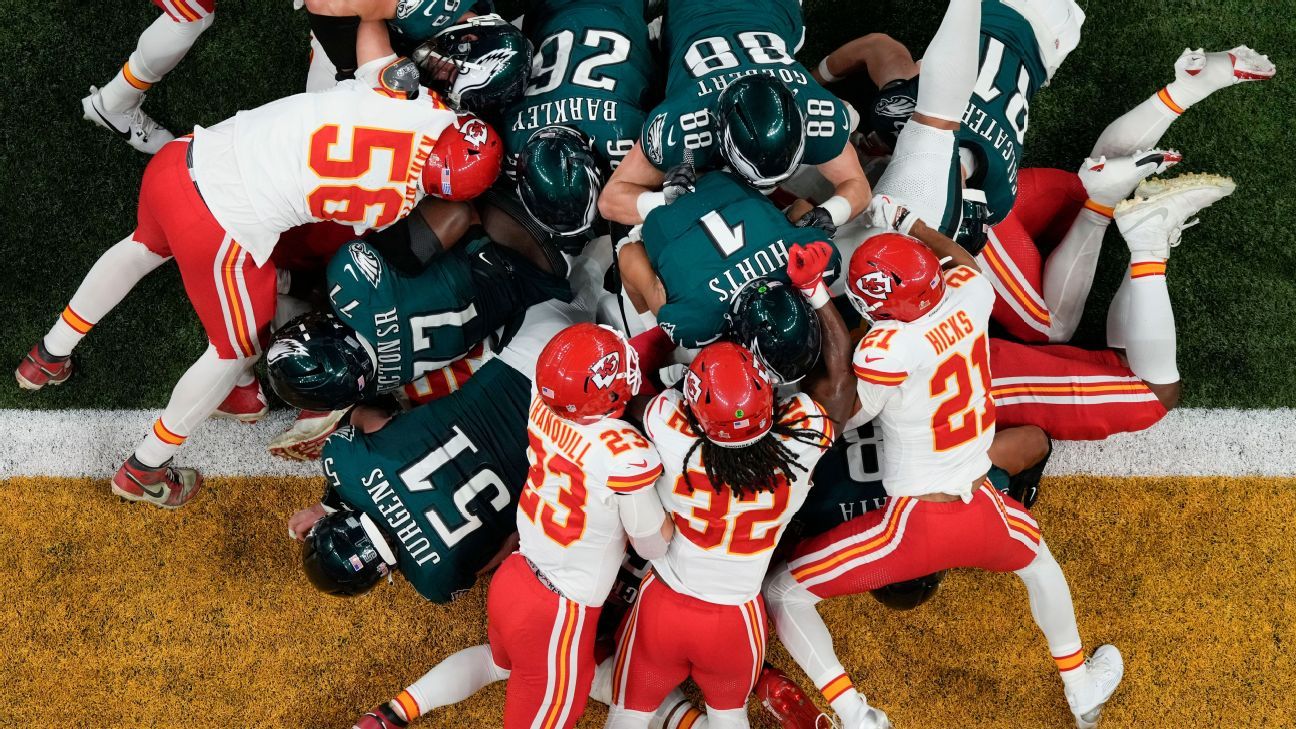
Philadelphia is not apologizing for its best blunt instrument
The Eagles did not hire a new offensive coordinator to become sentimental, and Sean Mannion did not walk into the building with a vow to sand off the sharp edges of a team that has spent years weaponizing its will. The message out of Philadelphia is plain enough: the tush push lives. The Eagles will keep leaning into the play that has turned inches into a civic argument, a tactical identity, and, for opponents, a recurring form of dread.
That is not a trivial football note. It is a declaration of philosophy. The tush push has become the clearest expression of what this franchise believes about its own body: if you can move people a foot, why be delicate about it?
Why the play still matters even when everyone knows it is coming
This is the strange, stubborn beauty of the thing. The league has spent seasons studying the Eagles’ short-yardage package, fussing over mechanics, personnel, leverage, and the optics of pushing a quarterback from behind, and yet Philadelphia keeps returning to the same answer because the answer still works. In a sport that worships innovation, there is something almost defiant about refusing to overcomplicate a brutally simple proposition.
The tush push is not merely a sneaky conversion method. It compresses the whole emotional weather of a game into a few seconds: offensive line against defensive line, force against force, certainty against hope. It is the sort of play that can flatten a drive for the other sideline before it even begins. And in a conference where thin margins decide winters, that matters. Short-yardage success is not decorative. It is the difference between possession and surrender, between a first down and a punt, between a crowd exhaling and a stadium suddenly feeling much smaller.
For the Eagles, the commitment also says something about continuity. A new play-caller can spend all spring trying to impress with cleverness, but Philadelphia’s best argument is still built on repetition and violence in miniature. Mannion’s willingness to keep the play in the script suggests the offense will not be treated like a blank canvas. The core remains the core.
The league may dislike the optics, but Philadelphia likes the math
The league’s discomfort with the tush push has never been hard to understand. It looks ungainly to some, unfair to others, and inevitable to nearly everyone who watches it close enough. Those objections, though, often collapse the moment a team is one yard from disaster and would gladly take any legal mechanism that turns chaos into control.
Philadelphia has long been a city that understands hard edges. It has never been especially interested in making football pretty for visiting sensibilities. There is a reason this play resonates there beyond the box score. It reflects an old Philadelphia sports instinct: if the task is ugly, meet it with a little more ugliness.
There is also the broader institutional question hanging over it, one the NFL has been unable to neatly resolve. When a particular formation becomes so effective that it starts to shape rule talk, the league must decide whether it is preserving competitive balance or protecting everyone else from having to catch up. That debate has become part of the shadow around the Eagles. The team does not need to win the argument to keep winning the down.
If the league wants to stop the tush push, it should stop the teams that cannot defend one yard. Philadelphia only exposed the problem.
Sean Mannion is inheriting a machine, not rebuilding one
There is temptation, with every new coordinator, to imagine a fresh personality stamped across the whole operation. But this is not a total renovation. It is stewardship. Mannion’s job is less about reimagining the Eagles than about preserving the parts of the offense that are too useful to discard. The tush push fits that mandate as naturally as a key fits a lock.
That matters because coaching transitions often invite vanity. New voices sometimes chase signatures, as if the most important thing is leaving a fingerprint. The smarter move is often the quieter one: keep the good machinery running. The Eagles have already proved that the tush push is not a gimmick but a stress test they usually pass. The burden is on everyone else to build a defense that can live at the line of scrimmage for three downs and still breathe.
I have always believed the most revealing plays in football are the ones that strip away all the pageantry. No motion worth admiring, no deep shot to admire afterward, no grainy little beauty shot for the highlight reel. Just bodies, leverage, and a decision about who gets to impose physics on whom. Philadelphia has made that decision. Repeatedly. And there is something almost old-fashioned about the confidence of it. Not cute. Not novel. Effective.
What to watch when training camp turns the volume up
The real question is not whether the Eagles will keep the tush push. They will. The question is how often they will need it, how creatively they will frame it, and whether the rest of the offense around it evolves enough to keep defenses from turning every short-yardage look into a referendum on one snap.
Watch for how Mannion handles the balance between identity and flexibility. If the Eagles are healthier and the offense is more varied, the tush push may become even more valuable as a change-up, a play that lands harder because it arrives less often. If the offense sputters, though, the scrutiny will sharpen quickly. When a team leans on one signature concept, every failed conversion becomes a headline, and every success becomes an accusation from the other side.
There is a larger league story here too, one that touches the Philadelphia Eagles, their rivals, and every front office that keeps asking whether the answer to a problem is scheme, personnel, or simply the will to keep banging the same door until it gives. For now, the Eagles are choosing certainty over restraint.
And that choice feels entirely on brand.
The season will bring the arguments back, one yard at a time. Philadelphia, as usual, seems perfectly happy to make them.
More from Straight From The Bench
Comments
Join the conversation — sign in to leave a comment.
Sign in to commentRelated Stories

Roger Craig 1,000-1,000 Season: The NFL Standard He Set
In 1985, Roger Craig did what no NFL back had done before: topped 1,000 yards rushing and receiving in the same season. That wasn’t a trick. It was a warning shot.
NFL Training Camp: Patriots Rookie First-Rounder Turns Heads
Two weeks into camp, the rookie first-rounder is flashing enough to matter. In Foxborough, that still means something.

Larry Fitzgerald Hall of Fame: Why He Refuses to Say 'Retired'
Larry Fitzgerald is headed to Canton, but he still won’t slap the “retired” label on himself. That’s pure Fitz — and pure football stubbornness.