
Eagles vs. Panthers Snap Count Analysis: Philly's Defense Carried
When one side of the ball spends the afternoon chasing, the reckoning usually follows.
 Beatrice Kensington6 min read
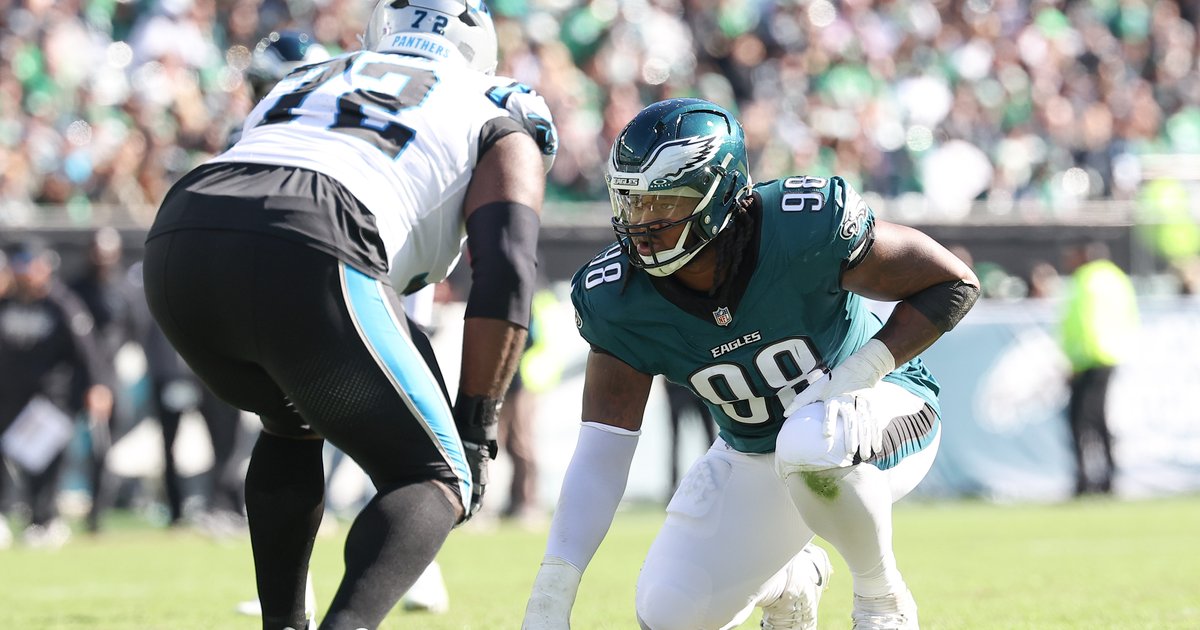
The snap counts told the truth long before the final whistle
The box score can be a polite liar. It offers yards, points, completions, and a tidy little illusion that every game is simply the sum of its parts. The snap counts, though, have no interest in manners. They tell you who was bending, who was breaking, and which sideline spent the afternoon scrambling to keep the tire on the road.
In the Eagles’ Week 6 loss to the Panthers, Philadelphia ran 64 offensive snaps and 79 on defense. That imbalance is not just a footnote. It is the story. A team cannot keep asking its defense to live out there that long and expect fresh legs in the fourth quarter, much less sustained resilience over the length of a season. Even the best units begin to fray when they are stretched like old canvas.
The Eagles have built a reputation in recent seasons as a club that wants to dictate the terms of a game with physical line play and a punishing front. But when the offense sputters, the whole machine starts to hiss and cough. The defense is left to absorb the consequences, one drive at a time, until the shape of the afternoon changes from competitive to draining.
Why 79 defensive snaps matters more than one bad drive
Seventy-nine defensive snaps is a workload that can distort everything around it. Edge rushers lose a step. Interior linemen stop winning the second effort. Safeties begin to tackle not with violence, but with caution. The cumulative effect is less visible than a turnover or a blown coverage, yet it is often more decisive.
That is why this loss feels broader than a bad defensive outing. It speaks to field position, possession control, and the kind of offensive consistency that can spare a defense from burial by attrition. If the offense cannot sustain drives, the defense becomes the permanent fire brigade. And no matter how talented the personnel, a team cannot put out every blaze with a bucket and a shrug.
This is where the Eagles’ identity is being stress-tested. A contender is supposed to travel with answers. When the offense goes flat, the defense should not have to become the whole enterprise. Yet that is what Sunday resembled: not a team with one side off its game, but a team with one side carrying the weight of the other.
The conversation around Philadelphia now belongs with the larger inventory of NFC frustration. Not long ago, the Eagles looked like a club built to survive ugly Sundays. In the current version, ugly Sundays are revealing too much.
The hidden cost of short drives and long afternoons
There is a certain cruelty in football’s arithmetic. A three-and-out does not merely waste a possession; it taxes the unit that follows it. A stalled series invites the defense back onto the field before it has fully collected itself. Do that often enough, and the game begins to tilt even if the scoreboard still pretends otherwise.
That is the real danger lurking inside the Eagles’ snap distribution. The offense’s 64 snaps suggest a game in which Philadelphia was never quite comfortable dictating tempo, never quite able to string together the sort of drives that let a defense breathe. The Panthers, for their part, were able to extend the afternoon, and the result was a defense asked to be sturdy far longer than is reasonable.
If you want the larger framework, start with the NFL itself, where the most durable teams tend to be the ones that control possession, reduce the number of live, physical plays their defense must absorb, and avoid self-inflicted chaos. The Eagles did the opposite here. They invited fatigue into the building and then acted surprised when it made itself at home.
That fatigue has consequences beyond one game. It changes how coaches rotate personnel. It nudges pass-rush packages into uncomfortable territory. It magnifies every missed tackle, every small communication lapse, every third-down failure that might have been survivable in a game with a healthier rhythm.
Special recognition, and a warning wrapped in a loss
There is always room in a game like this for a few people to leave fingerprints on the day, even in defeat. The idea of “game ball” is a small mercy, a way to note that not every effort was swallowed by the result. But the larger lesson remains unchanged: the Eagles can hand out praise internally, yet the defense still spent too much time on the field to make the afternoon feel manageable.
A defense can be excellent and still be worn down into ordinary by an offense that keeps handing it the same burden.
That is the line I keep returning to. Not because it is dramatic, but because it is true. Philadelphia’s challenge is not merely to correct a mistake or two; it is to prevent this from becoming a pattern. A single lopsided snap count can be an outlier. A recurring one becomes a diagnosis.
I have watched enough seasons to know that teams often mistake resilience for invincibility. They lean on a strong defense as if it were a renewable resource, as if the legs on that side of the ball do not notice the calendar or the contact. They do. They always do. The great Eagles teams of the past that lasted into January usually understood this bargain: protect your defense, or eventually you will be protecting a lead that no longer exists.
And yes, there is a historical echo here that should make Philadelphia uneasy. The most dangerous NFL teams are not always the most explosive ones; they are the ones that can survive bad stretches without forcing one unit to carry the memory of another’s failure. That is the standard the Eagles have set for themselves, and that is why this game lands harder than a routine loss. It asks whether they are merely talented, or actually balanced.
What to watch when the Eagles line up next
The next game will tell us whether this was an ugly one-off or the start of a more stubborn problem. Watch the offensive snap count, of course, but also the shape of those snaps: are the drives lasting, or are they evaporating after a first first down? Watch the defense too, especially the late-game body language. Teams rarely announce fatigue. They reveal it in pursuit angles and missed finishes.
If Philadelphia wants this season to remain pointed toward something meaningful, it must stop asking one side of the ball to serve as the emergency crew every week. That is not how you preserve a contender. That is how you grind one down.
The standings will move on. The tape will not. And the tape, in this case, is blunt.
More from Straight From The Bench
Comments
Join the conversation — sign in to leave a comment.
Sign in to commentRelated Stories
Colts Fire GM Chris Ballard: A Franchise Out of Patience
Indianapolis has finally said enough. Chris Ballard is out after ten seasons, and the Colts are once again staring at the same old question: who, exactly, is steering the room?
Troy Aikman Pool Story: NFL Legends, Memes and Michael Irvin
Troy Aikman’s pool story hit the sweet spot: weird, funny and instantly memeable. Michael Irvin’s reaction only made it better.
Dallas Cowboys Offense: Familiar Mistakes Sink Worst Start Since 2020
The Cowboys are paying for two old sins in new packaging: a ground game that disappears and a defense that can’t steady the room. The result is their bleakest opening in years.