
Falcons James Pearce Jr. Suspension: Eight Games, Heavy Toll
Atlanta loses more than a pass rusher; it loses time, trust, and a little oxygen.
 Beatrice Kensington6 min read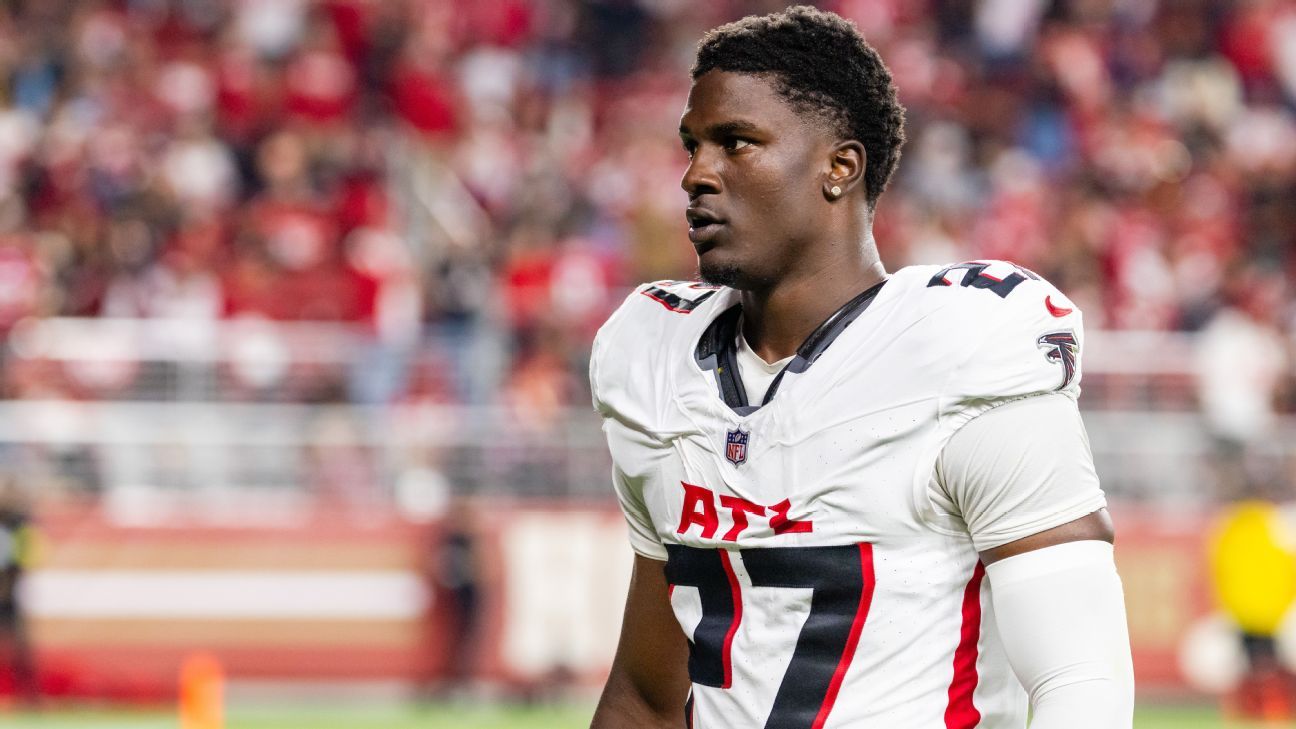
A suspension that lands before the first real rhythm
The Atlanta Falcons have spent years trying to build a defense that could hold its shape long enough for the rest of the roster to matter. Now the calendar has handed them a problem they did not budget for: James Pearce Jr. is out for eight games, and the absence arrives not as a footnote but as a structural stress test. For a team trying to climb out of the NFC’s middle class, losing a young edge rusher for half a season is not a minor disciplinary matter. It is a hole with a schedule attached to it.
Pearce’s suspension, tied to a violation of the league’s personal conduct policy following his arrest on domestic violence charges, puts the Falcons in the harshest corner of roster-building: the one where talent, timing, and responsibility collide. The NFL has long made a point of saying that personal conduct matters. It should. But the league’s disciplinary machinery, uneven and often opaque, always leaves the club to absorb the immediate football cost. Atlanta now has to do that while carrying the larger, uglier burden of what this incident says about judgment, accountability, and the thin line between projecting future help and depending on present-day availability.
Atlanta’s pass rush loses its planned shape
The Falcons did not draft Pearce Jr. to sit in a ceremonial chair and watch the season from a distance. They drafted him for pressure, for disruption, for the sort of speed off the edge that can change third downs and make quarterbacks hurry their decisions before the play has fully matured. That kind of player is hard enough to find. It is even harder to replace on short notice.
Without him, Atlanta’s defensive front must become a little more ordinary, and ordinary pass rushes tend to age badly against the best quarterbacks on the schedule. There is no elegant substitution for a player who was supposed to help bend the pocket. Someone else can take snaps. Someone else can fill a lane. That is not the same thing.
The Falcons have already spent enough seasons living in the purgatory of “almost.” Almost competitive. Almost balanced. Almost complete. An eight-game absence from a rookie edge piece does not end those ambitions, but it narrows the margin so sharply that every other defensive weakness starts to feel larger.
The cruelest part of a suspension like this is not the penalty itself. It is the way it strips a team of the future it thought it had already bought.
The league’s message is larger than one player
The NFL’s personal conduct policy has always carried the league’s preferred language of standards and discipline, but the public reads it differently: as a measure of what the league can tolerate, what it chooses to punish, and how much of the damage will be allowed to spill onto the field before anyone is made to answer for it. Eight games is not a slap on the wrist. It is a substantial portion of a season, especially for a young player who needs reps more than reputation management.
There is also the matter of optics, which in pro football are never merely cosmetic. Teams sell hope through draft nights and training camp clips, through the illusion that youth can arrive cleanly, all promise and no consequence. Then reality breaks in, as it does here, and the league is forced to reckon with the fact that its talent pipeline is built on people, not profiles. Pearce’s suspension reminds us that draft capital cannot sanitize character concerns after the fact. It can only postpone the bill.
I have watched too many organizations speak about culture as though it were a decorative ribbon tied around a roster. It is not. Culture is the line between what a club is willing to excuse and what it is prepared to confront. Atlanta now has a choice to make in the way it talks about this, and more importantly in the way it handles the next player who tests the edges of its standards. Soft language becomes a habit. So does seriousness.
What this means for the Falcons’ season plan
The most immediate football consequence is simple enough: the Falcons lose one of the players they were counting on to help create defensive urgency. For the first eight weeks, the burden shifts to the rest of the front seven and to a coaching staff that must do what every staff hates doing in August and September—change its expectations while pretending not to.
That affects everything downstream. Coverage gets stressed because the rush does not get home. Run defense gets asked to do more because the opponent can stay patient. Game plans become more conservative because explosive defensive plays are harder to summon. It is all connected, and front offices know it. That is why suspensions of this kind are never just about the missing player. They alter the geometry of the season.
For a franchise that has spent years searching for a durable identity, this is one more reminder that talent acquisition is only half the task. The other half is trust, and trust is fragile. A front office can draft speed. It cannot draft reliability and assume it will arrive on schedule.
My read: the Falcons cannot afford to treat this as background noise
Beatrice Kensington has always believed the best teams are built not merely on stars, but on standards that survive contact with disappointment. Atlanta will be tempted, as clubs always are, to move quickly past the embarrassment and talk only about the football. I understand the instinct. The league machine never waits for remorse to finish its paperwork.
But the Falcons should resist the convenient amnesia. A suspension for a conduct-policy violation is not a weather report. It is a test of how seriously the organization takes the idea that who a player is off the field can, in time, poison what a team becomes on it. I do not mean that one case defines a franchise forever. It does not. I do mean that the way a team responds to a case like this reveals whether its stated values are architecture or wallpaper.
There is a historical pattern here that football keeps repeating: teams fall in love with the athletic ceiling, then spend the season trying to manage the human floor. The successful clubs learn to do both at once. They do not confuse potential with permission.
The Falcons now need replacement snaps, steadier edges, and a cleaner public stance than the one this suspension has forced on them. They also need to prove that whatever they hoped James Pearce Jr. would be, they are not willing to let the cost of that hope drift into the background.
The season keeps moving. Atlanta has to move with it, just not blindly.
More from Straight From The Bench
Comments
Join the conversation — sign in to leave a comment.
Sign in to commentRelated Stories
.jpg?w=1120&h=630)
Troy Aikman Dolphins Job: NFL Access Gets Walled Off
Aikman’s Dolphins consulting role comes with the same nose-to-the-glass restrictions Tom Brady faces. The league still doesn’t trust a broadcaster with team secrets, and honestly, it shouldn’t.
Seahawks Terrion Arnold Signing: Why the Risk Still Fits
Seattle may be buying upside, not headlines. The football logic is easy to see; the public-relations fallout is the part that stings.

49ers preseason: Did Kurtis Rourke make Mac Jones expendable?
The 49ers’ first preseason game did what these games usually do: exposed a few jobs, hid a few more, and handed the quarterback room another round of questions.