
Giants trade Heliot Ramos to Yankees for two prospects
A familiar bat leaves the Bay, and the deadline keeps asking the same hard question.
 Beatrice Kensington6 min read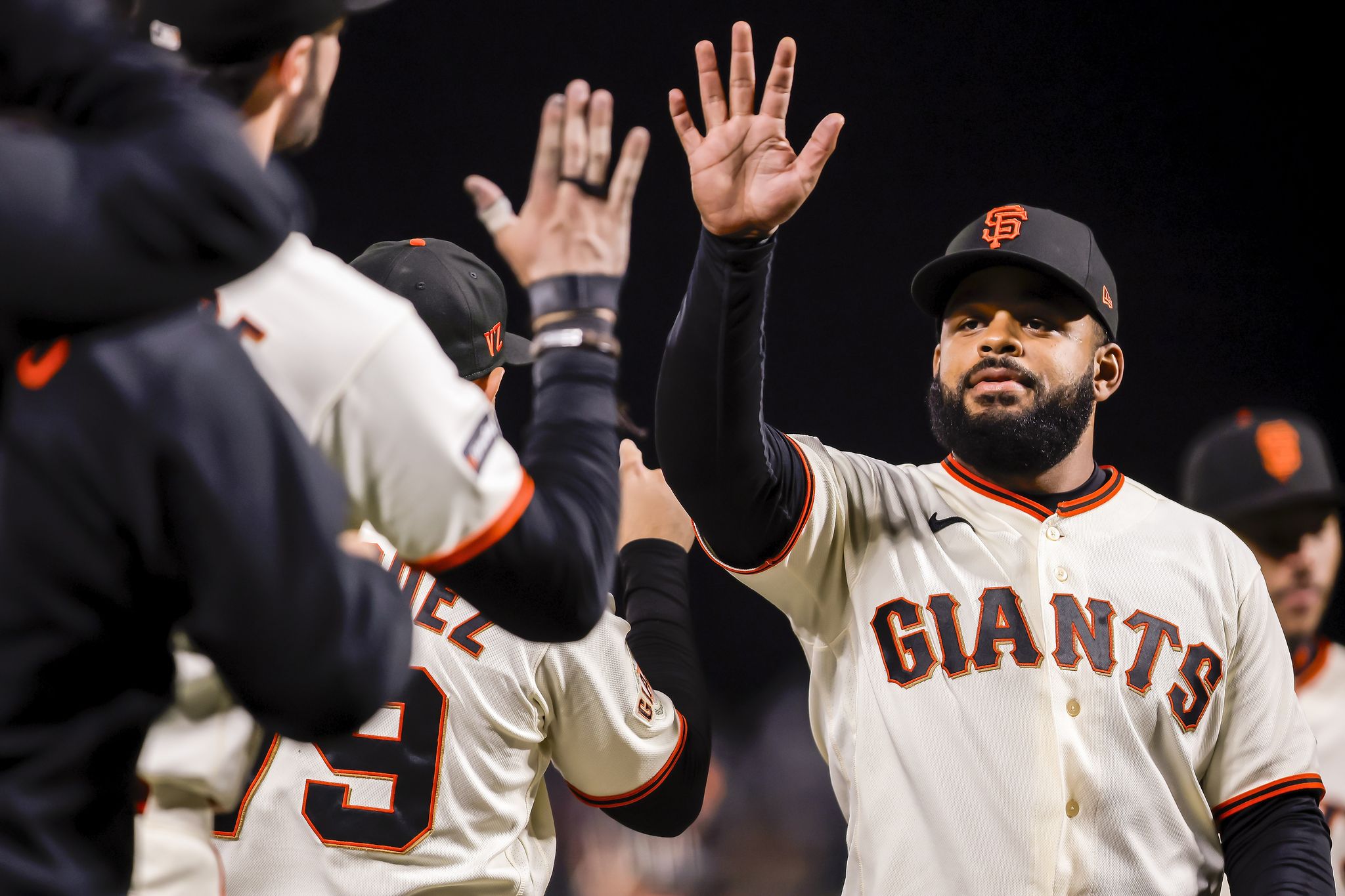
The Giants have spent this deadline behaving like a club that has finally stopped pretending it can have both timelines at once. Heliot Ramos, a homegrown outfielder whose name carried the warm weight of possibility in San Francisco, is gone now, sent to the Yankees for two prospects, including the son of Jeff Kent. That detail will tug at the old baseball memory centers, but the larger truth is starker: the Giants are cashing in present-tense talent for future innings.
Ramos was not merely a line on a transaction sheet. He was one of those players who, in a city like San Francisco, becomes attached to civic hope before he has fully finished becoming himself. The Giants drafted and developed him, watched him endure the usual apprenticeship of strikeouts, adjustments, and the merciless public calendar of a prospect’s life, and then saw him arrive as something sturdier than a rumor. To move him now is to admit the season has drifted past romance and into arithmetic.
A deadline that has turned into a reckoning
This is what sell modes look like when they are honest. They are not neat. They are not flattering. They ask clubs to part with the players who still feel young enough to matter, because those players are the ones other teams will pay for. The Yankees, forever suspicious of their own outfield depth and forever tempted by a controllable bat with upside, saw a fit. The Giants saw leverage.
That is the cold exchange, and nobody should dress it up in ribbon. Yet there is something almost cleansing about clarity. Once a front office stops chasing the fiction that one hot week can rescue a muddled summer, it can begin making decisions that fit the actual shape of the franchise. The Giants are there now. They have joined the hard company of teams looking past August and into the next opening of spring.
The Yankees, of course, are built to make every trade feel like a referendum. A deadline addition in New York is never just a baseball move; it is an argument with history. Ramos arrives into that furnace with all the usual Bronx expectations and none of the luxury of anonymity. He will be judged quickly, sometimes unfairly, and always in louder weather than he knew in the Bay.
Jeff Kent’s son brings the trade a strange, useful echo
The inclusion of Jeff Kent’s son gives the transaction a little of baseball’s old circular magic. The sport has always loved its family continuities, its sons and surnames and small inherited echoes. It does not change the ledger, but it changes the scent of the thing. A trade that might have read as merely transactional now carries a trace of lineage, a reminder that the game is always folding generations into one another.
And that matters because the Giants are not just trading a bat. They are trading a certain kind of relationship with their fan base. Ramos represented a promise the club made, tacitly if not formally, about how long it would take to build a winner. Fans invest differently when the player in question came up through the system; they do not just see output, they see authorship. When such a player goes out the door, the organization is not only changing personnel. It is revising trust.
The painful part of a sell-off is never the spreadsheet. It is the memory of all the reasons a player once felt like the future.
I’ve always believed deadline deals reveal the emotional discipline of a front office more clearly than any press conference ever can. The Giants have, for years, lived in the anxious middle ground between nostalgia and reinvention, between the old championship glow and the modern need to build a new core without waiting for luck to do the work. This move suggests they have finally accepted that sentiment is not a plan. That may be uncomfortable. It is also probably necessary.
There is precedent for this kind of turn, and not all of it is bleak. Clubs that linger too long in the middle often mistake familiarity for continuity. The brave version of roster management is knowing when a player’s value to the franchise exceeds his value to the current standings. If Ramos fetched real prospect capital, then the Giants have at least converted volatility into possibility. That is the transaction’s moral center, even if it leaves a bruise.
What the Yankees are buying in Heliot Ramos
The Yankees are not buying certainty. They are buying a live bat, an athlete with enough runway to matter, and a player whose development curve still has room for sharper lines. That is exactly the kind of gamble a contender can justify in late July, especially one that knows how quickly an outfield can become a daily puzzle.
Ramos may not walk into New York as a savior, because baseball rarely permits such tidy arrivals. But he does arrive with the one thing smart teams keep chasing: the possibility of more. More contact. More power. More adaptation. More reason to believe a player’s best month has not yet happened. In the Yankees’ environment, that possibility will be tested under stadium lights that expose every weakness and magnify every hot streak.
For the Giants, this means the next few days will tell us whether this was an isolated subtraction or part of a broader teardown. Their deadline moves will need to be read together, like the chapters of a single confession. A trade like this does not stand alone. It belongs to a larger story about whether San Francisco is finally ready to choose a direction and live with the consequences.
The human cost of choosing tomorrow
Baseball executives speak the language of control years and roster flexibility, but the players live in another register entirely. For Ramos, this is a sudden change of city, clubhouse, routine, and expectation. One day you are a familiar face in Oracle Park, the next you are part of the nightly traffic of New York baseball, where every swing acquires a second life in the public imagination.
That’s the unseen labor of the deadline. It rearranges lives in transactions so brief they fit on a phone screen, even as the consequences stretch into careers. Fans feel the loss as abstraction; players feel it in their lockers, on the flight, in the first morning when the new uniform is hanging where the old one used to be.
For San Francisco, the larger question is whether this is the beginning of something coherent or just another exchange of one uncertainty for another. Prospect hauls are lovely in theory. They are also fragile, full of variables and weather and the cruel patience of development. Still, if you are going to sell, sell with purpose. That appears to be the mandate now.
The Giants have chosen the future, or at least the version of it they can purchase today. We’ll know soon enough whether they bought wisely.
More from Straight From The Bench
Comments
Join the conversation — sign in to leave a comment.
Sign in to commentRelated Stories

John Harbaugh on Arvell Reese: Giants rookie starts camp fast
Arvell Reese turned heads in the Giants’ first padded practice, and John Harbaugh is already sounding encouraged. That’s August oxygen, not October proof.
Mets Trade Deadline: Eight-Player Selloff Leaves a Bruised Club
The Mets turned the deadline into a dismantling, shipping out eight big-league pieces and signaling a harder truth: this year was already slipping away.
Yankees trade for Heliot Ramos: right-handed bat arrives late
New York finally found the right-handed outfield help it hunted all week, landing Heliot Ramos from San Francisco in a deadline deal. The Yankees spent long enough shopping; now comes the part where t