
Hezly Rivera all-around gymnastics champion: historic comeback
The quiet prodigy has started speaking in medals.
 Beatrice Kensington6 min read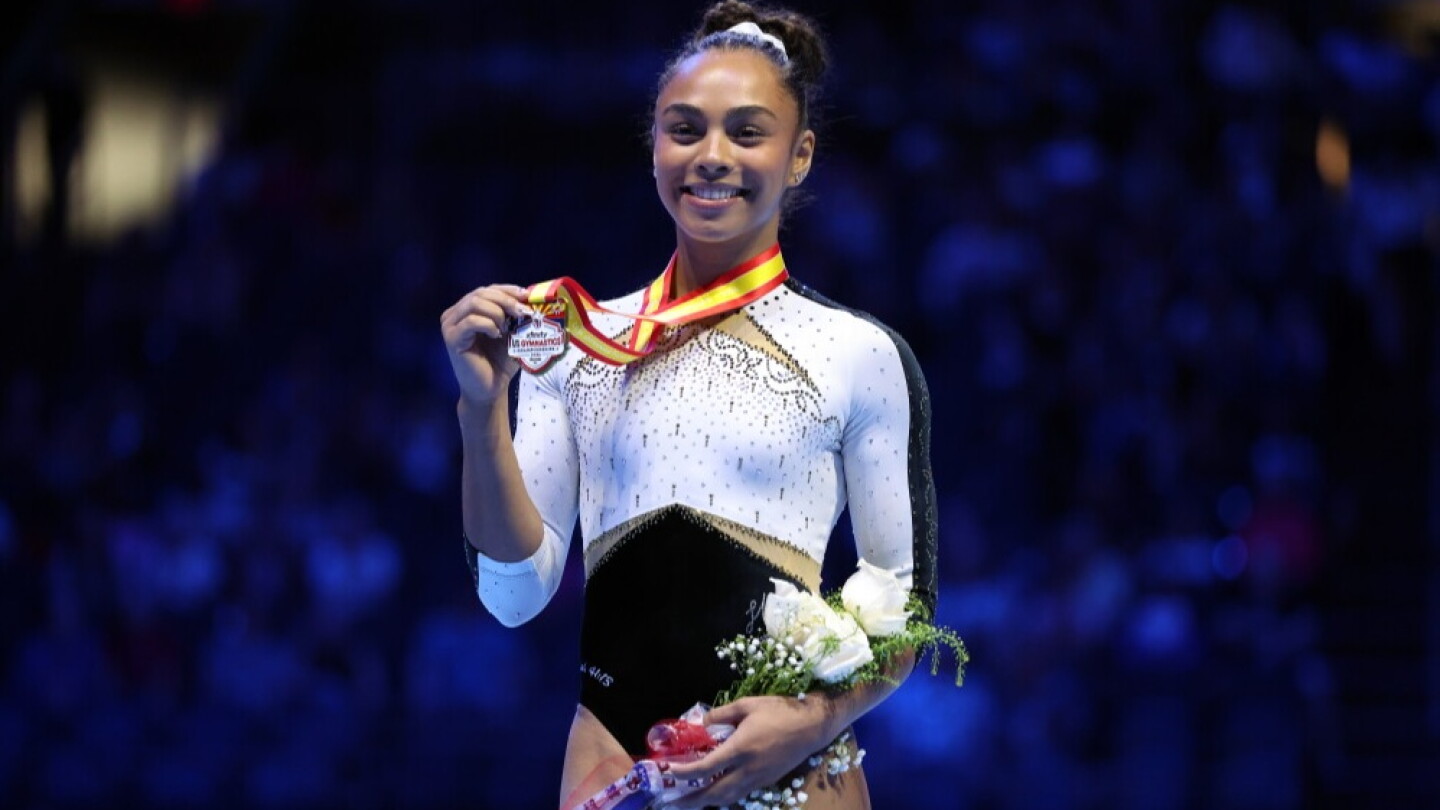
Hezly Rivera did not merely defend a title in Phoenix; she rewrote the shape of the conversation around American women’s gymnastics. The 17-year-old, once the youngest U.S. Olympian on a Paris roster thick with star power, returned to the center of the stage with the kind of poised, unsentimental gymnastics that tends to age well under pressure. In a sport that so often treats youth as both currency and warning label, Rivera looked like neither. She looked ready.
The old story in this sport is familiar: the reigning champion is either already fading or burdened by the impossible task of becoming a symbol. Rivera’s repeat victory as U.S. all-around champion suggests something more durable. She is not being carried by the glow of a one-week wonder. She is building, methodically, the sort of profile that survives the churn — the injuries, the coaching changes, the constant recalibration between ambition and protection.
A champion with no need to announce herself
Rivera’s appeal has never depended on noise. She does not perform like someone trying to convince the room she belongs there. She performs like someone who has already read the room and decided to stay. That is its own kind of force, especially in women’s gymnastics, where the attention often swirls around the most explosive difficulty or the most glittering backstory. Rivera’s gift is subtler: balance under load, clean lines, the ability to look composed while the apparatus asks for absolute nerve.
Her repeat title matters because it was earned in a period when the U.S. women’s program is edging toward a new cycle. With the U.S. women's gymnastics program still carrying the afterimage of Paris and the long runway to Los Angeles 2028, the next great American all-arounder is not just a medal proposition. She is the future face of selection camps, team strategy, and a program always trying to balance artistry with the hard math of difficulty.
The significance of this comeback is that it happened on Rivera’s terms. She did not arrive as the comeback story we were instructed to narrate for her. She arrived as a contender who had already outgrown the smallness of expectation.
In a sport that eats its own prodigies, Rivera is learning how to become something rarer: sustainable.
What her title means for Team USA’s World Championships picture
The immediate stakes are practical. The U.S. women’s team for October’s World Artistic Gymnastics Championships will be named after an early autumn selection competition in Crossville, Tennessee, and Rivera has put herself in the thick of that conversation. Selection in this sport is never a simple ledger of rankings. It is about how a gymnast scores across four events, how she holds up in training, and whether her body and mind look able to survive the escalation that comes with a world-stage lineup.
Rivera’s repeat all-around crown strengthens her case in a roster race that will likely prize reliability as much as ceiling. That is not a trivial distinction. The United States has long produced athletes capable of flashing brilliance; the harder task is assembling a five-woman unit that can take the pressure, absorb it, and keep moving. Rivera’s kind of gymnast helps. She steadies a lineup.
For the broader program, her rise is especially useful because it widens the story beyond the obvious names. That matters in a quadrennial where every federation is hunting not only medals, but continuity. The Americans have spent years having to reset after each wave of retirements. Rivera, still so young she should be more future tense than present tense, offers the possibility of a bridge.
Paris was a glimpse. This is a claim.
Her role in Paris was defined by context as much as performance. The youngest U.S. Olympian on a team loaded with more established stars, Rivera was easy to overlook unless you were watching closely, and gymnastics rewards close watchers. A teenager can be hidden in plain sight in this sport, especially when older teammates carry the biggest expectations.
Now the dynamics have changed. By repeating as national champion, Rivera has moved from intriguing inclusion to serious pillar. The distinction matters. Inclusion says a gymnast has a place. Pillar says the structure begins to lean on her.
There is a cultural undertone here, too. American gymnastics has spent years wrestling with what it asks of its girls, how early it identifies greatness, and how often it mistakes precocity for permanence. Rivera’s trajectory, at least so far, is a rebuttal to that habit. She is not a spectacle of youth burning bright and fast. She is a teenager becoming harder to define, and that is usually the sign of real staying power.
For comparison’s sake, this is where sports often start telling lazy stories about destiny. I prefer a more stubborn reading. The best young athletes do not simply peak early; they survive the period when everyone else begins talking about them in the past tense. Rivera is approaching that rare threshold where the spotlight stops being an introduction and starts becoming an obligation. How she handles that will tell us more than any single title.
I think that is why this repeat championship lands with such force. It says the Paris team did not merely produce a memory. It may have introduced the center of the next era. In gymnastics, where careers can turn on a landing, a wrist, a nervous season, that is not a claim made lightly. It is earned one meet at a time.
The pressure point ahead: Crossville, then the long climb to LA
The selection competition in Tennessee will tell us who is ready now. The years after that will tell us who can remain ready. Those are not the same test, and gymnastics punishes anyone who confuses them.
Rivera’s name will be among the most closely watched because her all-around strength gives the U.S. flexibility. She can matter across events, and in major championships that versatility is gold. If she continues to sharpen, she could move from “promising all-arounder” to the kind of every-meet anchor the Americans have leaned on in past Olympic cycles.
What to watch next is not just whether she makes the world team. Watch how she is framed inside it. A championship repeat at her age can tempt people to decorate her with too much too soon. Better to let the results do the talking and the apparatus do the reminding. Nothing in this sport is guaranteed, but some trajectories feel less fragile than others.
Rivera’s is starting to look like one of them. The medals are catching up to the poise. The rest of the country is just getting the message.
More from Straight From The Bench
Comments
Join the conversation — sign in to leave a comment.
Sign in to commentRelated Stories
Aces Coach Becky Hammon Benches Starters in Liberty Game
Becky Hammon sat three starters, including A'ja Wilson, in a national TV game against the Liberty. The message was loud: the schedule is asking too much.
WNBA narratives: Sue Bird and Cheryl Miller on Sophie Cunningham
Sue Bird and Cheryl Miller didn’t just react to one foul. They cut straight into the WNBA’s wider narrative machine — and who gets protected by it.

Trump Patriot Games: Athletic Pageant Turns into MAGA Theater
A showcase meant to celebrate young athletes has curdled into political theater. The real story is not the spectacle, but the people asked to perform inside it.