
Hunter Greene Trade Rumors: Reds Shut Door on Deal
Cincinnati’s ace is moving from rumor fodder to the center of the franchise’s ambition.
 Beatrice Kensington5 min read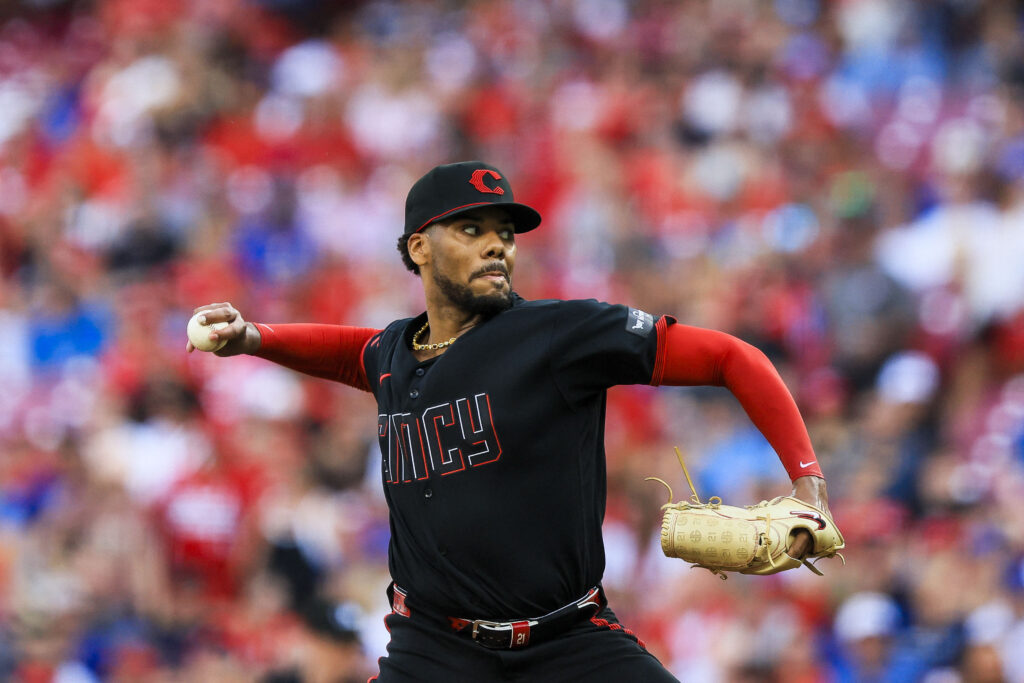
The Reds have spent much of this season trying to live in two timelines at once — one eye on the present, the other on a future they keep insisting will arrive on schedule. Hunter Greene has now become the fault line between those plans. Interest in him is said to be significant, and Cincinnati’s latest message to rival clubs is even more revealing than the buzz itself: Greene is no longer available. That is not the language of a team shopping a pitcher. It is the language of a front office drawing a line in the dirt.
And it is about time somebody did.
Greene is the kind of arm teams dream about, then regret trading
Greene is not merely a hard thrower, though his fastball has long made scouts sit up straighter in their seats. He is the sort of pitcher a franchise can sell to a fan base as proof the rebuild is real, because he changes the shape of a game before it begins. When a starter can command that kind of fear, he becomes more than an asset. He becomes a public argument for patience.
That is why the market around him makes sense. Clubs searching for rotation certainty rarely find it in July, and even more rarely find it in the form of a right-hander with frontline upside who is still young enough to carry a staff for years. Greene belongs to that small and expensive class. Teams always chase those arms. They chase them because the alternative is paying three lesser pitchers to do one great pitcher’s work.
The Reds know this. They also know how badly their own story can fracture if they keep treating premium talent like it might be moved for the right package. Fans have seen that movie before. The ending is usually a shrug and a rebuild that somehow needs another rebuild.
Cincinnati’s message says more than the rumor does
There is an old baseball habit, equal parts prudence and theater, of testing the market on a star and then discovering the market has taken the conversation somewhere you no longer want to go. What matters here is not just that teams asked. Of course they asked. What matters is that Cincinnati appears to have answered with a sharper, more definitive no.
That is meaningful for a club trying to graduate from teasing contention to sustaining it. The Reds have spent enough years explaining why the next step will arrive soon. A franchise cannot keep placing its most electric players in the window and then asking supporters to believe the glass is decorative. At some point, you keep the thing that makes the room brighter.
Trading Hunter Greene would not just thin the rotation; it would tell the whole league the Reds still think like a club looking for its future instead of guarding it.
There is also a practical baseball truth underneath the romance. Contending teams are often tempted to solve one problem by creating another. An organization with rotation needs sees Greene and imagines the return: prospects, depth, maybe a bat that fills a hole. Yet premium starting pitching is one of the rarest commodities in the sport, and the return for such pitchers can vanish quickly if even one piece in the deal stalls. The safest star to acquire is the one already in your own uniform.
The Reds cannot afford to mistake flexibility for wisdom
I have always believed that baseball front offices sometimes confuse movement with progress. A trade can look active, clever, and modern while quietly weakening the one area a team cannot cheaply replace. Greene is precisely the sort of pitcher that caution was invented for. His value is immense because the league knows what it costs to buy a pitcher of his caliber on the open market, and because the Reds themselves would spend years trying to assemble another one.
My own view is simple: if Cincinnati is serious about becoming more than an annual could-have-been, this is exactly the player it should refuse to move. Not every trade refusal is brave. Some are just inertia dressed up as conviction. This one, if it holds, feels different. It feels like a club finally acknowledging that some talents are too foundational to treat as currency. I have watched enough teams in enough markets to know the seduction of the shiny return package. I have also watched enough of those packages turn ordinary by the next summer.
The Reds do not need another clever little transaction to reassure outsiders that the rebuild has legs. They need a spine. Greene is part of it. The choice to keep him is not only about pitching; it is about whether Cincinnati is ready to stop behaving like a team collecting possibilities and start acting like one protecting certainty.
That distinction matters in a division race, in a clubhouse, and in a ballpark full of people waiting for the club to mean what it says.
What to watch if the door truly stays shut
If Greene is off the board, the ripple effects are easy to map. Rival clubs will have to pivot to lesser arms, and Cincinnati will have to live up to the confidence of its own declaration. Keeping a star is the easy part. Building the roster around him is the work.
The Reds now have to answer a more demanding question: if Greene is not the trade chip, who is the player who pushes this team forward? That answer cannot always be found outside the organization. Sometimes the boldest move is restraint, and the smartest deadline posture is refusing to solve tomorrow by borrowing from next year.
For now, the signal is unmistakable. The Reds have heard the noise around Hunter Greene, measured it, and chosen permanence over temptation. Good. Baseball has spent far too long rewarding teams for selling certainty because uncertainty can be packaged prettily.
Cincinnati’s next move should be quieter than the rumor mill — and more powerful. Keep the ace. Build the case around him.
More from Straight From The Bench
Comments
Join the conversation — sign in to leave a comment.
Sign in to commentRelated Stories
Guardians Trade: Craig Yoho, Blake Perkins for Bo Naylor
Cleveland and Milwaukee swapped useful pieces, and the subtext is plain: both clubs are betting on fit over familiarity. The Guardians are chasing cleaner edges; the Brewers are buying a different kin

Jarren Duran Outburst: Red Sox Should Have Set a Harder Standard
Duran’s latest flash of anger deserved more than a shrug. The Red Sox keep talking accountability while acting like it’s optional.

Tarik Skubal Trade Rumors: MLB Deadline Dominoes Ready to Fall
Tarik Skubal chatter has the deadline market holding its breath. Now the real question is which club blinks first and starts the pileup.