
Jannik Sinner Wimbledon win: repeats as champion over Zverev
The grass still belongs to Sinner, and this one felt colder than the trophy ceremony.
 Zane Miller5 min read
Jannik Sinner didn’t just defend a title on Centre Court. He handled the kind of pressure that used to follow him around like a bad bounce and turned it into another trophy case entry. The top seed beat Alexander Zverev 6-7 (7), 7-6 (2), 6-3, 6-4 to win Wimbledon for the second straight year and collect his fifth Grand Slam overall. That’s not a hot streak. That’s a hold on the sport.
The shape of this final mattered. Sinner dropped the opener in a tiebreak, stole the second in the same tight script, then gradually squeezed the life out of the match. Zverev’s movement clearly looked compromised after a slip on grass in the third set, and once that edge was gone, Sinner did what elite players do. He kept the rallies sharp, kept the ball deep, and made every point feel expensive.
Sinner didn’t blink after the first-set knife fight
The first two sets told you almost everything about the psychology here. Zverev had the cleaner start, the kind of start that can make a final feel like it’s tilting. Sinner absorbed it. He didn’t go searching for hero shots. He didn’t start spraying from the baseline. He waited.
That’s the shift with him. The old version of Sinner, even a year ago, could look almost too tidy under stress, like he was trying to solve the court mathematically. The version who won this title twice in a row knows when to simplify. He turned that first-set loss into a calibration exercise, not a crisis.
Winning Wimbledon after the French Open heartbreak in 2024, when he let three match points slip away against Carlos Alcaraz, was supposed to answer one question: could he recover mentally from the most brutal kind of defeat? He answered it then. Doing it again, with the title to defend and the world No. 1 target on his back, is a different layer entirely.
The scary part for the rest of the tour is that Sinner doesn’t need chaos to win anymore. He can beat you in the cleanest, quietest way possible.
Zverev’s knee issue changed the final’s balance
There’s no point pretending the match was won in a vacuum. Zverev looked bothered after the slip to grass at a key moment in the third set, and that matters. On this surface, one compromised step can turn into a service game lost, then a set, then the whole afternoon. Grass courts punish hesitation like no other surface in tennis.
Still, the larger truth is that Sinner had already built the platform before Zverev’s movement started to fade. The margins were thin early because Zverev served well enough to stay attached, not because Sinner was waiting for a gift. Once the physical disruption hit, Sinner did not waste time. He pressed the lever.
That’s what separates the top of the men’s game right now. The best players don’t just capitalize on openings; they create the kind of scoreboard pressure that forces bad ones. Sinner did both.
What a second Wimbledon means for the No. 1 spot
This is the part executives, agents, and everyone else in the business of tennis will read immediately: Sinner has moved from rising star to structural force. A second consecutive Wimbledon title changes how the tour has to think about him. Not “can he handle grass?” That’s obsolete. Now it’s: how do you build a path that survives him across surfaces?
That matters because the men’s game has been living in a post-peak-era conversation for a while, with Grand Slam) titles spread across a handful of elite names and every big event feeling like a referendum on who owns the next stretch of the sport. Sinner’s profile is the one that scares every locker room: young enough to keep compounding, mature enough to stop donating matches, and versatile enough to win in London and still look comfortable elsewhere.
If you want the real tell, it’s this: his losses are starting to require a full explanation. That’s what stars do. They don’t just win. They make the rest of the field explain why they didn’t.
I’ve seen enough to call this a real hierarchy, not a hot month
I’ll say it plainly: this is starting to look less like a champion in form and more like a new ordering of the men’s game. That distinction matters. Form runs out. Hierarchy sticks.
For years, tennis has lived off the idea that the next wave would arrive eventually, then immediately hit a wall of nerves, timing, or a more complete rival. Sinner is past that point. He already survived the ugly, public version of the test. He already took the French Open scar and turned it into a Wimbledon repeat. That’s the signature of a player who isn’t learning how to win anymore. He’s learning how to rule.
And for the rest of the tour, that’s the unnerving part. There’s no obvious weakness to circle in red ink. His defense is elite, his baseline control is ruthless, and now the mental part is showing up on schedule too. If Carlos Alcaraz and the other contenders want this back, they’re going to need more than flashes. They’re going to need sustained answers.
The sport keeps waiting for the next open era. Sinner is making everybody else wait longer.
The road ahead gets harder for everyone else
This title doesn’t just add to Sinner’s total. It hardens the standard. Every major from here on out will start with him on the shortlist and end with opponents trying to survive the second week, not just beat him.
That’s the real story out of London. One player is turning the tour from a debate into a target list. Good luck catching him before the summer runs out.
More from Straight From The Bench
Comments
Join the conversation — sign in to leave a comment.
Sign in to commentRelated Stories

Wimbledon 2026 Photos: Stars, Straw Hats and Centre Court Style
Wimbledon’s final weekend brought the usual polished crowd and a little extra sparkle. The white lines held the center stage, but the stands were doing their own performance.

Wimbledon 2026: 50 Parting Thoughts From Centre Court
Wimbledon 2026 left a few tidy trophies and a lot of hard truths. The Czech women were a force, Sinner got his redemption, and Centre Court did what it always does: sort the real from the rented.
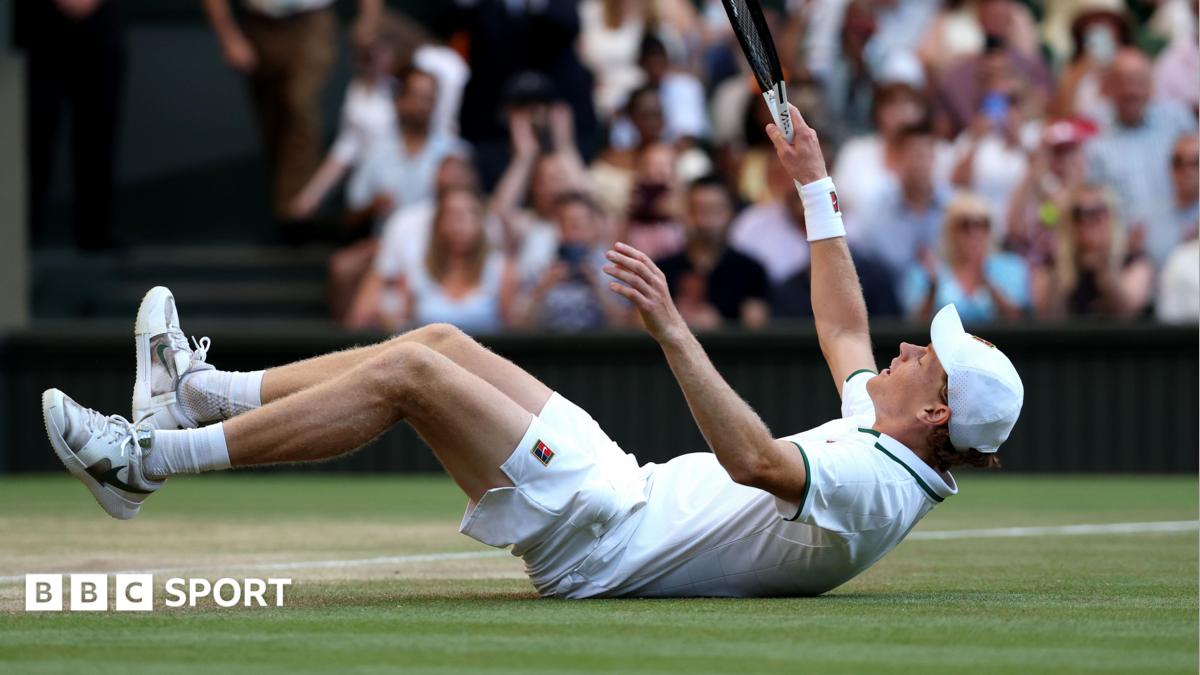
Sinner’s second Wimbledon was built on nerve, not just brilliance
Jannik Sinner held off Alexander Zverev to defend his Wimbledon crown, and the victory said as much about nerve as it did about talent.