
Sinner’s second Wimbledon was built on nerve, not just brilliance
 Beatrice Kensington6 min read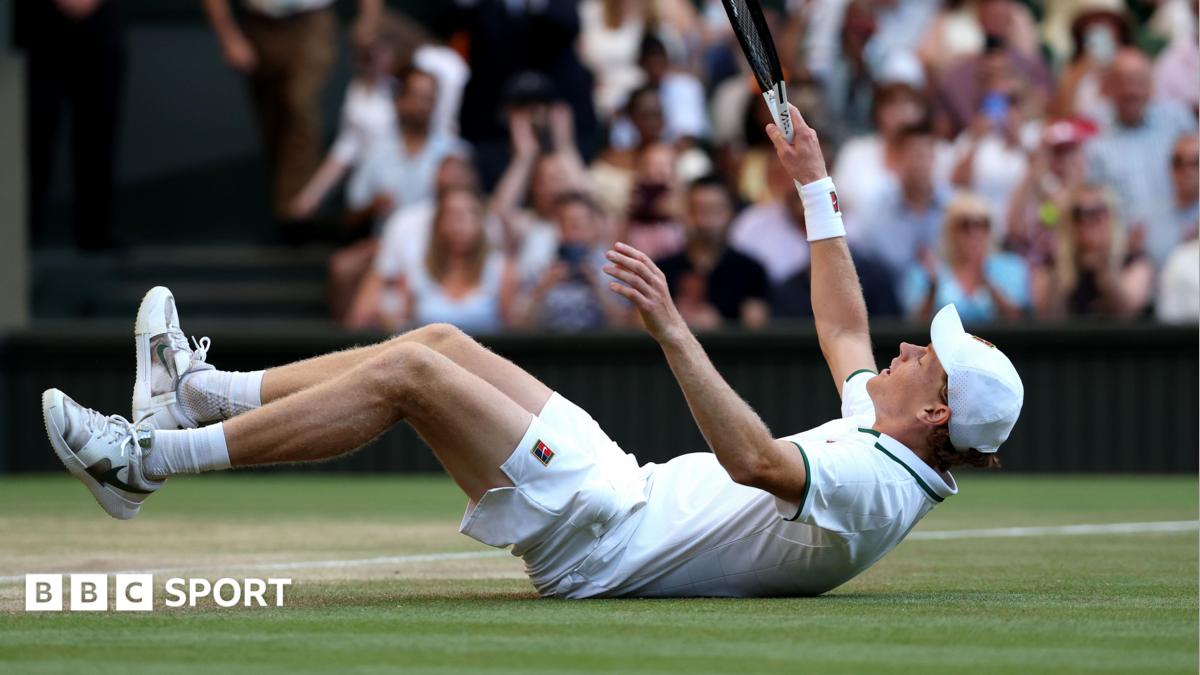
Jannik Sinner did not cruise through the final grass on Sunday so much as he pressed it flat beneath his feet and refused to be moved. Against Alexander Zverev, a man whose power can make Centre Court feel temporarily smaller, Sinner answered pressure with cleaner strikes, steadier legs and the colder heart of the current ruler of men’s tennis. Back-to-back titles at Wimbledon do not arrive by accident. They arrive when talent has learned how to survive the ugliest, most crowded corners of a match.
The result matters because it strips away one of the lingering comforts of the chasing pack: the idea that Sinner is merely a beautiful player riding a hot spell. He is past that. At 24, he has become the sort of champion who can absorb the loudest surge in the stadium and still keep the geometry of the court in order. That is the skill that separates contenders from custodians of the sport. On grass, where confidence is often a thinner shirt than it looks, he wore his authority plainly.
Sinner’s grass-court command looks permanent now
The old story around Sinner was simple enough: dazzling ball-striker, improving athlete, perhaps more naturally suited to the hard courts where his timing could breathe. Grass has a way of forcing revision. It shortens points, distorts rhythm and punishes hesitation. Yet Sinner has become increasingly fluent on the surface, and this title was the clearest proof yet that his game travels. The serve has gained bite. The first strike after serve has gained purpose. The movement, once the area of greatest scrutiny, now looks less like a question mark than a blueprint.
That evolution does more than add another trophy. It widens his claim on the sport itself. A player who can win on multiple surfaces is not merely in form; he is building a presidency. The rankings will say one thing. The eye says something stronger. In the biggest moments, Sinner now plays as though he expects the court to behave for him.
Zverev, for his part, was not some decorative final opponent. He is too sturdy, too experienced, too proud for that. He pushed, as he always does, with the kind of heavy hitting that can turn a championship match into a test of emotional scaffolding. But Sinner handled the force without appearing to worship it. That is the quiet revolution here. He did not need to dominate every exchange. He only needed to remain more intact than the man across the net.
Zverev’s familiar burden and the cruel arithmetic of grand finals
There is a particular weight to a grand final loss that does not show up in clean statistics. It settles into the shoulders, then into the memory. Zverev has lived near the top of the men’s game long enough to know how narrow the passage can be between possibility and disappointment. He is often good enough to reach the edge of history and not quite brutal enough, or fortunate enough, to seize it. That is the merciless arithmetic of tennis: you can win more points and still lose the only ones that matter.
What this final also revealed is how thin the room remains for the rest of the men’s field. Sinner and Carlos Alcaraz have spent the past few seasons forcing everyone else into the role of witness. That is not an insult. It is a statement of fact. The sport’s power has concentrated itself in a pair of young hands, one more raw and volcanic, the other more mechanically exact but increasingly ruthless. The effect on the tour is profound. Rivals do not merely have to beat elite players; they have to solve a closed system.
And that is where the pressure now falls. Zverev, Daniil Medvedev, Novak Djokovic when healthy and still willing, the next tier beneath them — all are being asked to answer a question that has become almost philosophical. How do you beat players who are already practicing the future while everybody else is still polishing the present?
Sinner is no longer the sport’s most polished promise. He is the standard.
The Alcaraz-Sinner axis is reshaping the men’s game
Every era says it is about transition until it is not. Then it becomes possession. Sinner and Alcaraz have reached that point. Their rivalry is not merely a series of finals and semifinal possibilities; it is the central organizing principle of the men’s game. The ATP has seen duels before, of course, but this one carries a different texture. It is less about inheritance from the past than about the two of them writing the terms under which everyone else must now compete.
For the sport, this is both gift and risk. Gift, because headliners matter and these two can fill any stadium on any continent. Risk, because dominance can flatten unpredictability if the challengers never catch up. The healthiest rivalry is one that invites imitation and resistance. The question now is whether the field can sharpen itself enough to make these finals feel less inevitable. If not, the men’s tour may find itself living between two great talents and a great deal of daylight.
This is where I’ll step out from behind the notebook and say it plainly: Sinner’s rise feels more durable to me than a mere hot streak, because it is built on habits rather than fireworks. I have watched enough champions to know the difference. Fireworks make a crowd stand up; habits make a dynasty, or at least the beginning of one. The Italians have long loved their elegant strikers, but Sinner has something colder than elegance now. He has repeatability. That is what terrifies opponents and reassures everyone who understands how championships are truly made.
I also suspect this final will age well as a marker of the moment when the men’s game stopped pretending it was waiting for a single savior. It already has one. It may have two. That changes the calendar, the rivalries, the expectations and the emotional climate around every major. Each of their meetings now feels like a referendum on the rest of the sport.
What this championship means for the season ahead
The immediate effect is simple: Sinner leaves London not just with another trophy, but with the aura that follows repeated conquest. The harder truth is that every top player will now be measured against the calm he brings to the game’s highest-leverage points. That changes preparation. It changes nerves. It changes the way opponents speak about beating him, because there is a difference between plotting an upset and believing one.
For Wimbledon, the sightline is even cleaner. This championship confirmed that the tournament’s post-Djokovic future is not some vague promise; it is already here, and it has an Italian accent and a remarkably level swing. For the wider sport, it means the next few majors will not simply be about who plays best tennis. They will be about whether anyone can interrupt the Sinner-Alcaraz summit long enough to make it feel unsafe again.
That is the work ahead now. The top of the men’s game has a king, a prince and a long line of would-be usurpers staring up at Centre Court. The rest is still trying to catch its breath.
Comments
Join the conversation — sign in to leave a comment.
Sign in to commentRelated Stories
Jannik Sinner Wimbledon win: repeats as champion over Zverev
Sinner outlasted Alexander Zverev in four tense sets to defend Wimbledon and silence the French Open ghosts. The No. 1 player just added a different kind of proof.

Wimbledon 2026 Photos: Stars, Straw Hats and Centre Court Style
Wimbledon’s final weekend brought the usual polished crowd and a little extra sparkle. The white lines held the center stage, but the stands were doing their own performance.

Wimbledon 2026: 50 Parting Thoughts From Centre Court
Wimbledon 2026 left a few tidy trophies and a lot of hard truths. The Czech women were a force, Sinner got his redemption, and Centre Court did what it always does: sort the real from the rented.