
Joey Porter Jr. Trade to Cowboys: Steelers’ cornerback shake-up
Dallas bets on youth and attitude; Pittsburgh bets it can outgrow the loss.
 Beatrice Kensington7 min read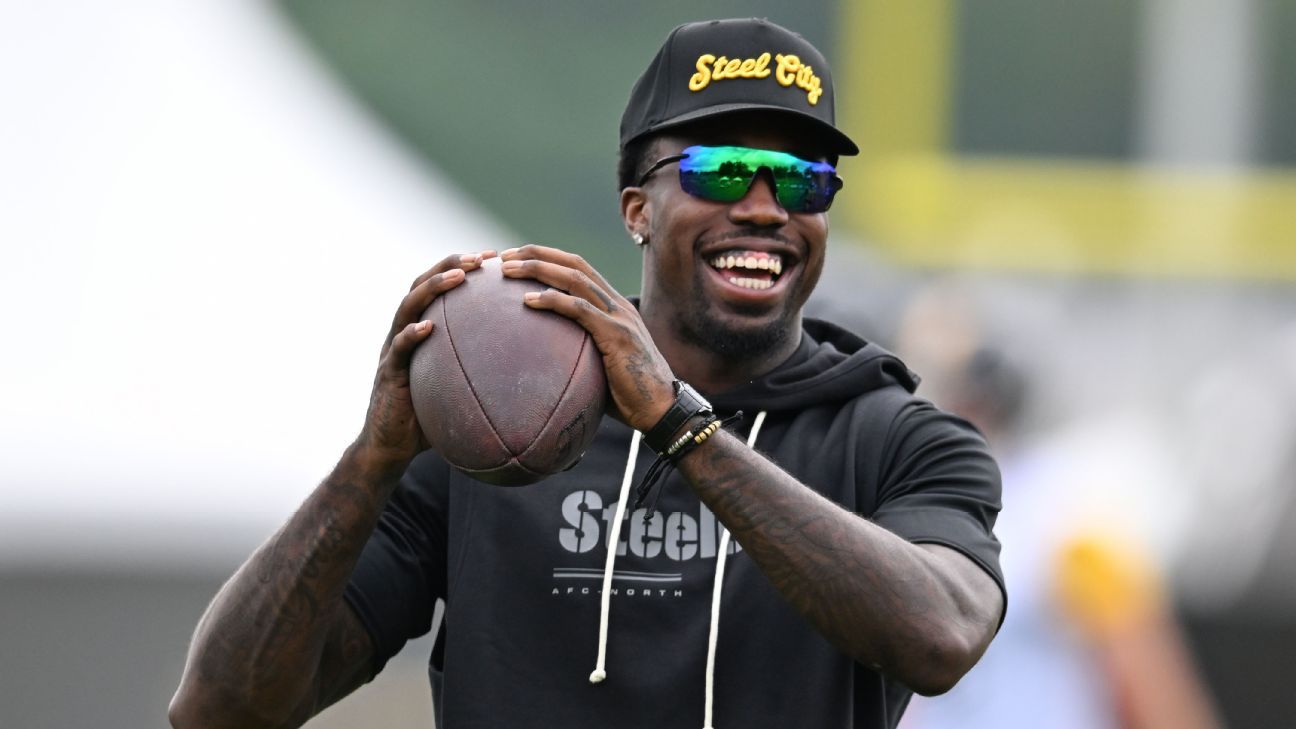
Joey Porter Jr. is leaving Pittsburgh with the kind of unresolved business that always makes a trade feel larger than the paper it’s printed on. After an offseason of negotiations that dragged into the first month of the season, the Steelers finally moved their young corner to the Dallas Cowboys, and in doing so they did more than rearrange a secondary. They exposed the hard edge of modern roster building: when a player and a team spend too long circling a contract, the future starts to look negotiable.
For Dallas, this is not a mere depth move. It is a declaration. The Cowboys have long built their identity on premium defensive talent, on speed and swagger in the back end, on the belief that if you can make life miserable for the opponent’s best receiver, everything else becomes easier to manage. Porter fits that instinct. He plays with length, confidence and a little bit of the family menace that football has always adored. The son of Joey Porter, he brings a name that still carries the scent of hard Saturdays and harder Sundays. In Dallas, that pedigree matters because the franchise has spent years trying to keep its defense from living entirely on reputation.
Dallas gets the kind of cornerback it can build around
Porter’s appeal is plain enough if you watch him with the lights down and the noise up. He is a press corner by temperament, not just by scheme. He wants to make the line of scrimmage an argument. He can get into a receiver’s frame, disrupt timing and force quarterbacks to hold the ball just long enough for the rush to arrive. In a league that has become increasingly allergic to hesitation, that skill carries real currency.
Dallas also knows the shape of this move. The NFL rarely hands out certainty cheaply, and cornerback is one of the sport’s most punishing jobs. If you are going to pay for a defensive back, you want one who can survive on an island and still look composed when the route tree deepens. Porter’s arrival suggests the Cowboys are willing to invest in that bet, likely with an eye toward a longer extension if the fit is as clean as they believe.
That is the crucial piece here. This is not just about the next few Sundays. It is about whether Dallas has found a defender who can age with them, not against them.
Pittsburgh chose leverage over the slow bleed
For the Steelers, the decision reads like a familiar act of organizational sternness. Pittsburgh has always believed in the dignity of restraint, the value of knowing when to let a player go before the relationship becomes a public irritation. Still, no one should mistake restraint for serenity. Trading a young corner with Porter’s profile, after negotiations stretched from the offseason into the season itself, says the gap between player value and team valuation was real enough to break the bridge.
There is also the colder football logic. The Steelers have spent years trying to keep their roster from tipping into one-man dependency on either side of the ball. They have seen enough of the league’s salary spiral to know that every premium extension forces a second question: what else do you lose to keep this one piece? Cornerbacks are especially tricky because their excellence is easiest to notice when it is absent. The wrong deal at that position can haunt a cap sheet for seasons.
If you want the wider frame, this is part of the same emotional arithmetic that has shadowed other clubhouse and locker room disputes across sports. We saw a version of it in the Red Sox internal strife over analytics, where trust and process collided in ways that made the room itself part of the story. Different league, different stakes, same old truth: once a team starts arguing with itself in public or semi-public, every decision becomes less about talent and more about power.
The contract question was never just about money
It is tempting to reduce a move like this to dollars, and the dollars always matter. But contract disputes in the NFL are rarely just a number at the bottom of a page. They are judgments about time, about health, about whether a player’s best years are still ahead or already being priced in. For Porter, the question would have been whether Pittsburgh viewed him as a foundational piece or a premium asset with an expiration date. For the Steelers, the question was whether the cost of certainty was worth the risk of being trapped by it.
In the NFL, the most expensive thing is often not the contract you sign but the argument you keep having.
That line applies here with almost uncomfortable neatness. The Steelers waited through the offseason and into the early weeks, and waiting can make a player either more valuable or more movable. In this case, it appears to have made him movable. Dallas, for its part, gets the chance to decide whether it sees Porter as a cornerstone or a high-end rental with an extension in mind. Those are very different futures wrapped in the same jersey number.
What Porter changes, and what the Steelers lose
Dallas will not ask Porter to be a savior. Good teams rarely need one player to be a savior; they need him to tilt a field. That is the more realistic and more useful expectation. Porter can help stabilize the outside, challenge receivers at the line and let the rest of the secondary breathe a little easier. If he meshes quickly, the Cowboys’ defense becomes less reactive and more dictatorial.
The Steelers lose more than a roster slot. They lose a young, physical identity piece at a position where continuity is rare and expensive. They also lose the kind of player whose name can become shorthand in a city that prides itself on defensive muscle. Pittsburgh fans have seen enough turnover to know that departures are part of the business. That does not make them painless. It makes them legible.
I have long thought there is a special kind of sadness in watching a team part with a player who still feels unfinished. Not a star who has fully bloomed and now demands a crown, but a hard-edged piece still being carved. Those are the moves that can look prudent in the morning and regretful by winter. Then again, front offices do not get paid to preserve sentiment. They get paid to predict the future, and the future is usually rude.
The next test is whether Dallas turns interest into commitment
The immediate watch item is simple: does the fit hold, and does it lead to a long-term deal? The Cowboys did not make this move to admire Porter from afar. They made it because they believe he can be part of their defensive spine. If that belief survives tape, chemistry and the inevitable bumps that come with any midstream change, this trade could end up looking like one of those rare transactions that helps both teams clarify who they are.
If it does not, then this will be remembered as another reminder that the NFL can be brutally efficient about ending conversations before they become expensive habits. Either way, Porter’s move changes the texture of the season. Dallas gets a corner with teeth. Pittsburgh gets its answer, whether it wanted one this soon or not.
Now the only thing left is the part that actually matters. Can the Cowboys turn a deal into stability, and can the Steelers prove they were wise to let the door close? The season will start answering shortly.
More from Straight From The Bench
Comments
Join the conversation — sign in to leave a comment.
Sign in to commentRelated Stories

Packers Kevin Zeitler Start Week 4: old guard, new job
Kevin Zeitler walked in, got to work, and immediately started looking like the answer at right guard. That’s how a veteran survives in the NFL.
Jalon Daniels NFL Start: the thermostat Kansas City needs
Jalon Daniels is stepping into his first NFL start with an old, unforgiving job description: steady the temperature. The rookie’s debut arrives not as a ceremony, but as a test of poise under pressure
2027 NFL Draft Rankings: Jordan Reid’s top 50 prospects
Jordan Reid’s first 2027 board is out, and the class already has shape. The quarterbacks are stacking, the receiver at the top is legit, and everyone else is chasing.