
Jonas Vingegaard Tour de France Injury Update: Visma Rallies
A broken collarbone may have stopped the rider, not the conviction.
 Beatrice Kensington6 min read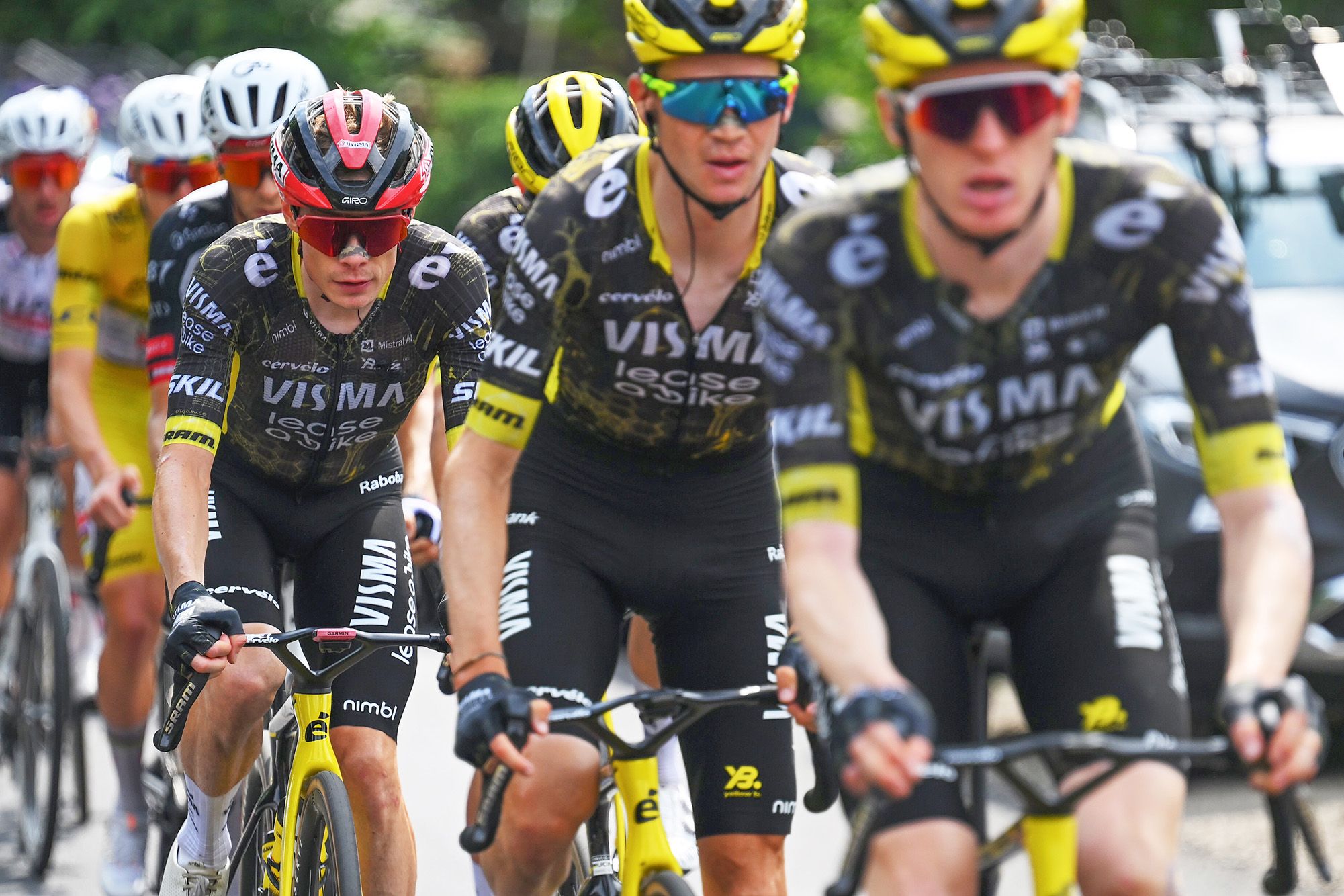
The Tour lost its favorite survivor
Jonas Vingegaard’s Tour de France ended the way no grand tour rider wants any season to end: in pain, in motion stopped cold, with a fractured collarbone and a trip to the operating table back home in Denmark. The surgery went well, which is the sort of clinical phrase that hides a much messier human truth. A bike race that has spent three weeks building toward suffering found its sharpest wound in a single crash, and one of the sport’s most disciplined men was suddenly reduced to a patient, then a voice on the edge of the team bus.
There was, by all accounts, an emotional farewell over burger and fries. That detail matters. Not because fast food has suddenly become an emblem of sporting nobility, but because it tells you how teams really live in a Tour: on crumbs of comfort, on ritual, on the thin glue of shared belief. Vingegaard did not simply disappear into a hospital room. He gave his Visma-Lease a Bike teammates a final push, telling them to make the best of it and ride aggressively. That is not a footnote. That is the whole mood.
In a race built on attrition, the most dangerous thing a contender can do is leave his team emotionally stranded.
A leader’s exit leaves a vacuum, not a pause
The Tour does not pause for grief. It is a merciless procession, and when a leader goes down, everyone else on the roster must decide what the loss means in real time. For Visma, this is not just about replacing watts. It is about replacing gravity. Vingegaard is the rider around whom a mountain stage becomes a plan rather than a wish. Without him, the team’s center of mass shifts. Domestiques who spent the spring sharpening themselves for one man’s campaign are suddenly asked to improvise.
That is where his farewell carries such unusual force. A rider can fracture a collarbone and still hand his team something durable: nerve. In professional road cycling, momentum is fragile, and belief often travels faster than legs. The Danes know this as well as anyone in the peloton; the modern era of the sport has made heroes out of precision, but it still runs on old Roman fuel — pain, loyalty, and pride.
Visma have spent years constructing one of the sport’s most meticulous competitive machines. They measure everything, trust almost nothing, and usually arrive in July with a plan for every climb and contingency for every crosswind. Yet no performance model can quite account for the emotional residue of losing the rider whose presence organizes the entire enterprise. The numbers remain, but the meaning tilts.
What the surgery really changes
A successful operation on a fractured collarbone is not a dramatic end; it is an opening chapter in a long recovery. For Vingegaard, the immediate concern is not simply healing bone but preserving rhythm. The best grand tour riders are not built only in the off-season. They are maintained through repetition, and forced time away can blur the edge that separates a podium threat from a merely excellent rider. The calendar will keep moving. So will his rivals.
That is why the human side of this matters so much. In a sport that loves to romanticize pain, there is a temptation to treat injury as proof of character. That can be a trap. A broken collarbone is not noble. It is just broken. The elegance of Vingegaard’s response lies in the opposite direction: he handled the moment with composure, then turned outward and urged the team to attack. He did not make the day about his absence. He made it about obligation.
I have long believed cycling reveals more about leadership than many richer sports do, because the leader is so often hidden inside the system he animates. A football quarterback can command a huddle; a cyclist must inspire from the front, from the roadside, or from a message delivered after a crash has stripped away the illusion of control. I think that is why this farewell lands with unusual weight. It reminds us that the strongest captains are not the loudest ones. They are the ones who can turn personal disappointment into collective purpose without asking for applause.
That has a historical echo, too. The Tour has always belonged to riders who could suffer with dignity and then ask others to keep climbing. From the old alpine kings to the modern all-rounders, the race has favored those who understand that a team’s morale is a currency as real as oxygen. Vingegaard, a Danish rider, has made a career out of controlled asceticism. This latest act — post-crash, pre-surgery, still coaching from the edge of the table — fits the pattern. It is not theatrical. It is colder than that. Better.
Visma’s attack has become a test of identity
The question now is what Visma choose to be in the days ahead. A wounded favorite’s team can retreat into caution, conserving energy, guarding losses, hoping the race becomes merely survivable. Or it can behave like a squad that understands the only meaningful tribute to a fallen leader is to race with teeth. Vingegaard appears to have chosen the latter for them. He handed them permission, maybe even a demand, to stop racing with their heads down.
That instruction may shape the rest of the Tour more than a great many healthy legs. Riders hear different things when a star is gone. Some hear freedom. Some hear panic. The best teams hear a new assignment. Visma’s task now is to convert emotion into motion, to turn a rider’s loss into tactical initiative. If they can do that, they salvage more than stage chances. They salvage identity.
The broader sporting lesson is plain enough. Injury does not only remove talent. It alters the social architecture around talent. Teammates recalibrate. Rivals sharpen. The race finds a new center. Vingegaard’s crash has done what crashes so often do in July: it has stripped the Tour of a story it was ready to tell and forced a more complicated one into its place.
The jersey remains in the race, but the man who wore it as a threat is now in recovery. Visma must decide whether to mourn the shape of things or attack the gap he leaves behind. The better teams, and the better souls, usually do both for a heartbeat. Then they get on with it.
More from Straight From The Bench
Comments
Join the conversation — sign in to leave a comment.
Sign in to commentRelated Stories

Athletics Injury Update: Joshua Kuroda-Grauer lands on IL
The A's lost rookie infielder Joshua Kuroda-Grauer after surgery for a ruptured testicle. It's a painful reminder of how thin depth gets when a young player is forced off the board.
Max Fried Injury Update: Yankees Activate Ace for Doubleheader
Max Fried is set to return after a two-month absence, giving the Yankees a badly needed front-line arm. In a season that keeps asking New York for more, this one matters.
Kyle Teel Injury Update: White Sox Catcher Out 6-12 Weeks
Kyle Teel’s high ankle sprain leaves the White Sox without their starting catcher for at least six weeks, and perhaps the rest of a lost season.