
Jonathan Taylor Trade Rumors: Colts Open Door to a Deal
A star back on the market would say as much about Indianapolis as it does about Taylor.
 Beatrice Kensington6 min read
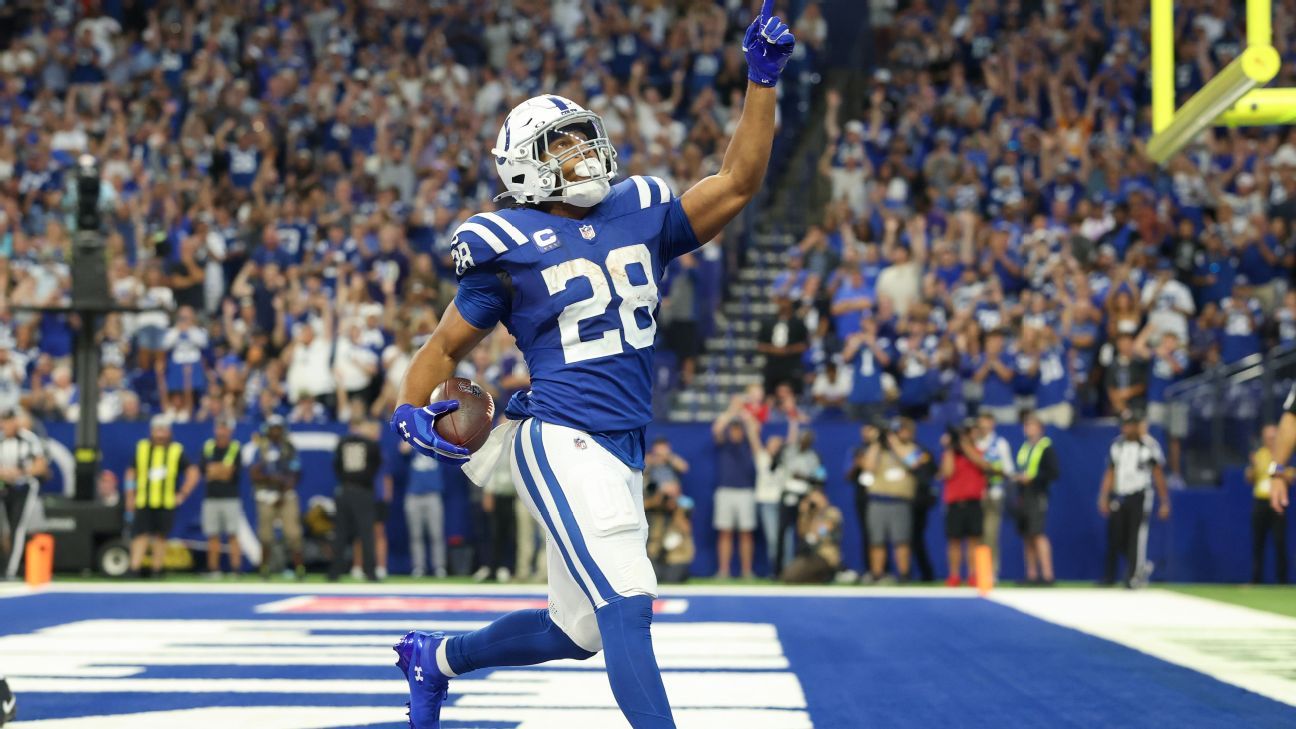
The first real shock here is not that the Indianapolis Colts are fielding calls on Jonathan Taylor. It is that they have reached the point where listening feels less like leverage and more like a sentence. A running back who once seemed destined to be the pulse of the franchise is suddenly a movable part, and the league, as ever, has no trouble turning a heartbeat into an asset column.
Taylor has been one of the most gifted backs in football, a runner who can make a defensive front look tired before halftime and a game plan look small by the fourth quarter. But the NFL rarely falls in love with certainty. It falls in love with contracts, calendars, and the arithmetic of roster construction. And in that arithmetic, a back approaching the wrong side of the age curve can become expensive fast, even one as talented as Jonathan Taylor).
Indianapolis is measuring the future, not just the player
This is not simply a talent decision. It is a philosophical one. The Colts have spent years searching for a stable identity at quarterback, cycling through eras that never quite settled into something permanent. That uncertainty changes the way every other roster move is viewed. If a team does not believe it is close enough to win with its present core, then even a star can be treated as a bridge rather than a foundation.
That is the ugly truth of the modern NFL. Running backs are adored until they are expensive, then admired, then discussed in the past tense. Taylor has already given Indianapolis explosive seasons and earned the sort of respect that comes only when a back repeatedly turns ordinary blocking into something grander. Yet the league has spent years teaching front offices that even brilliance at the position must be weighed against durability, mileage, and the hard math of replacement.
The NFL built this economy itself. It told teams that backs are interchangeable, then watched as a few special ones kept proving they are not. Taylor is one of those exceptions. That is why this conversation matters.
Why the market will be louder than the tape
Multiple teams have reportedly reached out, which is hardly surprising. A player of Taylor’s profile invites curiosity from every corner: contenders wanting a hammer for December, middling teams looking for a spark, and front offices forever tempted by the idea that the right veteran can change a season faster than a draft pick can.
There is also the seduction of scarcity. Good running backs are not rare. Great ones are. Taylor’s burst between the tackles, his balance through contact, and his ability to force defenses into committing extra bodies still carry real value. A club that believes it is one piece away from stabilizing its offense can convince itself that Taylor is that piece.
But trade talks in October tell their own story. They suggest Indianapolis is willing to examine not just what Taylor can still do, but what it would mean to cash in now rather than later. That is a difficult calculation with a player whose best football has often looked like the kind that should anchor a winning season, not be detached from it.
The odd thing is that this kind of market rarely rewards sentiment. Teams do not trade for what a player has meant to a city. They trade for what they think he might still mean to theirs.
The Colts are sending a message to the locker room
A possible Taylor deal would not stay confined to the running back room. It would reach the whole building. Veterans notice when a franchise starts converting familiar names into future picks. Young players notice too. The message is simple, even if nobody says it aloud: the front office is re-ordering its priorities.
That can sharpen a roster, or it can unsettle it. If Indianapolis truly believes it is pivoting toward a broader reset, then the move is coherent. If, however, the Colts see themselves as a team still trying to climb into the AFC’s middle tier, then moving Taylor would carry a sharper edge. You do not trade away a back like that unless you are prepared to explain what kind of football you expect to play next.
For Taylor, there is the human layer the league often prefers to skip past. Players grow roots in one city, build their routines around one facility, and learn the rhythms of a locker room that can feel like a second home. Then the business changes the address. It always does. The question is whether the departure is framed as a fresh start or a surrender.
The NFL never just trades a player. It trades a piece of the story a franchise told itself about who it was.
I have seen this movie before, and the ending is rarely tidy
Bea here: the league has become very good at convincing itself that emotion is a luxury item. I do not buy that. Not entirely. When a team contemplates moving a player like Taylor, it is not only weighing yards and cap space; it is deciding whether its identity will be built around stars or around flexibility, around now or around later.
We have seen this dance before with premium running backs, and it tends to follow the same uneasy rhythm. First comes the insistence that a player is central. Then comes the contract tension, the injury caution, the strategic pivot, the talk of “value.” Then, if the market is warm enough, comes the trade. Years later, if the player lands in the right place, people ask why the original team ever let him go. The answer is usually the same. Football got practical.
Taylor’s situation also underscores a broader league truth: franchises are increasingly willing to separate from even beloved players when the current roster no longer matches the cost of keeping them. That does not mean the front office is right. It means the front office is acting like a modern one. Those are not always the same thing.
And if Indianapolis does move him, the ripple effect will extend beyond one transaction. It will affect how opponents game-plan, how other teams value veteran backs, and how the Colts are perceived in the market for the next star they hope to develop or acquire. This is never just about one name. It is about whether a franchise is building with intention or simply rearranging the furniture while the house still leaks.
What to watch next as the calls keep coming
The next step is not complicated, though the fallout may be. Watch whether the Colts set a firm price or let the market define it. Watch whether the interested teams are contenders with a short-term need, or clubs looking to buy low on a premium talent. And watch whether Indianapolis pairs this openness with other roster moves that make the larger plan clearer.
For now, the most revealing detail is not that teams have called. It is that the Colts are answering.
That tells you the season, and perhaps the direction of the franchise, has entered a colder phase. Taylor’s name may not stay in Indianapolis for long. If it leaves, it will leave behind a question the Colts will have to answer on the field, not in the rumor mill.
More from Straight From The Bench
Comments
Join the conversation — sign in to leave a comment.
Sign in to commentRelated Stories

Garrett Wilson Jets Trade Rumors: No Deal Coming Before Deadline
Garrett Wilson isn’t moving, despite the deadline chatter. For the Jets, that’s less a surprise than a roster reality check.
Josh Jacobs Domestic Violence Report: Police Files Get Worse
Police records say three women contacted investigators after Josh Jacobs’ May arrest, each reporting similar abuse claims. The story is no longer about one bad night.

Daron Payne Injury Update: Commanders Face a Big Foot Problem
A “significant” foot injury to Daron Payne is the kind of news that changes a defense’s entire week. For Washington, it may change a lot more than that.