
Juan Soto and Francisco Lindor Mets Sitdown: What It Means
Freddy Peralta played peacemaker — and the Mets finally said the quiet part out loud.
 Zane Miller5 min read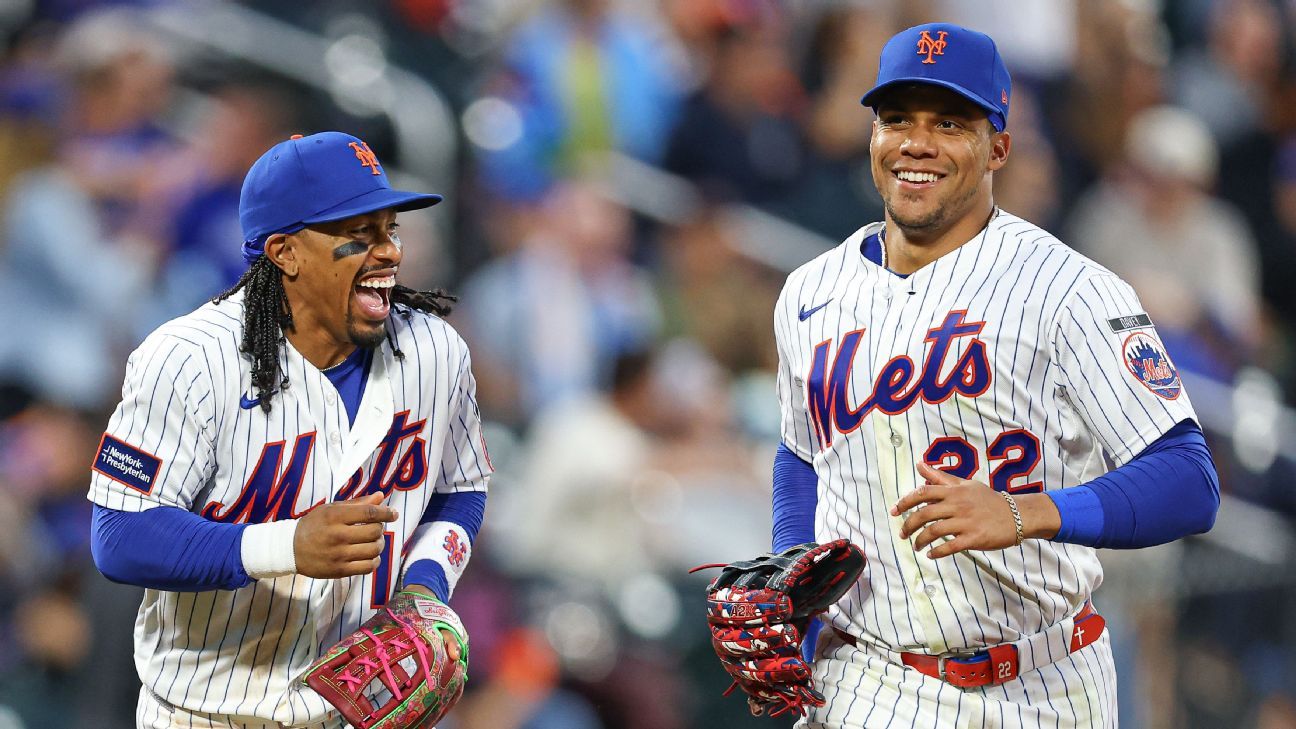
The Mets didn’t need another reminder that talent alone doesn’t glue a clubhouse together. They got one anyway.
Multiple sources say Freddy Peralta arranged a June sitdown between Juan Soto and Francisco Lindor so the two franchise faces could air out what had become a disconnected relationship. That is not standard operating procedure for a contending club. That’s triage. And it says plenty about where the Mets were living emotionally long before the calendar turned to late summer.
Peralta is now gone, shipped to Tampa Bay Rays land in a move that gave the room one less veteran bridge-builder. But the bigger story is the one hiding behind the transaction wire: the Mets apparently felt enough friction between their two highest-profile hitters that somebody had to walk them into the same room and get the conversation started.
A superstar pairing that never looked fully synced
On paper, Soto and Lindor should be a clean fit. Left-handed thunder, switch-hitting polish, two of the sport’s most marketable stars, and a lineup built to pressure pitchers from the first inning on. In reality, high-end baseball relationships are rarely about the logo on the chest. They’re about rhythm, trust, and whether two cornerstones read the same game the same way.
That’s where this gets interesting. The Mets have spent years trying to assemble a roster that feels star-heavy enough to scare people and coherent enough to survive October. When the stars don’t fully mesh, everything around them starts to wobble. The dugout notices. The coaches notice. Front offices absolutely notice.
Soto is a singular offensive engine, the kind that changes pitch plans for everyone around him. Lindor is the tone-setter, the heartbeat, the guy the organization wants the room orbiting around. Those roles can complement each other. They can also bump into each other if the communication gets stale or the expectations drift. Apparently, they drifted.
Freddy Peralta as accidental clubhouse conduit
Peralta’s part in this is the kind of detail baseball people file under: veteran sees a problem and tries to stop it from turning into a season-long annoyance. Not every pitcher in a clubhouse wants that job. Some run from it. Some pretend not to see it. Peralta stepped into it.
That’s why the sitdown matters more than the gossip angle. It suggests the Mets had enough internal awareness to identify a real issue, not just a bad week. And it also tells you Peralta had enough credibility with both sides to make the meeting happen. That’s not nothing. Players remember who can be trusted when the room gets weird.
The irony, of course, is that he’s now out the door. If you’re the Mets, that leaves an obvious question hanging over the roster: who’s the connective tissue now? Teams can survive friction when there’s another veteran presence to soften the edges. Lose that person and the cracks can get louder.
When two cornerstone stars need a mediator, the problem is never one conversation. It’s the months before it.
What the Mets were really trying to fix
This isn’t just about personalities. It’s about hierarchy.
Every good club has one, even the flashy ones. Somebody leads. Somebody follows. Somebody learns when to push and when to shut up. The Mets have tried to build a room where Lindor’s leadership and Soto’s offensive gravity can exist together without forcing a power struggle. That’s easy to say in February. It gets harder when the season starts chewing at everyone’s patience.
If this was just a little tension, you don’t call a special meeting. You let the veterans sort it out organically. The fact that Peralta organized it means the clubhouse sensed the disconnect had become visible enough to matter. That’s usually what front offices dread most: not a blowup, but a silent drift.
For a team trying to keep pace in a loaded National League, chemistry gets treated like a luxury until it isn’t. Then it becomes the edge you can’t quite measure but definitely feel. The Mets have lived on both sides of that equation before. They know the difference between a roster that is merely expensive and one that actually pulls in the same direction.
My read: this is less scandal, more warning flare
Here’s my take, and I’ll say it plain: I don’t see this as some giant Soto-Lindor blowup story. I see it as a warning flare for how fragile star ecosystems can be when the optics get ahead of the relationship.
I’ve covered enough of these rooms to know the quiet stuff usually matters more than the loud stuff. A team can absorb a quote dispute. It can survive a bad series. What it can’t always survive is two franchise players assuming the other guy understands the job without actually talking through it. That’s how you get parallel tracks instead of partnership.
The Mets didn’t sign up for a drama series. They signed up for run production, October relevance, and a lineup that forces opponents into bad choices. If Soto and Lindor can reset, this becomes a footnote. If they can’t, every cold streak gets framed through the same lens, and that’s exhausting for everybody in the building.
For a franchise that keeps trying to convince the sport it has stabilized, this is the sort of detail executives hate because it’s so human. Salary-cap sports people talk about chemistry like it’s frosting. Baseball people know better. A room can look perfect on a spreadsheet and still need somebody to pull two stars into a meeting because the vibes have gone sideways.
And make no mistake: around the league, clubs notice this stuff. Not because they’re laughing at the Mets. Because they’re studying how hard it is to keep elite talent aligned once the daily grind starts grinding back.
There’s a reason I keep coming back to the mediator role. Teams don’t usually lose seasons in one dramatic moment. They lose them in the spaces between conversations.
The Mets have their answer now. Whether they like it or not, so does everyone watching.
Next step: see if the lineup starts feeling less like a collection and more like a unit. That’s the real test, and it’s the only one that matters now.
More from Straight From The Bench
Comments
Join the conversation — sign in to leave a comment.
Sign in to commentRelated Stories
2026 MLB trade deadline awards: Dodgers, Yankees, Mets, more
The 2026 deadline had the usual noise, but the real story is pressure. The Dodgers, Yankees and Mets made their moves; now the hard part starts.

Red Sox Adley Rutschman Catching Update: New Team, New Test
Adley Rutschman is already learning the hard part of joining a new club: trust. The bat can wait. The signals, the rhythm, the little stuff can’t.
Tarik Skubal Dodgers Debut: A Cy Young arm looks right at home
Tarik Skubal walked into Los Angeles and looked like he’d been wearing Dodger blue for years. The box score was clean, the stuff was louder, and the league noticed.