
Lane Johnson Retirement: Eagles Face a 2027 Cap Crisis
The left side of the ledger may be calm. The right tackle void won’t be.
 Beatrice Kensington6 min read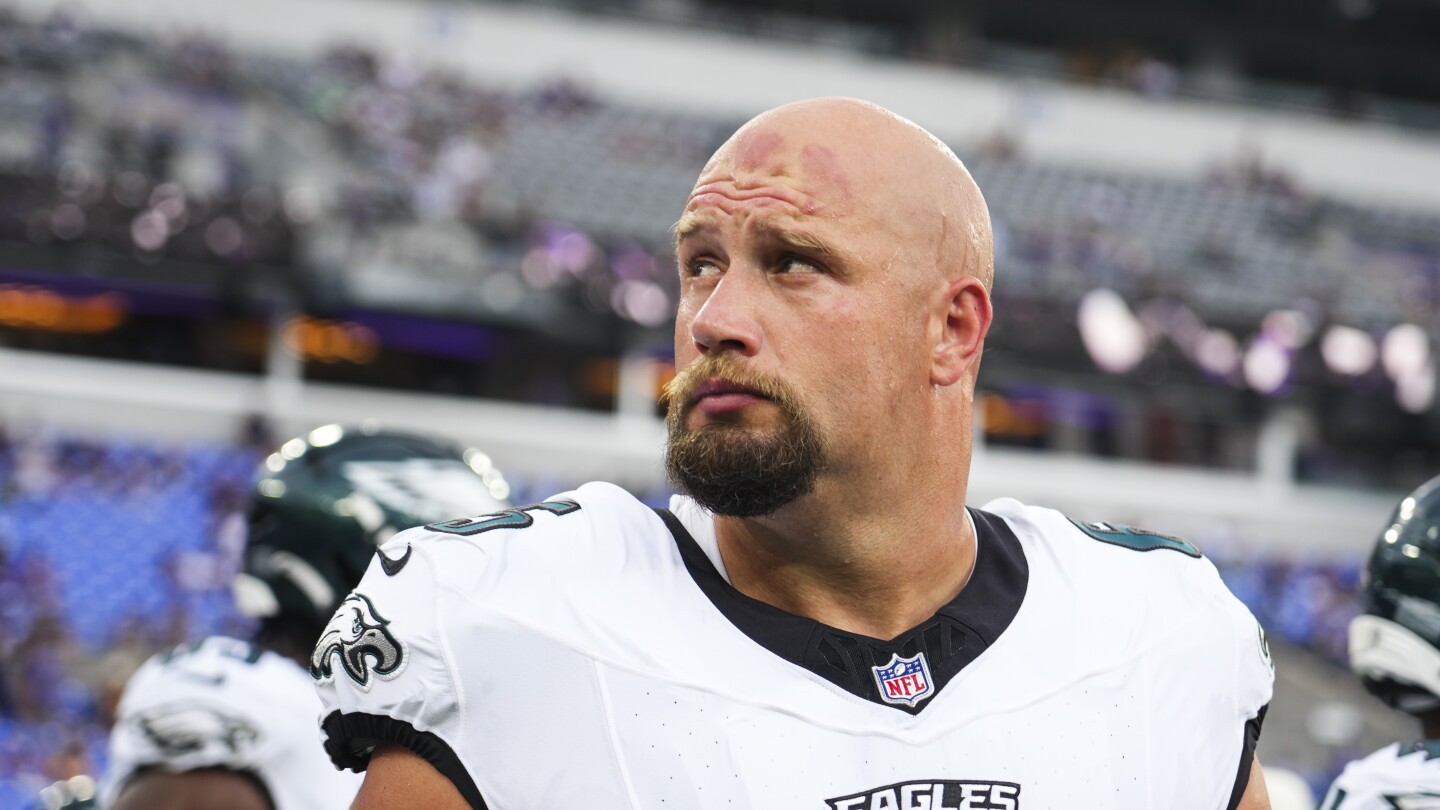
Johnson’s exit changes the math, not just the line
Lane Johnson has been one of those rare players who made the extraordinary look routine, the kind of right tackle whose presence altered how an offense breathed. When he said in August that 2026 probably would be his last season, that already felt like the end of an era. Retirement now, after only three games, brings the timeline forward and the cost into sharper focus. The Eagles are losing a player whose value was never fully captured by statistics, but whose absence will be felt in the bluntest possible language of football: protection, continuity, and money.
Philadelphia has spent years building around Lane Johnson, and for good reason. The right tackle position rarely earns poetry; Johnson made it deserve some. He was the wall on the edge, the man who let a quarterback hitch, reset, and trust the pocket would hold. That kind of certainty is hard enough to replace on Sundays. It is harder still when the accounting office enters the conversation.
The Eagles’ cap problem is the quiet part becoming loud
This is where the story stops being sentimental and starts being structural. An early retirement can turn a manageable plan into a messy one, especially when a veteran contract has been charted with a different finish line in mind. The Eagles had every reason to expect Johnson’s departure in the near future, but the timing matters. A player stepping away now can leave dead money, create timing issues with future roster planning, and force a team to accelerate decisions it would rather delay.
That is the cruel arithmetic of the modern NFL. Teams do not simply lose talent; they inherit consequences. If Philadelphia had banked on one more season of Lane Johnson, even indirectly, then 2027 was always going to be the year in which the organization paid the bill for age, stature, and success. Now that bill may arrive with interest.
The Eagles have lived in this territory before, and it has often been the price of staying aggressive. Championship windows do not close neatly. They creak. They leave cap tabs on the table, and eventually somebody has to pick them up.
Why the tackle spot matters more in Philly than almost anywhere else
It is easy to talk about right tackle as if it were an interchangeable office chair, but that is not how this league works. On the Eagles, the position has had outsized importance because of the way the offense has been built, the way the run game leans, and the way quarterbacks are asked to survive in crowded pockets.
Johnson’s steadiness gave Philadelphia a luxury it rarely admits it has had: one side of the line could be trusted without weekly drama. Lose that, and the offense is forced to redistribute its anxiety. The quarterback feels it first. The play caller feels it next. The run game feels it when edges close faster than expected. And if the replacement is young, the team may be buying potential while paying veteran prices.
That is why this retirement is about more than a single roster slot. It presses on the whole architecture of the roster. A tackle of Johnson’s caliber lets front offices spend elsewhere with confidence. Take that away, and the margins narrow. You begin paying premium resources for insurance instead of improvement.
The hardest part of losing a star offensive lineman is not replacing his snaps. It is replacing the calm he gave everyone else.
What the Eagles must decide before 2027 arrives
The practical choices are straightforward, even if none of them are pleasant. Philadelphia can draft a successor, develop one quietly, and hope the timeline works. It can spend in free agency and hope a veteran steadies the position. Or it can roll the dice on internal candidates and trust its coaching to manufacture competence.
All three paths have costs. The draft brings uncertainty. Free agency brings price tags that can stiffen a cap sheet already under strain. Internal development brings patience, which is often the first casualty in a city that remembers its linemen by the bruises they do not allow.
The larger issue is that the Eagles cannot afford to treat this as a sentimental farewell only. Johnson’s retirement deserves gratitude, not begrudging ledger talk. But the front office must now view the next two years as a bridge project. Who is the tackle of 2027? Who protects the blind side’s sibling side? How much can the team afford to spend solving that problem once Johnson’s final season is no longer on the books?
This is also where the ripple effect reaches beyond the line. A franchise quarterback, whether that is now or later, lives on protection. Receivers live on timing. Running backs live on edges that do not collapse. Strip away a premier tackle and you do not just lose a player; you alter the texture of the offense.
My read: Philadelphia is paying for excellence, as usual
I have long believed the cleanest way to understand elite NFL teams is to follow where their comfort disappears. For Philadelphia, comfort has often been purchased at the line of scrimmage. That is the franchise’s old virtue and its recurring vulnerability. The Eagles build hard, win hard, and eventually discover that hard-built teams age in chunks rather than increments.
Johnson’s retirement, whenever it became official, was always going to be a line item with consequences. What changes now is the speed of reckoning. The Eagles do not merely need a new tackle. They need to make peace with the fact that one of the most reliable players in franchise history has stepped away before the organizational calendar expected him to. That is how cap problems begin: not with catastrophe, but with a gap between plan and reality.
And yet there is dignity in this too. Johnson has earned the right to leave on his terms, not the team’s. He has done his work, taken his hits, and helped hold together the kind of line that keeps a city’s football dreams upright through winters that feel longer than they should.
Philadelphia will move on. Of course it will. Teams always do. But the bill for excellence never disappears; it merely finds a later address.
The Eagles now have a runway to prepare, and not much room to waste it. 2027 is not far away. In this business, neither is the reckoning.
More from Straight From The Bench
Comments
Join the conversation — sign in to leave a comment.
Sign in to commentRelated Stories
Tyreek Hill Divorce Case: Audio, Video Put Pressure on Both Sides
The Tyreek Hill divorce trial is dragging private life into public view, with audio and video now part of the record. For a free agent, that matters beyond the courtroom.
Lane Johnson Retirement Comments: Stephen A. Smith Apologizes
Stephen A. Smith walked back his remarks on Lane Johnson’s retirement, a small act with a large shadow. In the NFL, where toughness is currency, the apology mattered.
Lamar Jackson Ankle Injury Update: Ravens Hold QB Out of Practice
Lamar Jackson was absent from early Ravens practice with an ankle injury, a reminder of how quickly Baltimore’s margin for error can shrink. The team now waits on the health of its most indispensable