
Lane Johnson retirement: Eagles lose a pillar of the right edge
Philadelphia’s latest goodbye feels larger than football.
 Beatrice Kensington6 min read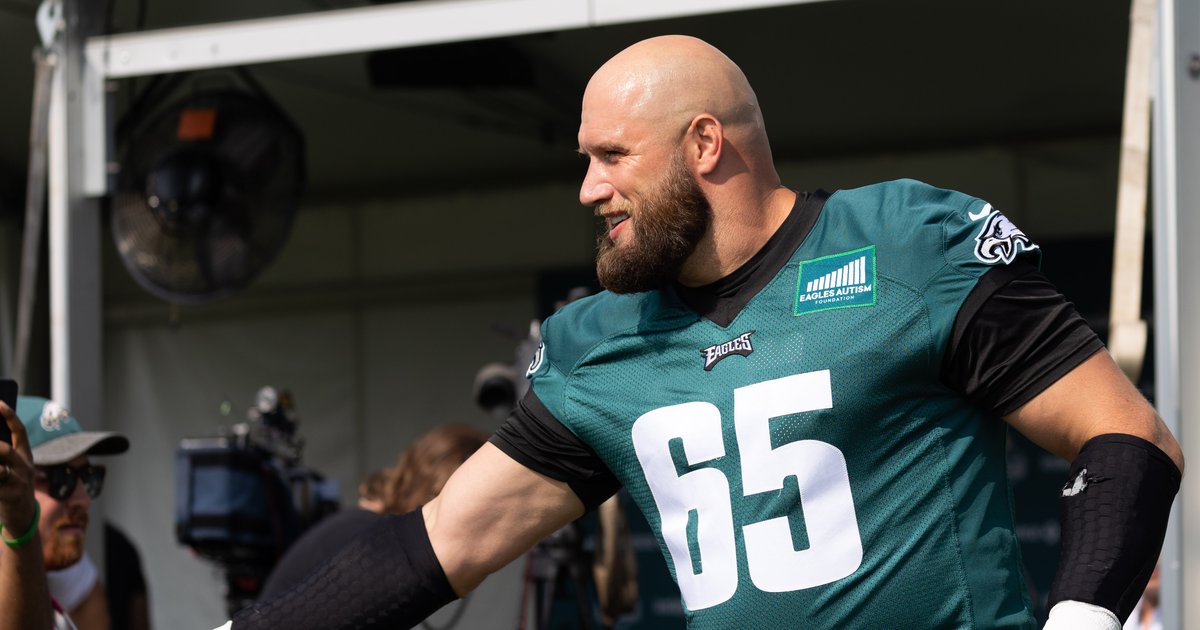
Lane Johnson’s retirement lands like a deep bruise in Philadelphia: not loud, not theatrical, but felt immediately by everyone who has watched the Eagles build, break, and build again with his right side as the constant. The Eagles have said farewell to stars before, of course. This one carries a different weight. Johnson was never merely part of the machinery. He was the guardrail, the doorframe, the reason the whole house did not tilt when the weather turned nasty.
The end of an era on the right side
For more than a decade, Johnson made right tackle look less like a crisis position and more like a place of calm competence. That sounds plain until you remember how rare it is. In a league obsessed with edge pressure, timing, and fragile quarterback confidence, a dependable tackle can feel like a civic utility. You only notice him fully when he is gone.
Johnson retires as one of the great offensive tackles of his generation, and one of the most decorated linemen in Eagles history. The body of work matters here. So does the way he played. He was not simply effective; he was often dominant, the kind of blocker who could erase an opposing pass rusher from the evening and make it look procedural. For Philadelphia, that kind of steadiness became woven into the franchise identity.
This is not a farewell that arrives with the clean symmetry of a final snap. It arrives with the noise of an unfinished season, with roster questions still curling in the air, with the uncomfortable truth that football teams are never allowed to stay young or intact for long. The Eagles’ right edge now belongs to the future, and the future is usually less polished than memory.
Great tackles don’t just protect quarterbacks. They preserve a team’s nerve.
What Johnson meant to the Eagles’ identity
The Eagles have long sold themselves, and often successfully, on a certain hard-edged practicality. Run game. Line play. The trench wars. Johnson was the embodiment of that creed, the sort of player coaches point to when they want to explain culture without sounding sentimental. He gave Philadelphia a rare luxury: the chance to set aside one concern while juggling a dozen others.
That stability mattered even more in seasons when the rest of the roster wobbled. When the offense grew noisy, when protection broke down elsewhere, when the quarterback needed a clean launch point and the playbook needed a few extra heartbeats, Johnson was usually there to blunt the worst of the chaos. He made hard things look organized. That is one of the highest compliments you can pay an offensive lineman.
His retirement also closes a chapter for an organization that has spent years leaning on the physical edge as both a strategic weapon and a philosophical anchor. The Eagles have been good enough, for long stretches, because they understood that glamour is often built on anonymity. Johnson made anonymity impossible, but the principle still held: the game is frequently won by the men who receive no applause until they disappear.
Philadelphia now has to replace more than a player
The football question is obvious enough. Who takes over? Who protects the edge? Who steps into a role that has been defined by elite consistency rather than mere availability? That is the first layer, and the most immediate one. But the larger issue is subtler. Replacing Lane Johnson means replacing the expectation that one side of the line can be trusted almost by habit.
That kind of trust changes play-calling. It changes how a quarterback feels in the pocket. It changes how much help a team must commit to chip blocks and slide protections. It changes, in a very real sense, the emotional temperature of an offense. A great tackle gives a coordinator permission to be ambitious. Lose that player, and the margins begin to shrink.
For an Eagles team already living in the constant pressure of contention, this is the sort of move that forces honest inventory. The front office can draft, sign, and scheme around the hole, but nobody should pretend the hole is small. Eagles Lane Johnson Retirement: End of a Philadelphia era is not just a headline; it is a reminder that even the most stable franchises are built on temporary foundations.
The same lesson has been hovering over other roster stories around the league, too. A season’s worth of planning can be altered by one veteran step aside, one unexpected absence, one key cog no longer willing or able to carry the load. Philadelphia knows that better than most.
Why this retirement feels bigger than the box score
I have always believed the best linemen age into folklore in a way skill-position stars rarely do. A wide receiver can leave behind highlights. A tackle leaves behind relief. That may sound less glamorous, but in football, relief is a kind of artistry. It allows the rest of the offense to breathe.
Johnson’s departure also says something about the shape of modern roster life: even the players who seem permanent are only passing through. Philadelphia fans understand that with unusual clarity. They love hard-earned excellence, and they know how quickly it can be replaced by hope, then by uncertainty, then by another long summer of projection. The city never pretends otherwise. It mourns, then it recalibrates.
There is a historical line here to older eras of line play, to the great right tackles and left tackles who earned reputations not through flashes but through decades of ordinary-looking domination. Johnson belongs in that company. He was not just good for a stretch. He was good in the way franchises build their memory around someone. That is why this retirement lands so heavily.
The Eagles also face a cultural challenge now, not just a tactical one. A team that has relied on veterans like Johnson to set the emotional tone must decide where that tone comes from next. Leadership is often treated as a vague clubhouse word. It is not vague at all in Philadelphia. It is the difference between a unit that absorbs pressure and one that fractures under it.
For readers tracking the broader Eagles arc, Johnson’s retirement sits in the same emotional neighborhood as other foundational departures, the sort of transitions that force an organization to confront age, mortality, and the cold arithmetic of the salary cap. The Lane Johnson retirement story will matter in the film room, certainly. It will matter more in the huddle, where trust is built one rep at a time and lost far faster.
The Eagles will find a replacement. They always do. But replacements are not replicas, and this is where the ache begins.
Philadelphia has lost a great right tackle. It has also lost a little of its certainty. The season keeps moving. The standard does not vanish, but it now has to be defended by someone else.
More from Straight From The Bench
Comments
Join the conversation — sign in to leave a comment.
Sign in to commentRelated Stories

Dan Campbell offense struggles: Lions coach sounds the alarm
Dan Campbell didn’t sugarcoat the Lions’ sluggish start. The offense looks ordinary, the defense needs fixing, and patience is starting to wear thin.
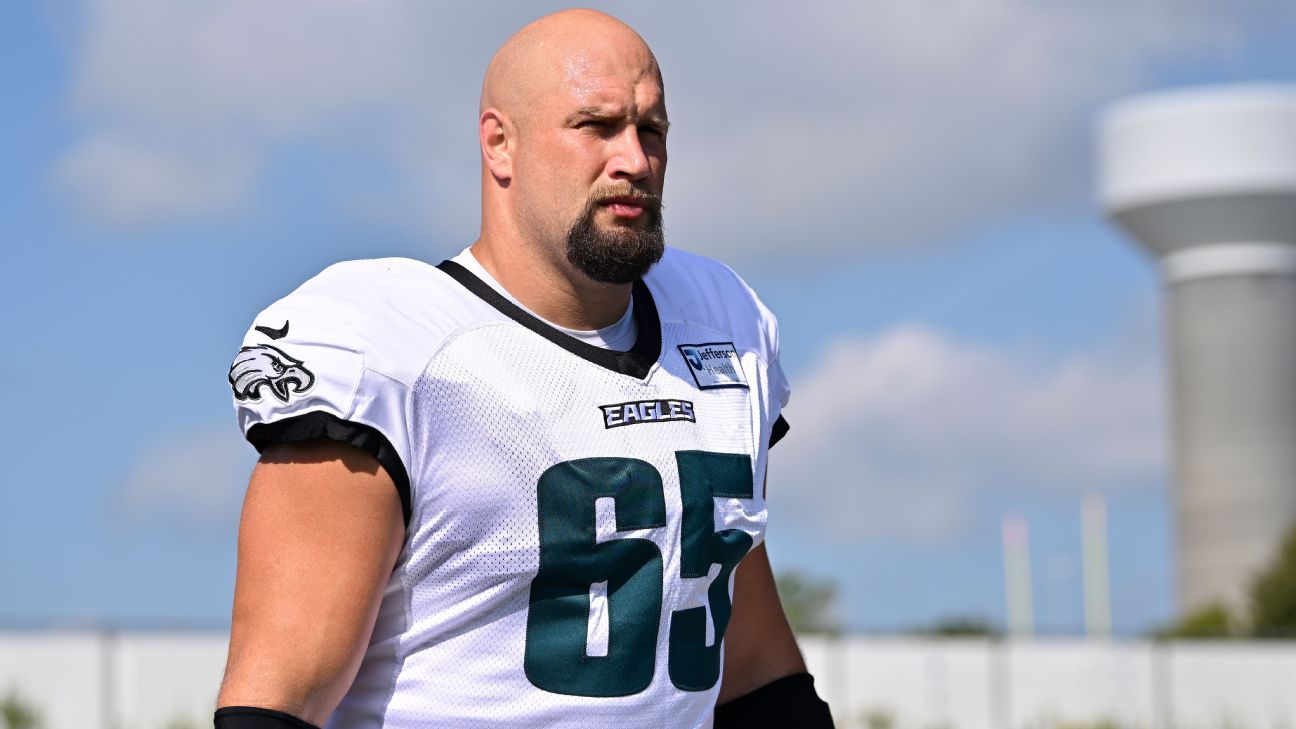
Eagles Lane Johnson Retirement: End of a Philadelphia era
Lane Johnson’s retirement closes a 14-year Philadelphia chapter defined by dominance, toughness and quiet gravity. The Eagles now face a real question at the edge of their identity.

Fantasy Football Waiver Wire Week 5: Emanuel Wilson, Keaton Mitchell Top Pickups
Week 5 waivers are where patience gets rewarded and hesitation gets punished. Emanuel Wilson and Keaton Mitchell headline a market built on urgency, scarcity and a little bit of luck.