
Luis Castillo Trade: Mariners Send Ace to White Sox
Seattle’s summer pivot is less a flourish than a verdict.
 Beatrice Kensington6 min read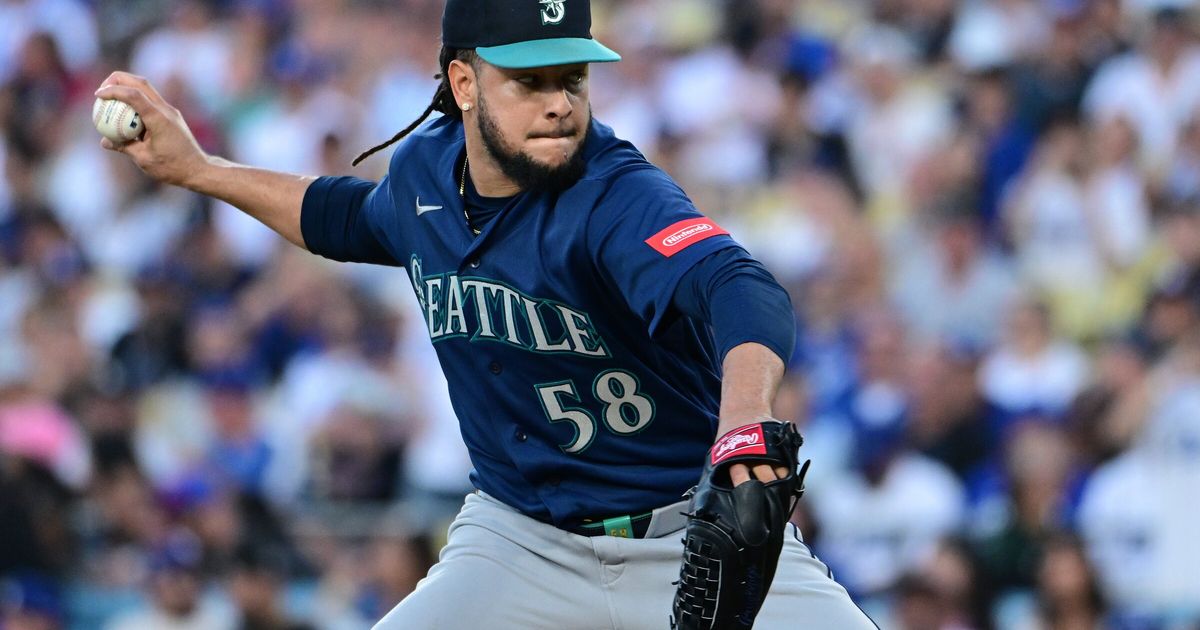
The first meaningful swing of the summer did not arrive with fireworks. It came with a ledger’s dry finality, the kind of transaction that rearranges a season before the crowd has fully grasped what changed. Luis Castillo) is headed to the Chicago White Sox, and the Seattle Mariners are saying, in the plainest possible language, that their present is no longer worth protecting at all costs.
That is the hard part of deadline season. Not the rumor, not the speculation, not the breathless inventory of prospects and control years and what-ifs. The hard part is the admission baked into a trade like this: a club that can sell one of its most recognizable arms has decided the standings have begun to speak louder than hope.
Seattle’s move says the season has tipped
Castillo has been one of the faces of the Mariners’ competitive era, the veteran presence on a staff that has often needed steadiness more than sparkle. He arrived as the sort of starter teams dream of finding at the right moment — durable, battle-tested, and good enough to change the shape of a series. Shipping him out now is not merely a roster adjustment. It is a declaration that Seattle has entered a different part of the calendar, and maybe a different part of its own identity.
The Mariners have spent enough summers circling contention to know the difference between a team on the rise and a team stuck in neutral. A move like this suggests they see the gap clearly. If they were close enough to chase, they would have kept the horse in the stable. Instead, they have chosen to cash in an expensive, established asset for three players whose value may not be immediate, but whose control window will almost certainly be longer. That is how baseball’s middle class survives: by accepting that even good teams must sometimes bow to arithmetic.
For Seattle fans, the emotional cost is real. Castillo represented certainty in a sport built on erosion. He was the pitcher managers trusted to stop a slide, to quiet a dugout, to keep a bullpen from catching fire by the third inning. Those men are rarer than front offices pretend. You can draft ceilings. You can trade for projection. You cannot manufacture the calm a veteran starter brings when the night has begun to lean the wrong way.
Chicago buys the shape of a rotation
For the White Sox, the appeal is obvious. A team that wants to shorten losing seasons has to start somewhere, and starting pitching is still the cleanest way to impose order on the chaos. Castillo does not arrive as a mystery box. He arrives as a known commodity, a pitcher with big-game mileage and the kind of repertoire that can steady a club’s weekly rhythm.
Chicago has spent too much of the recent past being outgunned in the pitching department. A trade for an arm of this caliber is a practical move, the sort that can raise the floor even if it does not instantly lift the ceiling. It tells the clubhouse that the front office is not merely waiting for the future to happen; it is trying to shape it.
That matters, too, for the rest of the roster. Starting pitching has a way of changing the terms of a series, not just the box score. A strong top-line starter gives the bullpen better rest, gives the offense a chance to breathe through a longer game, and changes how opponents line up a weekend. A club does not have to be great to benefit from a pitcher like Castillo. It only has to be serious.
It also fits a broader pattern in deadline baseball: contenders and rebuilders no longer live on opposite planets, but they still speak different languages. Seattle is turning talent into time. Chicago is turning time into credibility. Both are rational. Only one, for the moment, is willing to sacrifice a familiar name to make the math work.
The three-player return will be the real verdict
There is always a temptation to grade a trade the instant the names are announced. That is a fool’s errand, especially in baseball, where a prospect can look like a bargain in July and a burden by the following spring. The quality of Seattle’s return — the three players coming back — will determine whether this deal feels like a prudent reset or the kind of move that leaves a fan base staring at the calendar with a sour taste.
The Mariners have not simply traded a pitcher; they have traded certainty for variance. That is the bargain. It may pay off handsomely if even one of the players develops into a fixture. It may also become the sort of trade that looks tidy on paper and thin in October. Teams love control until they discover that control does not always mean impact.
I have always thought these deadline moves reveal more about ownership of the present than any public statement could. A club can talk about competing while making small, polite additions, or it can send out a respected starter and admit, however reluctantly, that the season has already bent out of shape. Seattle has chosen honesty. It is an unsentimental honesty, and fans do not have to like it to understand it. The Mariners have lived long enough in the shadow of promise to know that half-measures are a particularly cruel form of theater.
This is the kind of trade that tells you a front office has stopped arguing with the standings.
Chicago, for its part, gets the older and perhaps more useful luxury: a player whose usefulness can be counted in innings, not just potential. That is not glamorous. It is often better.
What to watch as both clubs move forward
The immediate question in Seattle is whether this is the first step in a wider sell-off or a targeted reset built around replenishing depth. One trade can be prudence. Two or three can become a confession. The front office will spend the next stretch trying to convince everyone — perhaps itself most of all — that this is about rebalancing, not surrender.
In Chicago, the focus turns to what Castillo does under a different uniform and a different kind of pressure. The White Sox are not asking him to be a savior. They are asking him to be consistent, to give them shape, to raise the pitch-to-pitch standard of a staff that needed help. That is a reasonable ask. And in baseball, reasonable is often how the useful things begin.
The next few weeks will tell us whether Seattle has chosen the first domino in a thoughtful retool or simply the easiest name to move. They will tell us whether Chicago has bought real stability or just the illusion of it. For now, the trade leaves both clubs standing in clearer light.
The Mariners have opened the door. Now comes the harder part: deciding what kind of room they want on the other side.
More from Straight From The Bench
Comments
Join the conversation — sign in to leave a comment.
Sign in to commentRelated Stories

Dodgers Trade for Tarik Skubal: LA Lands the Ace
Los Angeles didn’t shop for a nice-to-have. It went and grabbed a frontline ace in Tarik Skubal, and that changes the whole temperature of October.

Cubs vs Yankees: Pete Crow-Armstrong Seizes the Night
Chicago and New York played a grinder until Pete Crow-Armstrong cracked it open in the seventh. This was a statement swing in a statement series.

MLB Trade Deadline Rumors: Adley, Kirby, Skubal, Miller
The Dodgers already snapped up Tarik Skubal, and now the rest of the market has to answer. Some clubs are shopping stars, others are just window dressing.