
Luis Castillo Trade to White Sox: Mariners React to the Shock
A pitcher can be moved in a breath; the ripple lasts much longer.
 Beatrice Kensington6 min read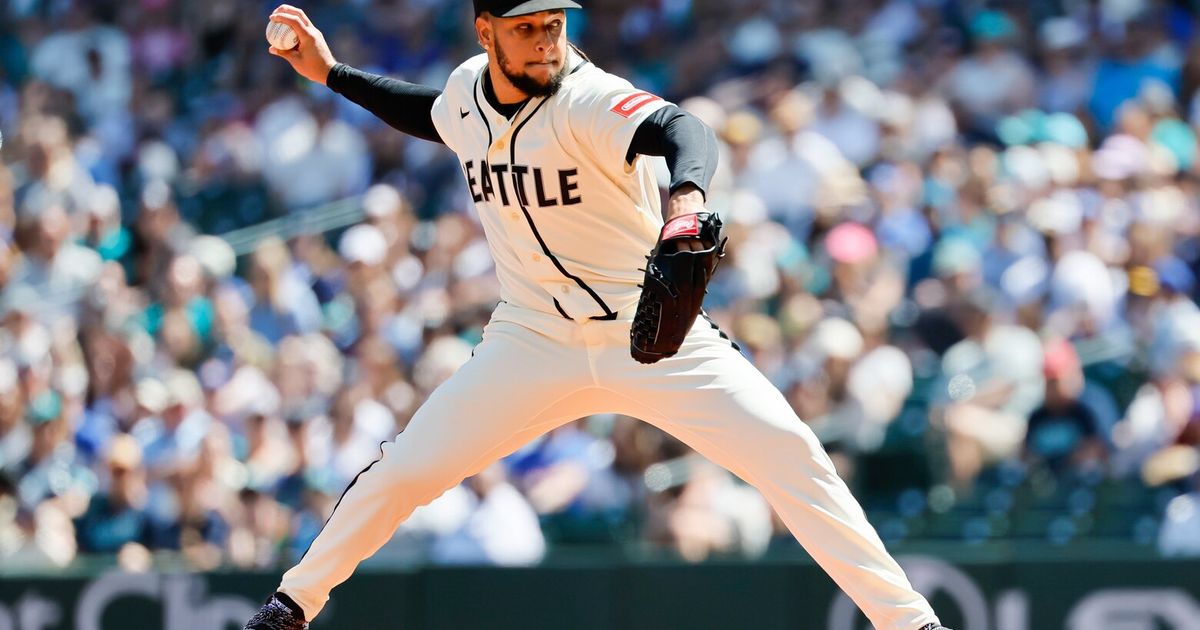
The commute that ended with a trade call
Bryce Miller was halfway through the ordinary Seattle ritual — leaving T-Mobile Park, thinking about traffic and dinner and whatever comes after a long day — when the baseball calendar turned theatrical again and Luis Castillo) was sent to the Chicago White Sox. That is how these things often arrive now: not with the old soft rustle of rumor, but with a phone vibrating in a pocket, a glance at social media, a moment in which a clubhouse learns that the ground beneath it has shifted.
The reaction in Seattle was not merely surprise. It had the sharper edge of disbelief. Castillo was not a fringe arm, not a deadline flyer, not the sort of pitcher you move when you are tidying the edges of a roster. He was the veteran presence in a rotation that had been built, in part, around his steadiness. Take him out, and the Mariners do not just lose innings. They lose a kind of gravitational pull.
What Castillo meant inside a young rotation
The best teams do not ask their veterans only to throw strikes. They ask them to set the weather.
Castillo has long been that kind of pitcher: the one who can slow a series, settle a dugout, and turn a three-game week into something more manageable by virtue of his mere presence. In a room with younger starters learning how to survive major league turbulence, he was the one whose routines, between-start habits and game-day calm carried a practical lesson. That matters in a way the box score never fully catches.
Seattle’s rotation has been one of the sturdier architectural features of this club. The organization has spent years collecting and cultivating arms, hoping to assemble depth that can withstand the attrition of a full summer. Castillo fit that design because he could be the headliner without acting like one. His departure leaves a technical hole — innings, quality starts, leverage in big moments — but also a human one. Pitching staffs are ecosystems. Remove the oldest tree and the light changes for everything around it.
That is why a trade like this jolts more than the rotation chart. It asks the remaining starters to absorb not only additional work, but a different emotional climate. A team can preach next-man-up until the words go numb. The real test is whether the next man up feels like he is inheriting opportunity or emergency.
The White Sox get a veteran, Seattle gets a mirror
For Chicago, the move says something about urgency and ambition, even if the front office eventually has to defend the math of it. A pitcher with Castillo’s track record brings credibility the moment he steps off the plane. He shortens the distance between a rebuilding club and a believable plan. For a fan base that has seen too many summers end in patience and promises, that kind of addition matters because it tells them the calendar still contains intent.
For Seattle, the trade feels like a mirror held a little too close. A club that has spent seasons talking about contention, sustainability and October readiness must now answer a difficult question: if a pitcher like Castillo can be moved, what exactly is the roster being built to protect?
The hardest trades are the ones that make a team look less like a contender and more like a spreadsheet.
That may sound severe, but baseball executives know the truth hidden in it. Deadline deals are not evaluated only by prospect return or payroll flexibility. They are judged by what they signal to the room. A team that sells off a trusted veteran is not merely making a transaction; it is announcing a belief about its own timeline. Players hear that. So do coaches. So do fans who have paid enough to spot the difference between a retool and a retreat.
The Mariners have been here before in different forms, of course, as have so many clubs on the edge of contention. The modern game asks front offices to perform a constant balancing act between now and later. But every once in a while, later arrives wearing the face of now. That is when the room gets quiet.
Beatrice Kensington: this is what unsettles a clubhouse
I have always believed the most revealing roster moves are not the glamorous ones, the trades that come wrapped in prospect lists and optimistic press conferences. It is the severing of familiar ties that tells you what a franchise truly values in a given season. Castillo’s exit feels less like a headline and more like a message slipped under the door. Not angry. Not cruel. Just clear.
And clarity can be brutal.
What unsettles me is not that Seattle made a move — baseball rewards the ruthless, and front offices are paid to imagine futures. What unsettles me is the specific kind of player they chose to move. Castillo was the sort of arm teams usually cling to in the belief that October will eventually arrive and that veterans like him are what make the difference when it does. Shipping out a pitcher of that caliber suggests either a profound confidence in what comes next or a sobering lack of faith in what is currently standing in the room.
Both possibilities are expensive.
What to watch next in Seattle
The immediate question is how the Mariners redistribute responsibility. Miller, who was already processing the trade in real time, becomes more than a promising starter; he becomes part of the spine. The remaining rotation must now handle not just extra innings but extra scrutiny. Every poor start will feel a little larger. Every good one, a little more necessary.
There is also the matter of clubhouse language. Teams will publicly insist that they move on, that baseball is business, that they have the depth to absorb change. Perhaps they do. But the innings after a franchise-defining trade often tell a more honest story than the press release. If the Mariners respond with sharper execution, the trade may eventually look like one of those hard, cold decisions that keep a season alive. If they wobble, it will be remembered as the day the floor shifted under their feet.
Seattle has made a habit of asking its fans for patience. Patience is a fragile currency. Spend it too often and it begins to sound like a demand rather than a promise.
The next start will tell part of the story. The next road trip will tell more. And somewhere in Chicago, Luis Castillo) will be trying to make a new uniform feel like old work.
The trade is done. The reverberation is just beginning.
More from Straight From The Bench
Comments
Join the conversation — sign in to leave a comment.
Sign in to commentRelated Stories
Diamondbacks vs Guardians Rain Delay After Benches-Clearing Rumble
Arizona tried to stir the pot against Cleveland, and the game turned into a mess of tempers and weather. Tim Tawa’s bunt bid lit the fuse.
Yankees acquire Luis Garcia Jr.: New York adds impact bat
Luis Garcia Jr. is headed to the Bronx, giving New York a middle-infield bat with real pop. Washington turns four right-handers into a fresh reset.
Marlins Trade Talks: Liam Hicks, Kyle Stowers Draw Interest
The Marlins are listening on Liam Hicks and Kyle Stowers while the season wobbles. That usually means one thing: somebody upstairs is staring at the mirror and the standings at the same time.