
Yankees acquire Luis Garcia Jr.: New York adds impact bat
The Yankees finally buy a real infielder—and they paid with arms.
 Zane Miller5 min read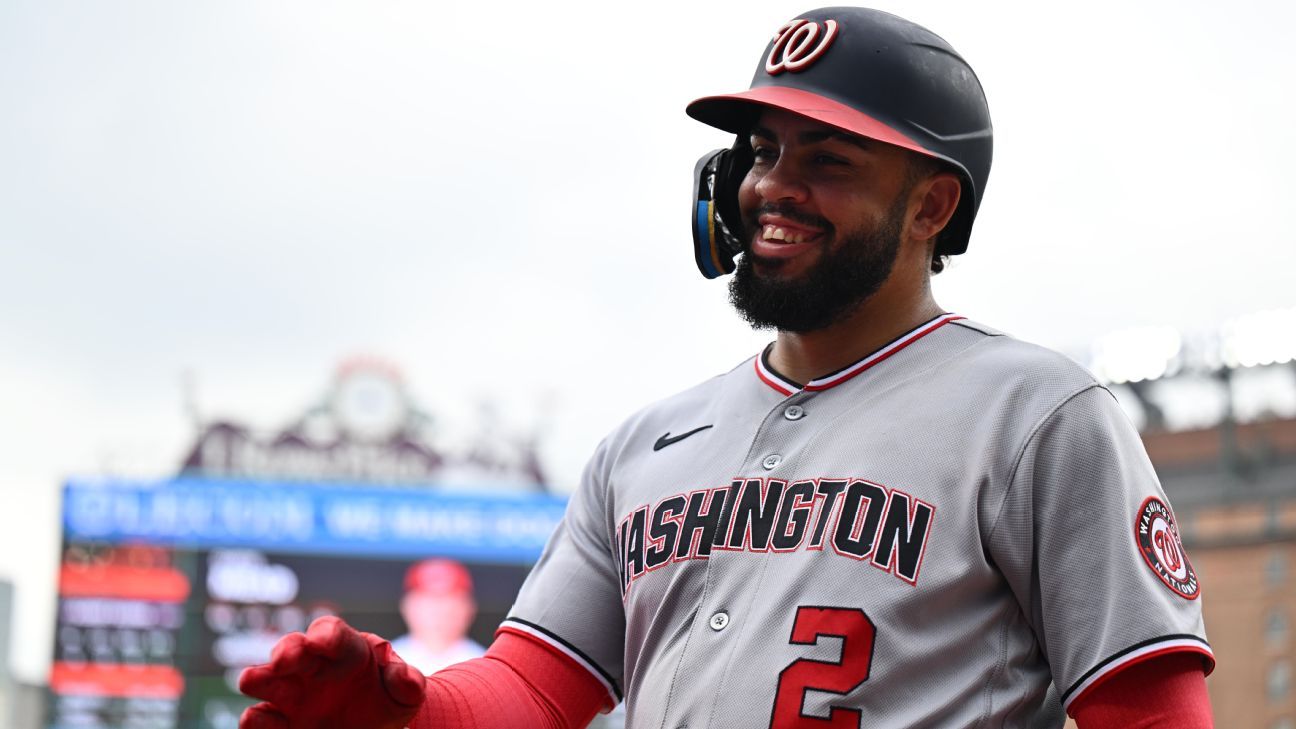
The Yankees just made the kind of move that tells you exactly where they think the roster is leaking. Luis Garcia Jr. is on his way to the Bronx, and this is not some depth shuffle at the edges. This is a bat with juice, a player hitting .283 with 23 homers, landing in the middle of a lineup that has spent too many nights waiting on someone, anyone, to lengthen the order.
The price? Four right-handed pitchers. That’s the modern deadline language: controllable arms out, proven offense in. New York is trading from a stockpile that every contender guards like cash in the safe. Washington is doing the other half of the business—turning one established position player into a bundle of mound options and betting that quantity plus development time can still beat certainty.
The Yankees needed a real answer, not another patch
The Yankees have lived in the gray zone too long. They’ve had enough talent to scare people and enough inconsistency to leave doors open. That’s the ugly middle of roster building: you can be expensive and still not be complete. Garcia gives them a different look because he changes the shape of the lineup. Power matters in October, but so does the ability to force a pitcher to keep working after the heart of the order has already taken a cut.
A .283 average with 23 homers isn’t just production. It’s credibility. It forces opposing staffs to plan differently. It also tells you New York saw a fit they could trust, not just a name to fill a spreadsheet slot. If you want a sense of how the Yankees are thinking, this is it: they’d rather pay in pitching inventory than keep waiting for internal lineup balance to show up on schedule.
That’s why the trade matters more than the exact position label attached to Garcia. The Yankees didn’t go shopping for a headline. They bought a problem solver.
Washington cashes in on arm volume
Four right-handed pitchers is a very Nationals kind of return in a market where contenders never seem to have enough pitching and rebuilding clubs can never have too much upside in the pipeline. The Washington Nationals are not pretending this is about today. It’s about options, development, and seeing which arms can survive the grind of pro innings.
That approach has a logic to it. Pitchers break, pitch counts rise, and one good month can change a fringe arm’s value fast. Washington is buying lottery tickets with live arms instead of hanging onto one bat that may not line up with the next competitive window. Whether that turns into something real depends on how many of those four pitchers can actually stick, but the process is pretty easy to read.
The Nationals are choosing depth over certainty because that’s what a team in transition does.
What Garcia changes in the Bronx immediately
For the New York Yankees, this is about lineup integrity as much as power. Big-market teams can survive a hole or two. They usually can’t survive too many places where the opposing manager knows exactly where the easy outs are hiding. Garcia reduces that vulnerability.
He also gives the Yankees more ways to build innings. That matters in a league where starter usage is tighter, bullpens are overworked, and managers are constantly trying to force leverage before the seventh inning even arrives. A switch like this doesn’t just add production. It changes the temperature of the dugout. You feel less dependent on one big swing and more able to stack competent at-bats until the game tilts.
This is the kind of move that looks cleaner in August than it does in October if it works. If Garcia keeps producing, the Yankees get a lineup piece that can punish middle relief and make late-game matchups harder to game. If not, they’ve still paid for a real swing at solving a roster problem that was getting harder to ignore.
Contenders don’t win by collecting names. They win by fixing the one hole everyone else keeps circling.
The market read: offense costs, and arms are the currency
This trade fits the current deadline economy almost too neatly. Offense from a player with a track record costs real assets. Pitching, especially right-handed pitching, is the chip every contender seems willing to slide across the table because it feels replaceable until it isn’t. The Yankees are betting their system can survive that loss. Washington is betting it can convert that volume into something better down the line.
I like the Yankees’ side more, and I say that knowing exactly how cold that sounds if one of those pitchers turns into a useful big leaguer. But front offices don’t get paid to win abstract value debates. They get paid to solve the current roster. New York just did that with a player who brings actual impact, not theoretical upside.
I’ve seen plenty of deadline deals where the team acquiring the bat acts like it’s getting a luxury item. This one feels more like a repair job. The Yankees aren’t trying to win the press conference. They’re trying to stop leaving runs on the table.
What to watch next
The first thing I’d monitor is how New York deploys Garcia and what that means for the rest of the infield mix. If the Yankees are serious, they won’t waste time easing him in. They’ll put him in spots where his bat can matter right away.
The second thing is the return package. Four right-handed pitchers sounds like a lot, and in today’s market, that usually means there’s at least one name with real internal believers attached. Washington will sell the upside. New York will sell the fit. Both clubs can call this a win for now.
The Yankees got bolder. The Nationals got younger. And the deadline just got a lot more interesting in both clubhouses.
More from Straight From The Bench
Comments
Join the conversation — sign in to leave a comment.
Sign in to commentRelated Stories
Diamondbacks vs Guardians Rain Delay After Benches-Clearing Rumble
Arizona tried to stir the pot against Cleveland, and the game turned into a mess of tempers and weather. Tim Tawa’s bunt bid lit the fuse.
Luis Castillo Trade to White Sox: Mariners React to the Shock
Seattle’s rotation lost its familiar anchor in a deal that startled the clubhouse. The reaction said plenty about trust, timing and the cost of chasing July certainty.
Marlins Trade Talks: Liam Hicks, Kyle Stowers Draw Interest
The Marlins are listening on Liam Hicks and Kyle Stowers while the season wobbles. That usually means one thing: somebody upstairs is staring at the mirror and the standings at the same time.