
Mariners vs Tigers benches clear: Seattle’s win turns testy
When the pitches got inside, the temperature rose fast.
 Beatrice Kensington5 min read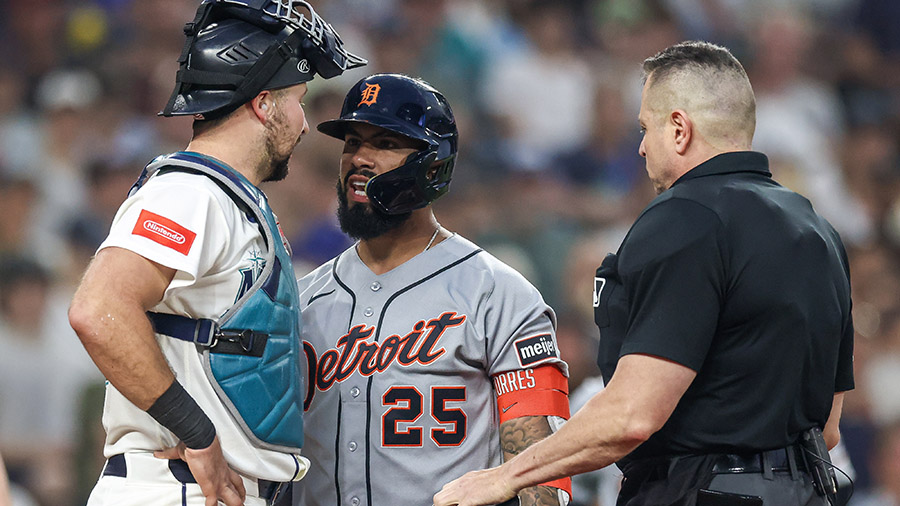
The Seattle Mariners left the ballpark with a win and a warning, the kind that arrives not in a box score line but in the tight set of a dugout jaw and the memory of a fastball that came a little too close to bone. Wednesday night’s 4-2 victory over the Detroit Tigers was supposed to be about leverage, late-inning execution, and a team trying to bank another clean result. Instead, the eighth inning cracked open like bad plaster, and the game acquired the sour taste of grievance.
That is baseball, too. The sport likes to imagine itself as measured and pastoral until somebody gets drilled, somebody takes exception, and the old code rises from the dirt with its tie crooked and its temper showing. The Mariners and Tigers did not invent that old script. They merely stepped into it, one hit batsman and one retaliation later, with enough heat in the air to send both benches and bullpens surging toward the warning track.
The eighth inning took the game away from the tidy storyline
What had been a straightforward Seattle win became something knottier once relief pitching started writing its own argument. By the summary of the night, a key member of each club was hit by a pitcher, and that was enough to turn a competitive game into a confrontation. The exact choreography matters less than the meaning: once the ball begins targeting bodies, the evening stops belonging to the managers and starts belonging to impulse.
And there is always a cost. Maybe no punches land. Maybe nobody winds up suspended. But the message travels anyway, from one clubhouse to the next, and it can shape the next series as surely as a three-run homer. The Mariners know this terrain well enough; so do the Tigers. A club on the rise often has to prove it will not be nudged around, and a club with postseason ambitions has to make clear that its hitters will not be treated as movable objects.
For Seattle, the victory still matters. Wins in August and September are not only numbers in a ledger; they are oxygen. But this one leaves residue, the way a thunderstorm leaves the street wet long after the sky has brightened.
In a season that rewards composure, the fastest way to waste a good win is to let the ending become the headline.
Why plunked hitters still alter the tenor of a season
Baseball has never fully escaped the tug of retaliation. The game dresses itself in analytics and launch angles, yet the emotional grammar remains old as the leather glove: you hit one of ours, we may answer. That code is part theater, part deterrent, and part dangerous relic. It survives because players believe it protects the vulnerable edge of competition. It also survives because no one wants to be the club that looks passive when the other dugout is boiling.
The Mariners’ night echoes other moments in the modern game where one pitch seemed small until everyone treated it as symbolic. If you want the broader context, there is always room to compare these moments with the way teams like the Seattle Mariners and Detroit Tigers have navigated the line between controlled aggression and avoidable chaos. One pitch can become a statement, and a statement can become a distraction.
For a Seattle team trying to stay sharp in a crowded race, the real challenge is not whether it can win a scrum. It is whether it can avoid being dragged into one. That distinction matters. There is a difference between toughness and theater, between protecting your own and surrendering the next three innings to a mood.
Speier and Wilson leaving changes more than the box score
Ejections are never merely ceremonial. They thin the bench, they alter bullpen availability, and they can force managers to improvise in ways they did not plan for when the first pitch was thrown. The names attached to Wednesday’s chaos — Speier and Wilson — will now be remembered less for the incident itself than for the ripple it sends through the next few days of roster management and emotional calibration.
That is especially true in late-season baseball, where every bullpen inning can feel borrowed against tomorrow. Clubs do not have endless margins. A manager who must burn through relievers because tempers flared can pay for it two nights later, when the game is on the line and the arm that might have covered the sixth is still cooling in the trainer’s room.
Seattle fans, of course, will mostly remember the result. A win is a win, and the Mariners have spent enough recent seasons learning how fragile those can feel. If you want another example of a club living with the tension between confidence and pressure, the Aaron Judge injury update around another contender is a reminder that every roster is one awkward turn away from anxiety. Baseball is built on accumulation; one bad night can tax the whole week.
My read: the strongest teams do not need to perform their toughness
I have always believed that the most dangerous teams are not the loudest ones. They are the clubs that can absorb a bruise without making the bruise the story. In my view, that is the line the Mariners have to guard now. Not because they should be docile — far from it — but because swagger is cheapest when the standings are abstract and most expensive when every inning can change October.
There is a romantic impulse in baseball to celebrate the bench-clearing moment as proof of loyalty, as if proximity to chaos automatically confers character. It does not. Sometimes it just reveals a team that has let another club dictate the emotional weather. The better clubs, the ones that last, usually understand this: you protect your hitters with plate discipline, with command, with answers on the scoreboard. Not with a lecture delivered in a cloud of dust.
That is why this particular win feels larger than the 4-2 line. Seattle got the result, but Detroit helped turn the evening into a reminder that baseball’s old tempers are always waiting just beneath the grass. The Mariners’ job now is to keep that heat from sticking to them.
The standings will move on. The next game will arrive. And somebody, somewhere, will still be waiting for a clean inning and a cleaner ending.
More from Straight From The Bench
Comments
Join the conversation — sign in to leave a comment.
Sign in to commentRelated Stories

Andrew Painter Injury Update: Phillies stay calm after hamstring scare
Andrew Painter left early with left hamstring tightness, then sounded optimistic after the Phillies’ extra-inning loss. In a season built on thin margins, that matters.
Garrett Crochet Red Sox Relief Role: late-season twist in Boston
Garrett Crochet says he’d take a relief assignment if it gets him back for the stretch run. For the Red Sox, that’s not a plan — it’s a lifeline.
Pete Crow-Armstrong MVP Race: Cubs Star Stuns Dodgers
Pete Crow-Armstrong and Shohei Ohtani traded thunder in a 7-6 Cubs win, but the young center fielder left with the louder claim on the NL MVP race.