
Mariners vs Yankees: Critical Road Trip Opens With Flat Loss
A promising arm met an offense that never found its pulse.
 Beatrice Kensington6 min read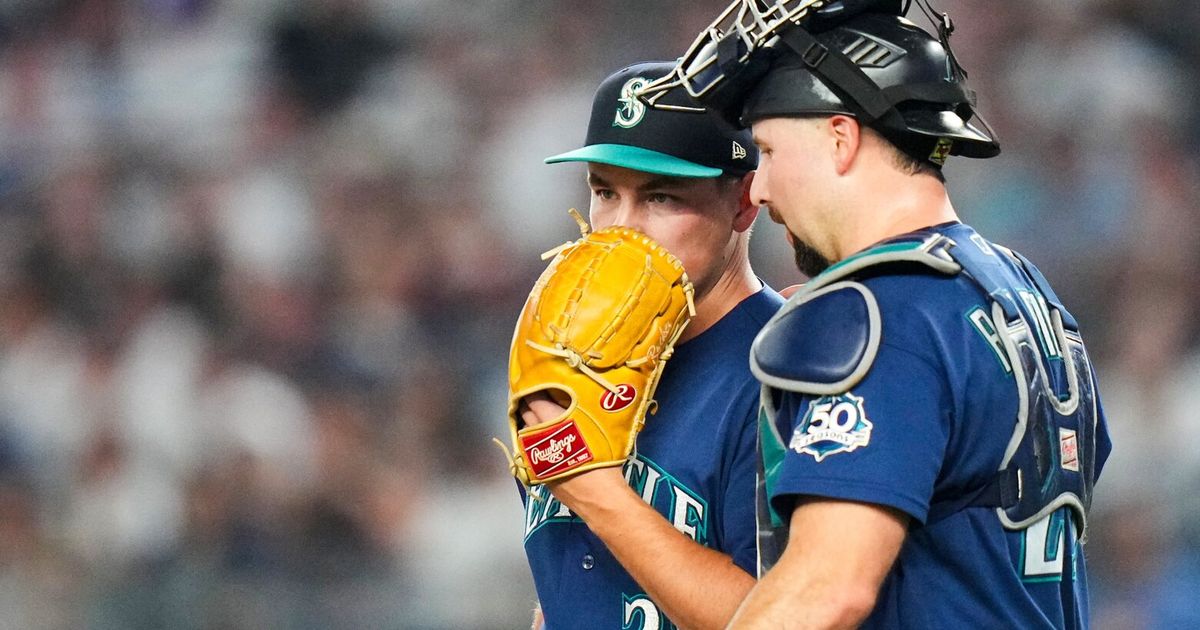
A missed opening in a trip that already feels expensive
The first test on a demanding road trip arrived with the kind of familiar sting the Seattle Mariners know too well: a sharp outing from a starter, a lineup that could not gather itself, and a bullpen asked to cover the cracks before the game had fully settled into its shape. In a 4-1 loss to the New York Yankees, Seattle managed only three hits and spent most of the night chasing a margin it never seriously threatened to erase.
This was not just an ordinary loss in June, July, or whenever the calendar says the season has become real. This was the sort of defeat that can sit in a clubhouse like damp wool. The Mariners came east needing to prove they could carry themselves through a hard stretch against a heavyweight, and instead they left the first game looking like a team that had confused modest contact with offensive life.
Bryan Woo supplied the sort of start that should travel
There will be larger reasons to discuss the evening, but the cleanest truth belongs to Bryan Woo, who turned in his best road start of the season and gave Seattle the one thing a visitor in Yankee Stadium cannot waste: time. Woo worked with poise, missed enough bats to keep the game from tipping early, and looked like a pitcher comfortable with the scale of the moment. That matters. It matters because the Mariners have built so much of their present and future on the assumption that young pitching can be the spine of something sturdier than their recent offensive history.
Woo did his job. The shame of the night is how quickly the rest of the team made that feel like a footnote.
When a young starter gives you that kind of road outing and the lineup still produces almost nothing, the loss stops being about one game and starts looking like a habit.
The Yankee Stadium setting tends to sharpen these failures. The walls are short, the crowd is large, and the scoreboard has a way of making every missed opportunity feel like an insult. Seattle did not need a masterpiece at the plate. It needed competence, a few harder balls in play, one inning that could have bent the game. Instead, it offered silence.
Three hits, and not nearly enough pressure
Three hits is not a plan. It is an absence of one.
The Mariners’ offense has spent enough seasons under a cloud of impatience that every weak night comes freighted with memory. Fans do not merely see a bad box score; they see old disappointments standing in line behind it. The club has worked hard to convince itself that this group is different, deeper, more resilient, less dependent on the old theatrical extremes of the home run. Nights like this test that claim in a brutal, almost old-fashioned way. Can you string together traffic? Can you make a pitcher uncomfortable? Can you stay in a game long enough for the pressure to shift?
Seattle answered no.
The broader issue is not that a lineup will fail every so often. Even good teams go quiet. The concern is the shape of the silence. Too many plate appearances seem to end before they have truly begun, too many at-bats appear to search for a swing instead of a solution. Against a club like the Yankees, that can feel fatal because the game punishes passivity. One empty inning becomes two. Two become a standing crowd and a scoreboard with a personality.
For context, this is the sort of stage where the American League hierarchy likes to remind everyone that reputation is earned in ugly places, not just in home parks under familiar lights. Seattle wanted evidence that it belongs in that conversation. Instead, it got a reminder that belonging must be defended nightly.
The bullpen had no room to breathe
The box score will say the bullpen could not back up Woo, and that is true enough to be blunt. But the deeper problem is how little margin Seattle’s relief corps was given to work with after the starter did his part. The Mariners have had enough games this season where the leverage arrives early and stays sticky, and that is a dangerous way to live when your offense is not built to flood the board.
Michael Rucker’s presence in the game became part of the evening’s tension, not because one arm defines a season, but because bullpen management under pressure always reveals the anxiety beneath the surface. Teams talk about relievers as if they are interchangeable until a few consecutive innings prove otherwise. Then every decision begins to feel like a referendum on trust.
That is the hidden cost of nights like this. A starter can pitch well and still leave behind a mess of arithmetic that the next arm must solve. When the offense cannot offer cushion, each outing in relief becomes a small referendum on the manager’s faith and the pitcher’s nerve. The game narrows. So does the season.
What this loss says about Seattle’s trip — and its ceiling
I have watched enough summers of cautious Seattle baseball to know the difference between a bad night and a revealing one. This felt revealing. Not because the Mariners are suddenly exposed as something lesser than contenders, but because the contours of their problem remain so stubbornly recognizable. Pitching gives them an opening. The lineup keeps asking for another day.
If Seattle is going to survive this road trip with its ambitions intact, it cannot keep treating offense like a luxury item that appears only when the mood is right. It needs more from the top of the order, more from the middle, and more from the bench when the game begins to tilt. That is not a glamorous prescription. It is, however, the one that keeps seasons from sliding into regret.
I’ve long believed the Mariners are at their most dangerous when their pitching forces opponents to play tight and their bats make that tightness uncomfortable. When that balance disappears, they look strangely ordinary, and ordinary does not travel well in the American League chase. We have seen too many Seattle teams carry the burden of being nearly complete. Nearly is a hard word to build around.
The next few games will tell us whether this was simply the wrong night at the wrong time, or whether the club is still auditioning for a role it claims to already own. That distinction tends to become clear fast on the road.
Seattle does not need speeches. It needs hits. It needs support for Woo’s kind of work. It needs a rebound before the trip starts to feel heavier than the standings can bear.
More from Straight From The Bench
Comments
Join the conversation — sign in to leave a comment.
Sign in to commentRelated Stories
Angels Coaching Shakeup: Maddux, Chiti and Scott Fired
Anaheim dumped three pitching coaches before beating Texas, a blunt admission that the staff had run out of rope. The real test is whether this fixes anything more than the headline.

MiLB at Field of Dreams: Saints, Cubs bring the minors back
The St. Paul Saints and Iowa Cubs are back at the Field of Dreams site, and the minors are getting a big-league stage with pure nostalgia attached.
Brewers Re-Sign Bryse Wilson: Bullpen Reset After Weekend Flip
The Brewers reversed course fast, bringing Bryse Wilson back on a big league deal and trimming Lyon Richardson off the roster. That tells you how Milwaukee views the bottom of the bullpen.