
Mike Vrabel clock management: intentional offside penalty explained
Old-school chess, ugly on the eye, and exactly the kind of grime coaches love.
 Leo Lupo6 min read
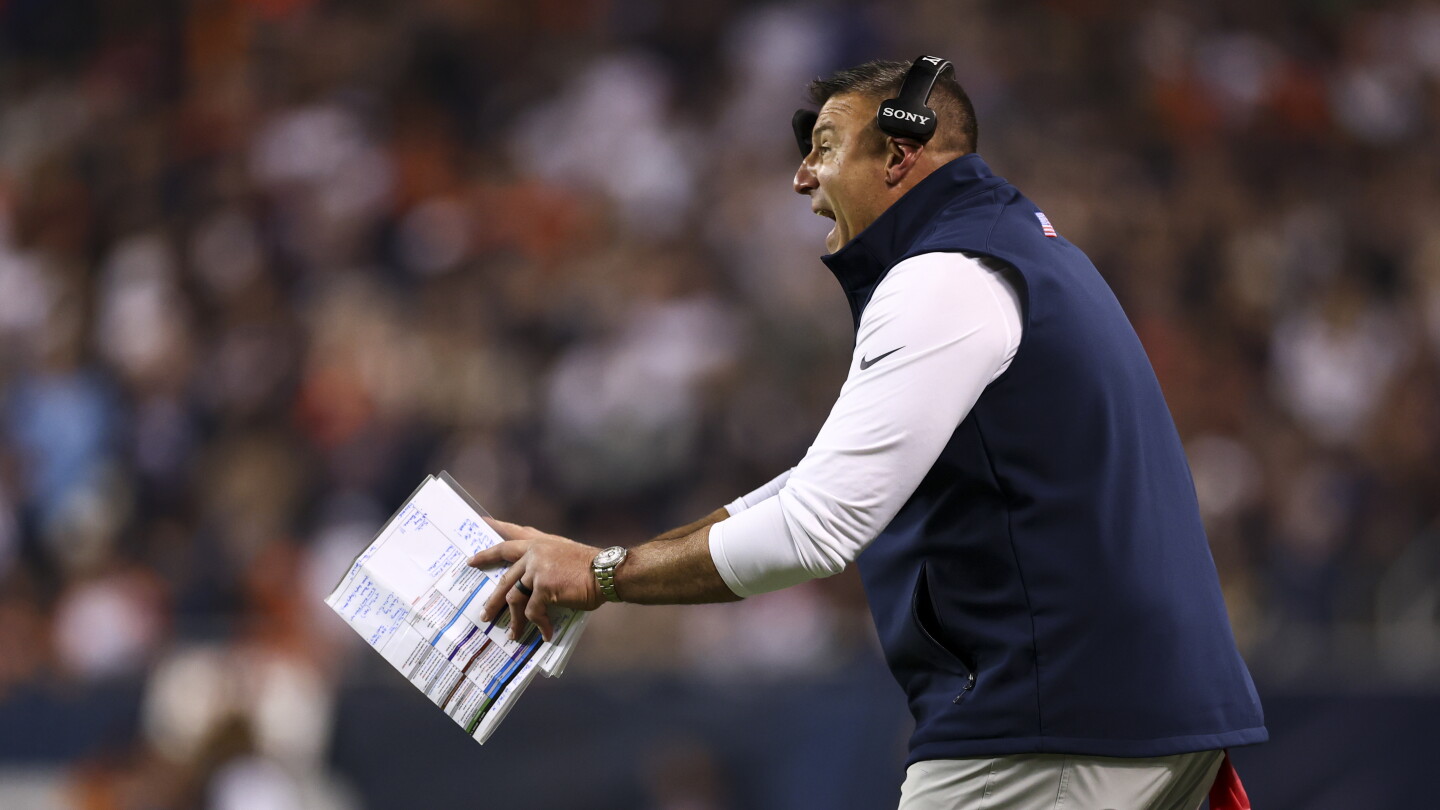
Mike Vrabel didn’t just let the clock run Thursday night. He reached into the ugly little toolbox every veteran coach keeps under the bench and used it. With 1:56 left, the Patriots were staring at third-and-inches, and defensive lineman Cory Durden jumped offside on purpose. The Bears got the cheap five yards, sure. But they also got a first down, a fresh set of downs, and a stopwatch that suddenly looked a lot less threatening to New England. That’s the part the casual crowd misses while they’re yelling about “discipline.” This wasn’t a brain cramp. It was theater with a purpose.
Vrabel has been around long enough to know that games in the final two minutes are less about courage and more about math, nerve, and whether the other sideline is paying attention. He’s not the first coach to bend the rules at the edges, and he won’t be the last. But there’s a difference between a clever move and a sloppy one. This one had the fingerprints all over it. The Patriots under Vrabel are not trying to win a style point contest. They’re trying to win possessions, snap counts, and leverage. If you want romance, buy a ticket to a different sport.
The offside penalty wasn’t a mistake, it was a decision
The Bears thought they’d caught a break. Fans in Chicago even had that little burst of hope that comes with a defensive penalty against a team you’re trying to put away. Then the realization lands: New England wanted the stoppage. That’s the whole point.
On third-and-inches, the offense is already on the doorstep. The defense is in a bind. If you stop the play, the clock keeps bleeding. If you jump, you get the whistle, the reset, and a shot to force a longer march. It’s not pretty. It’s not something the league office is going to put in a commercial. But it’s basic game-state awareness, and Vrabel has always had a feel for those pressure points.
That’s why this matters. A lot of coaches can script the first 15 plays. Fewer can manipulate the last 2 minutes without looking like they’re reading from a pamphlet. Vrabel has made a career on being the guy who notices the hidden lane while everybody else is busy watching the main traffic.
Vrabel’s brand has always been part bully, part mechanic
There’s a reason people who’ve watched Mike Vrabel for years don’t blink at something like this. As a player, he lived in the mud. As a coach, he’s kept that same belief that football is won by winning awkward moments. He doesn’t coach for applause. He coaches for control.
That lines up with the Patriots’ whole identity under the old guard and beyond it: squeeze the game, take the oxygen out of it, make the other side think twice on every snap. It’s the same hard-nosed logic that once made New England a problem in every phase. The names change. The instinct doesn’t.
You can file this under strategy, gamesmanship, or plain old veteran trickery. I’d call it evidence that Vrabel still trusts situational football more than slogans. And honestly, good. Too many teams get beat because they’re waiting for the perfect moment instead of manufacturing one.
Football is a dirty little clock game when the game gets tight, and Vrabel knows exactly where the dirt is.
What it says about the Patriots right now
This is where the thing gets interesting for New England. A team that’s been trying to claw back its edge does not need to be adorable. It needs to be sharp. It needs to be willing to live in the margins. That means special teams awareness, clock awareness, and the kind of discipline that lets you choose a penalty instead of suffering one by accident.
The Patriots have lived through enough wandering seasons to know that “close enough” doesn’t cut it in this league. A coach like Vrabel gives them a clear operating system: shorten games, stress the opponent, and make every possession feel like it was packed in a lunch pail. If that sounds old-fashioned, fine. Old-fashioned wins a lot of football games in November.
It also tells you something about how this coaching staff views the quarterback-and-clock equation. If you’re going to protect your offense and preserve your options late, you better be comfortable turning a third-and-short into a tactical lever. That’s not passive football. That’s calculated football.
For more on how the Patriots have been working through personnel and discipline issues, keep an eye on our Patriots vs. Bears live updates: Drake Maye vs. Caleb Williams coverage and the ripple effect from the Patriots Alijah Vera-Tucker Injury Update: IR move shakes OL story. Different problems, same theme: this team is still trying to build a sturdier machine.
The Bears got a lesson they probably didn’t enjoy
Chicago’s side of this is simple: don’t let a veteran coach turn your late-game situation into a chess problem. The Bears were given the ball, the field position, and the clock. They still had to prove they could close the door. That’s the part teams hate most. Not the penalty. The reminder.
The Chicago Bears have spent too many seasons learning the same lesson in different uniforms. When a game tightens up, the team that understands the clock usually owns the night. When you’re still reacting, you’re already behind.
And let’s not pretend this is some scandal. It’s not. It’s football with the paint scraped off. The league built this sport around a thousand little edges, and smart coaches have spent decades chasing them. Vrabel just happens to be one of the few who does it with a face that says he’d happily argue with the rulebook and the ref at the same time.
The bigger picture: this is the Vrabel era in one snap
If you’re looking for the meaning here, don’t overthink it. This is the kind of move that tells players exactly who’s in charge. It tells the defense to stay alert. It tells the offense that every snap can be weaponized. And it tells the rest of the league that New England under Vrabel is going to be annoying, calculated, and hard to bully.
I’ve watched enough of these coaches come and go to know the difference between a team that talks toughness and a team that lives it. Most teams preach situational awareness after they blow one. Vrabel seems to coach it before the mess starts. That’s a useful trait. Not glamorous. Useful.
The league will move on, because it always does. Some folks will call it savvy, others will call it cheap. Me? I call it a coach making sure the game is played on his terms, not the other guy’s. That’s what winners do when the margin gets thin.
Keep an eye on this one. Vrabel’s already showing you the kind of details he trusts. And in this league, details are where the bodies are buried.
More from Straight From The Bench
Comments
Join the conversation — sign in to leave a comment.
Sign in to commentRelated Stories

Patriots vs. Bears live updates: Drake Maye vs. Caleb Williams
Drake Maye and Caleb Williams meet under the lights as the Patriots and Bears open Week 7. This is more than a Thursday game — it’s a draft-class checkpoint.

Marshall Faulk Parkinson's Disease Diagnosis: Hall of Famer Speaks Out
Marshall Faulk says he’s been diagnosed with Parkinson’s disease and is stressing early detection. The news hits hard, but the message is plain: know it early, face it early.

Jonathan Taylor Trade Rumors: Several Teams Call Colts
Interest in Jonathan Taylor is real, and it says as much about the running back market as it does about Indianapolis. The Colts are holding a rare piece of leverage.