
Miles Bridges Suns Update: Phoenix Says Standards Will Be High
The Suns made the move. Now they have to live with the message.
 Zane Miller5 min read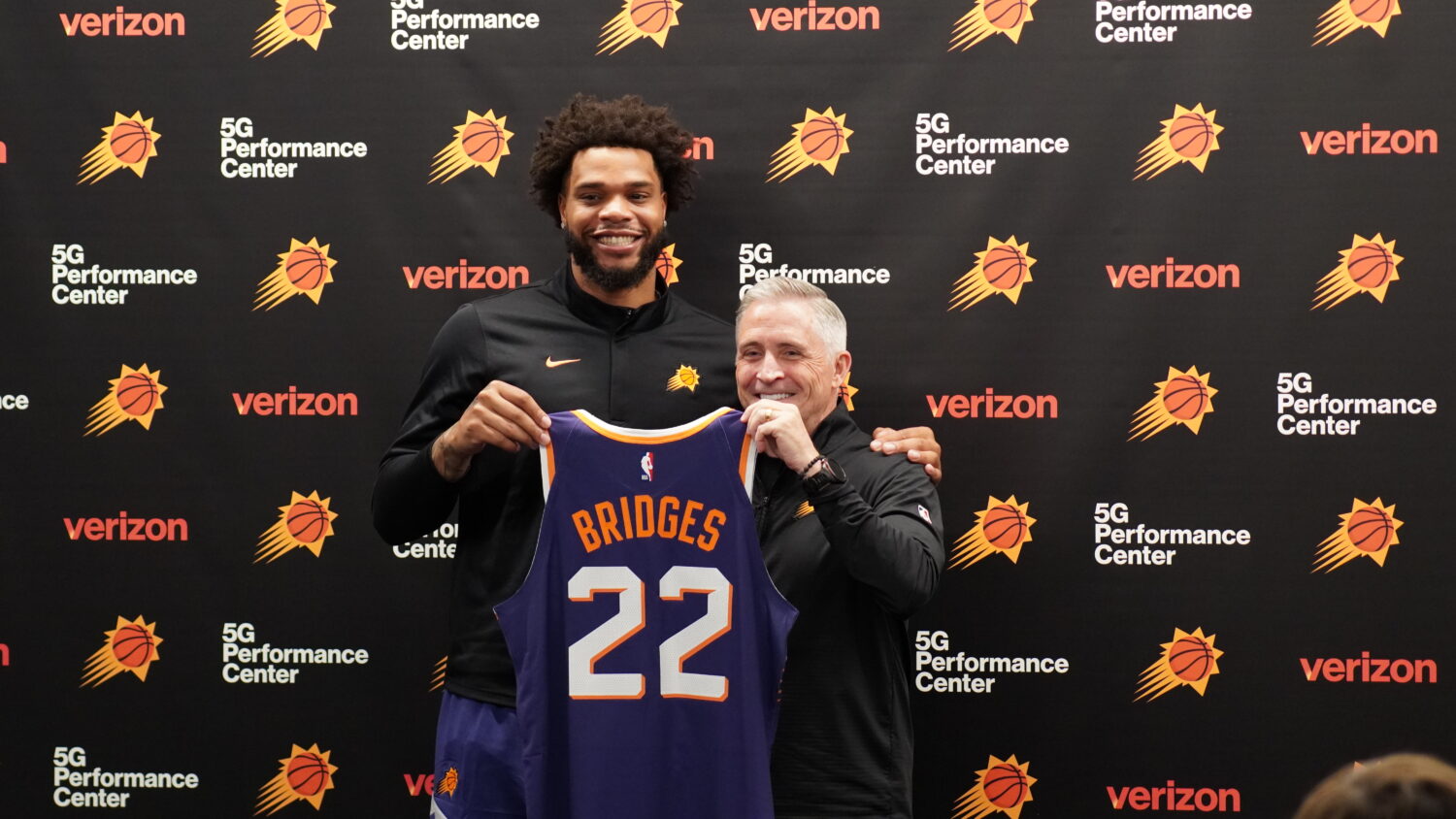
Phoenix didn’t hide from the baggage
The Phoenix Suns knew exactly what they were walking into with Miles Bridges. This wasn’t a clean basketball transaction with a neat press-conference bow on top. The franchise said it ran a “thorough evaluation” before trading for him, and general manager Brian Gregory didn’t soften the edge of the conversation: the conduct that followed Bridges to Phoenix was labeled “unacceptable.”
That matters. Not because teams suddenly discovered morality, but because front offices know optics are part of roster construction now. In the NBA, talent buys patience. Reputation taxes it. Phoenix has already spent plenty of both.
Bridges is the kind of player teams convince themselves can move the needle on the floor. He brings scoring, size, and the sort of wing production that never shows up cheap on the market. That’s the basketball argument. The business argument is uglier. You don’t inherit a player like this and get to pretend the past is background noise.
The Suns are signaling they understand that. The question is whether that message sticks once the games start and the noise gets louder.
A roster built for pressure, not comfort
This is what teams do when they are chasing relevance with no patience left for soft resets. They stack talent, absorb risk, and trust the room to hold together. Phoenix has lived in that lane for a while, and Bridges only sharpens the tension.
He’s joining a franchise that has already shown it will lean into high-variance roster moves if it believes the ceiling is worth it. That approach makes sense in a league where the West punishes hesitation. It also means every edge case gets magnified. If Bridges is productive, people will call it pragmatism. If anything gets sideways, it becomes a referendum on everything the Suns said they valued.
There’s no escaping that. The NBA doesn’t let teams bury these stories under a couple of efficient box scores and move on. The league’s audience is too loud, too connected, too quick to connect every dot.
And Phoenix knows this. That’s why Gregory’s language landed the way it did. It wasn’t just a statement. It was a warning shot aimed inward.
The Suns are not just adding a player. They are adopting the consequences that come with him.
The locker room is the real measuring stick
Forget the headline for a second and look at the room Bridges is stepping into. Teammates, coaches, and staff are the ones who have to make the basketball part work day after day. That’s where “high standard” stops being a phrase and turns into practice habits, travel dynamics, and accountability after a bad night.
That’s also where front offices usually get exposed. It’s easy to say a player has been evaluated. It’s harder to prove the evaluation extended beyond the spreadsheet and the highlight reel.
The Suns don’t get points for acknowledging the past. That’s baseline. The actual test is whether they can draw a bright enough line that everyone inside the building understands what is expected. Not performatively. Actually.
That’s especially true for a team operating under constant pressure to justify its decisions. Phoenix doesn’t have the luxury of a patient rebuild, where one controversial move can be absorbed by a bigger developmental timeline. This is a win-now ecosystem. Win-now teams are usually the least forgiving places for messy stories because every distraction feels like a threat to the margin.
Why this choice carries a bigger NBA message
I’ve covered enough league cycles to know this pattern by heart: a team gets comfortable believing it can separate basketball from everything else, then spends the next six months explaining why the separation is not as clean as advertised.
My take? Phoenix is betting the league’s short memory will outrun its long one. Sometimes that works. Sometimes it absolutely does not.
The larger issue isn’t whether Bridges can help the Suns score points. The larger issue is what kind of organizational line this draws for the next player, the next agent conversation, the next room that asks what a franchise will tolerate if the fit on paper is good enough. That’s the slippery part. One move becomes precedent fast in this league.
And once a front office goes public with “thorough evaluation” language, it’s basically inviting everyone to grade the homework. Fair or not, that’s the reality. A franchise can’t ask for benefit of the doubt while also asking fans to ignore the context. Those two things don’t travel together.
If Phoenix wants this to work, the standard can’t just be spoken. It has to be enforced. Quietly, consistently, and with no exceptions when the basketball gets bumpy.
What to watch next in Phoenix
The next checkpoint is simple: how Bridges is handled internally, and how the Suns communicate around him if the story starts bubbling again. Teams can survive one controversial roster decision. They usually get in trouble when they start sounding casual about it.
This is where the Suns’ season becomes bigger than a box score. Every rotation choice, every postgame comment, every bit of body language will get read through the lens of this trade. That’s the cost of bringing in a player with this history. You don’t just add production. You add scrutiny.
Phoenix clearly believes the on-court upside is worth the off-court weight. We’ll see if that calculation survives contact with the season.
The Suns made their choice. Now comes the part where they have to prove the standards are real, not just convenient.
More from Straight From The Bench
Comments
Join the conversation — sign in to leave a comment.
Sign in to commentRelated Stories
Sophie Cunningham Women's Sports Debate: White House Backs Fever Star
Sophie Cunningham’s remarks on protecting women’s sports drew a White House response and reignited a fight that reaches far beyond the Fever.

Portland Moda Center Negotiations: Who’s Leading the Blazers Talks?
Portland’s Moda Center negotiations have moved into a more visible phase, with the city leaning on outside contractors to steer the process. The Blazers are watching closely.

LeBron James Decision Update: Heat link mix-up sparks frenzy
A Heat video link briefly made it look like LeBron James had picked Miami again. It was a mistake, but it says plenty about how badly the league still watches his next move.