
Sophie Cunningham Women's Sports Debate: White House Backs Fever Star
A basketball argument has spilled into the nation’s front room.
 Beatrice Kensington6 min read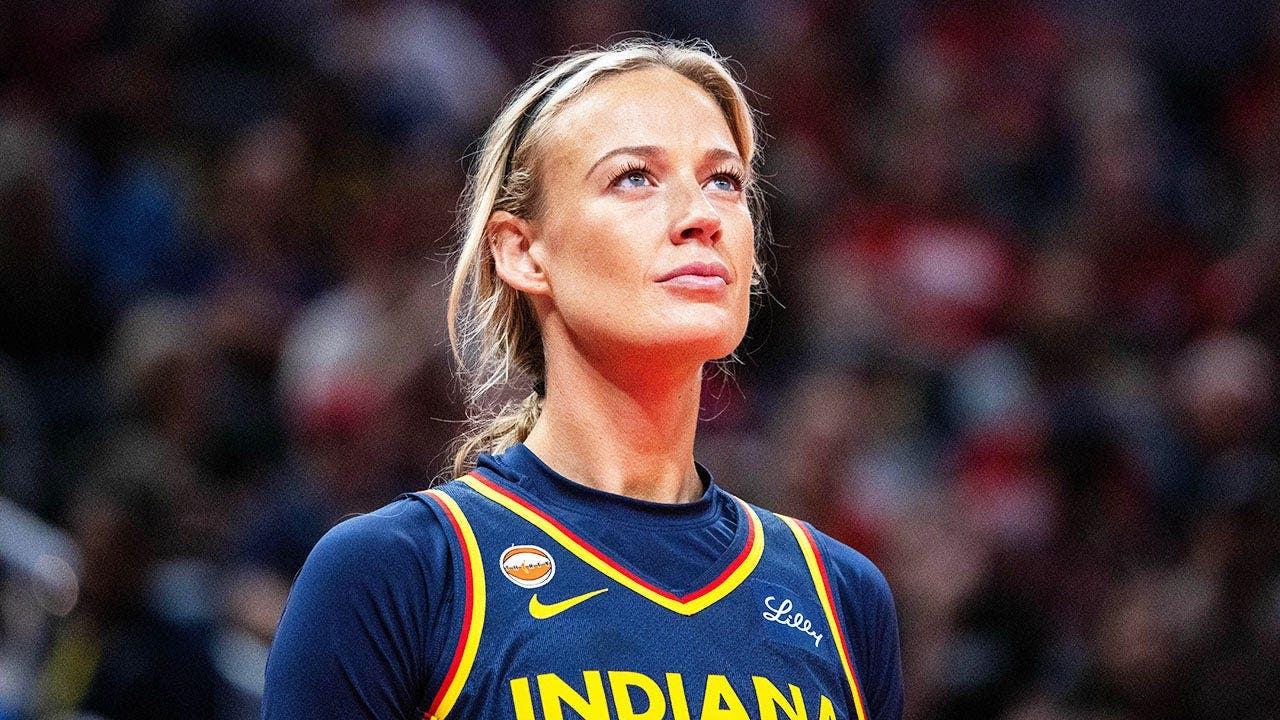
A Fever guard steps into a national fault line
Sophie Cunningham did what modern athletes do now, whether they seek it or not: she said the quiet part aloud and found herself standing in the middle of a national argument that has been simmering for years. The Indiana Fever guard, already part of one of the league’s most watched teams, spoke publicly in support of protecting women’s sports, and the White House moved quickly to back her after the backlash followed. That is not a small thing. It is a sign that a WNBA player has become more than a player in the public imagination; she has become a symbol, and symbols are rarely allowed to keep their edges sharp for long.
The reaction says as much about the country as it does about Cunningham. Sports has always been one of America’s easiest mirrors, a place where our arguments about fairness, identity and belonging arrive wearing jerseys and warmup jackets. The WNBA has lived in that pressure chamber for years, balancing its own growth, labor fights and cultural relevance while also being asked to carry debates that were never born on a basketball court.
The league did not ask to be the country’s courtroom, but that is where it finds itself again.
Why this is bigger than one player’s post
Cunningham is not the first athlete to face blowback for stepping into a political or cultural thicket, and she will not be the last. What makes this moment notable is the speed with which it escalated beyond the usual social-media churn. Once the White House press secretary weighed in, the story stopped being only about one player’s comments and became a fresh chapter in the wider national struggle over women’s sports, language, and policy.
The core of the dispute is familiar by now: who gets to define fairness in female competition, and who gets to decide where the line is drawn. Those questions have no easy answer, which is precisely why they keep returning. In sport, unlike in cable panels, the consequences are concrete. Roster spots are finite. Scholarships are finite. Titles are finite. For athletes who have spent their lives chasing fractions of an advantage, the idea of competitive integrity is not abstract at all. It lives in the body, in the film room, in the daily grind.
Still, the emotional temperature around the issue can flatten nuance. People pick sides quickly, then mistake volume for clarity. Cunningham’s case shows how instantly a player can become a proxy for a cause, with all the lonely costs that come with that role. The applause is loud. So is the contempt.
The Fever, the league, and the burden of visibility
Indiana is not merely a backdrop here. The Indiana Fever sit at the center of one of the league’s brightest stages, and that visibility cuts both ways. When a team is watched this closely, every off-court statement carries more weight than it would in a quieter market. Cunningham’s comments do not live in a vacuum; they live alongside the Fever’s chase for relevance, the larger surge in attention around women’s basketball, and the near-constant scrutiny that follows players who become household names.
That scrutiny has a familiar shape. Women athletes are asked to be pioneers and diplomats at the same time, to represent progress while never offending the people most invested in policing its boundaries. The burden is not evenly distributed across sports, but it is especially visible in the WNBA, where the players have long had to defend not just their talent, but the legitimacy of the league itself.
For Cunningham, the danger is that the message becomes the headline and the basketball disappears. Yet the opposite is also true: silence is not neutral, and in today’s sports culture, silence is often interpreted as surrender. She chose to speak. The country answered.
What this moment signals for women’s sports
I have covered enough public fights to recognize the pattern. First comes the quote. Then comes the outrage. Then comes the attempt to turn one athlete into a permanent exhibit, as if a single player can carry the entire moral weight of an issue that has been roiling courts, legislatures and locker rooms for years.
My own view is that women’s sports will keep becoming a battleground precisely because they have finally become too important to ignore. That is the bitter irony. The growth of the game has made the stakes visible, and visibility invites interference. Once a sport commands attention, everybody arrives with a theory of justice. Some are sincere. Some are opportunistic. Some are simply hungry for a culture-war badge they can pin to a jersey and call it principle.
The leagues would be wiser to treat this not as a public-relations flare-up, but as a governance question with human consequences. The conversation around women’s competition deserves rules that are clear, durable and humane, because ambiguity only feeds suspicion. Athletes should not have to learn constitutional interpretation between shootaround and tipoff.
There is also a media lesson here, and it is an uncomfortable one. We have become very good at amplifying the heat and very bad at sitting with the policy. Sports talk has a way of reducing real people to loud symbols, then pretending the shouting itself counts as engagement. It does not. The honest work is slower, and less theatrical.
What to watch next around Cunningham and the league
The next question is whether Cunningham’s comments become a one-day storm or a longer defining thread in her public identity. If she keeps speaking, she will be praised in some quarters and targeted in others. If she goes quiet, people will call it retreat. That is the trap laid for athletes who wander into contested public space: there is never a clean exit.
The larger league story will be whether the WNBA can keep its focus on basketball while this argument swirls around it. That is easier said than done, especially in an era when every player is effectively her own media outlet. One statement can reach farther than a press conference ever did. One clip can harden into a cause.
For Cunningham, the short-term truth is simple. She has become part of a national argument that is not going away. For the Fever, the challenge is to protect the basketball from the noise without pretending the noise does not exist. And for the rest of us, the harder task is to stop mistaking the volume of a debate for the quality of its thinking.
The game keeps moving. The argument does too.
More from Straight From The Bench
Comments
Join the conversation — sign in to leave a comment.
Sign in to commentRelated Stories
Caitlin Clark Technical Foul Update: Fever Star Near Suspension
Clark’s seventh technical foul puts Indiana on thin ice. One more and the Fever guard gets a one-game ban, with the WNBA’s temperature climbing fast.
Miles Bridges Suns Update: Phoenix Says Standards Will Be High
Phoenix is betting it can manage a messy basketball talent bet without losing the locker room. That’s the real story here.

Portland Moda Center Negotiations: Who’s Leading the Blazers Talks?
Portland’s Moda Center negotiations have moved into a more visible phase, with the city leaning on outside contractors to steer the process. The Blazers are watching closely.