
New Jersey Devils hire Jessica Campbell, Bryan McCabe
A smart front office is still a rebuild, just with better tools.
 Beatrice Kensington5 min read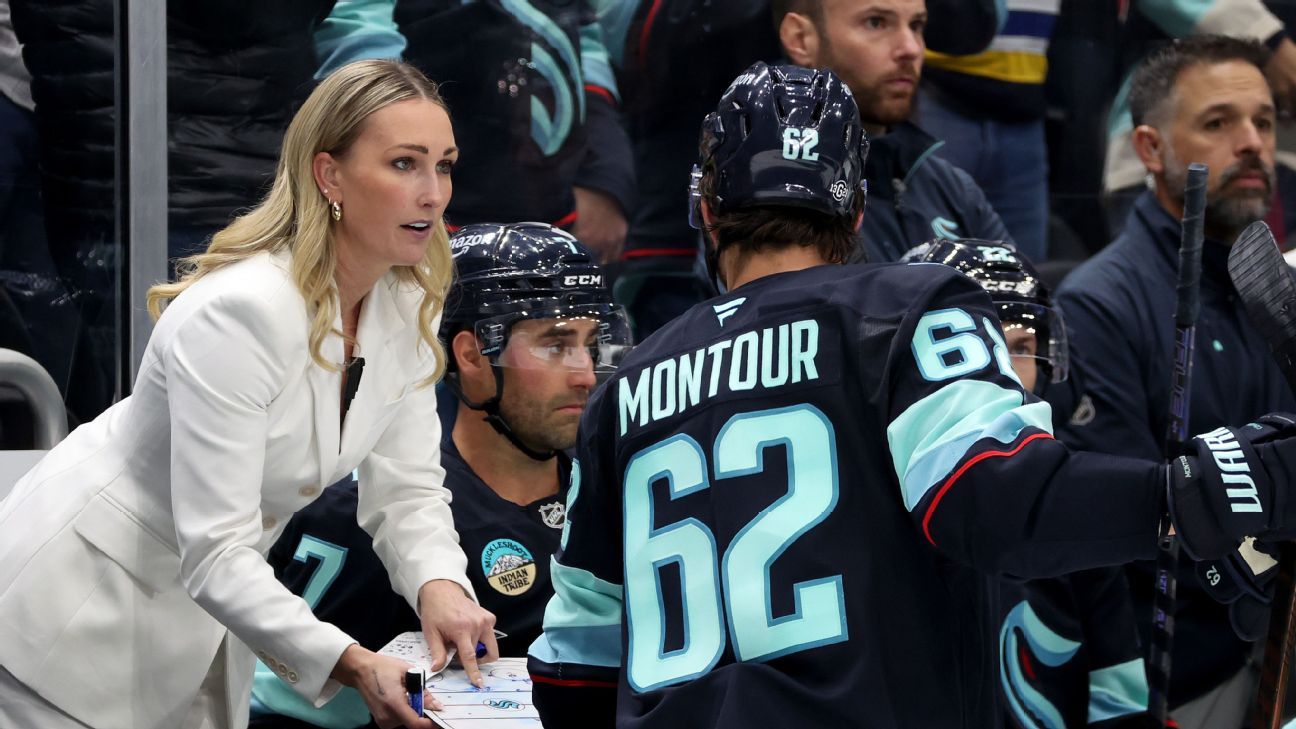
The Devils are investing in the long game
The New Jersey Devils have spent enough seasons learning the hard way that talent alone does not keep a roster on the rails. So this latest front-office reshuffle — bringing in Jessica Campbell as manager of player development and Bryan McCabe as vice president of prospect personnel — feels less like housekeeping than a statement of philosophy. The message is plain enough: if the club wants to turn promise into permanence, it has to build a sturdier bridge between the draft table and the NHL ice.
Campbell arrives with a reputation that extends beyond novelty, though the novelty remains part of the story whether the sport likes it or not. As a former assistant with the Seattle Kraken, she brought visible competence to a league that still treats women behind NHL benches as an event instead of an ordinary professional fact. McCabe, a longtime hockey man with years inside the Florida Panthers machine, brings the other ingredient every development department craves: institutional memory. The Devils are trying to marry modern teaching with old-school familiarity. That is not a small thing in a league where too many organizations still confuse “having prospects” with “developing them.”
Why Campbell matters beyond the headline
Campbell’s hiring carries weight because player development is where reputations are either forged quietly or squandered noisily. It is the room behind the room. The work is rarely glamorous and almost never public, yet it shapes everything that follows. For a team like New Jersey, whose future has to be built around young players learning to survive the grind of the NHL, the person overseeing that process is as consequential as any trade deadline splash.
Her name also matters because hockey remains in an awkward, half-complete conversation about access. Campbell has already made the climb through spaces where women in the sport are still asked to justify their presence before they are allowed to demonstrate their value. That burden is unfair, but it is real. And it means her success in New Jersey will be read in two ways at once: as a hockey hire and as a cultural marker. The franchise is not merely adding competence; it is signaling a willingness to let competence look different from the old template.
The Devils are not just hiring experience. They are hiring a new way to define it.
McCabe gives the prospect pipeline a harder edge
McCabe’s role may sound bureaucratic on paper, but it is the kind of title that tells you where a team thinks its future really lives. Prospect personnel is about identification, yes, but also judgment. Who can handle bigger minutes? Who needs another year? Who looks impressive in the soft light of summer development and who will still be standing when the season turns cruel?
That matters enormously for New Jersey because the modern NHL punishes wasted years. A promising forward can age out of his best cap-friendly window before a club properly equips him. A defenseman can spend too long in a holding pattern and never become the player the organization imagined. The Devils have to avoid that drift. If Campbell is about teaching, McCabe is about sorting. One helps grow the orchard; the other decides which fruit is worth protecting.
There is also a useful tension here. Development staffs often fail when everyone in the room thinks alike. McCabe’s background in a franchise that has won by getting serious about structure, pace, and layered roster building should complement Campbell’s more hands-on developmental brief. The Devils do not need a chorus. They need friction that sharpens decisions.
What this says about New Jersey’s identity problem
For years, the Devils have existed in a kind of in-between place: talented enough to tease, not yet steady enough to terrify. That is a frustrating spot for any fan base, because it creates the illusion of arrival without the substance. The fix is not always a blockbuster move. Sometimes it is the less cinematic labor of getting the organization to think in a straighter line.
That is why this pair of hires feels meaningful. In the NHL, winning organizations tend to have a clear answer to a simple question: what do we believe will make players better? The Devils are trying to answer it with better staffing, more specialization, and perhaps a little humility about how much hidden work separates a good prospect from a useful professional. That is not a headline-grabbing strategy. It is a grown-up one.
And there is a broader league context here too. Hockey’s best-run teams increasingly look less like monuments to one general manager’s instincts and more like ecosystems — scouting, development, performance, psychology, analytics, and coaching all talking to each other before the season forces them to. New Jersey’s move fits that evolution. It says the club understands that prospect success is not a mystery, just a discipline.
I’ll say this plainly: too many franchises still treat development as a department you staff after the important decisions are made. That is backward. The important decisions begin there. The draft is not the finish line; it is the first homework assignment. And the Devils, to their credit, are acting like an organization that finally knows the difference.
The test will be whether the pipeline shows it
There will be no applause for this in October, and perhaps none in December either. That is the nature of sound organizational work. It reveals itself later, in a smoother transition for a young center, in a defenseman who stops looking over his shoulder, in a prospect who arrives ready instead of merely available. If the Devils are serious, the evidence will show up in those small but decisive places.
They can help that process by keeping the communication clean from the draft room to the bench to the training table. They can help by resisting the temptation to overrate raw tools and underrate temperament. They can help by making development an identity rather than a department.
The Devils have made a quiet bet on expertise, and quiet bets can still change a franchise. Not overnight. Not with trumpet blasts. But in hockey, as in life, the teams that keep building while everyone else is admiring the paint job are usually the ones still standing when spring comes around.
More from Straight From The Bench
Comments
Join the conversation — sign in to leave a comment.
Sign in to commentRelated Stories

Cutter Gauthier Contract: Ducks Lock Up Star for $81 Million
The Ducks didn’t wait around on Cutter Gauthier. Six years, $81 million, and a loud message to the rest of the league: the kids are getting paid early in Anaheim.

Alexander Ovechkin Russia Ad: Capitals star sparks new backlash
Ovechkin’s appearance in a United Russia campaign video drags a familiar political burden back into the NHL spotlight. The optics are heavy, and they land hard in Washington.

Alex Ovechkin United Russia Ad: Capitals Face Awkward Spotlight
Ovechkin’s appearance in a United Russia ad has pulled the Capitals into a storm far larger than hockey. For a player whose legend was built on goals, the off-ice image now carries real weight.